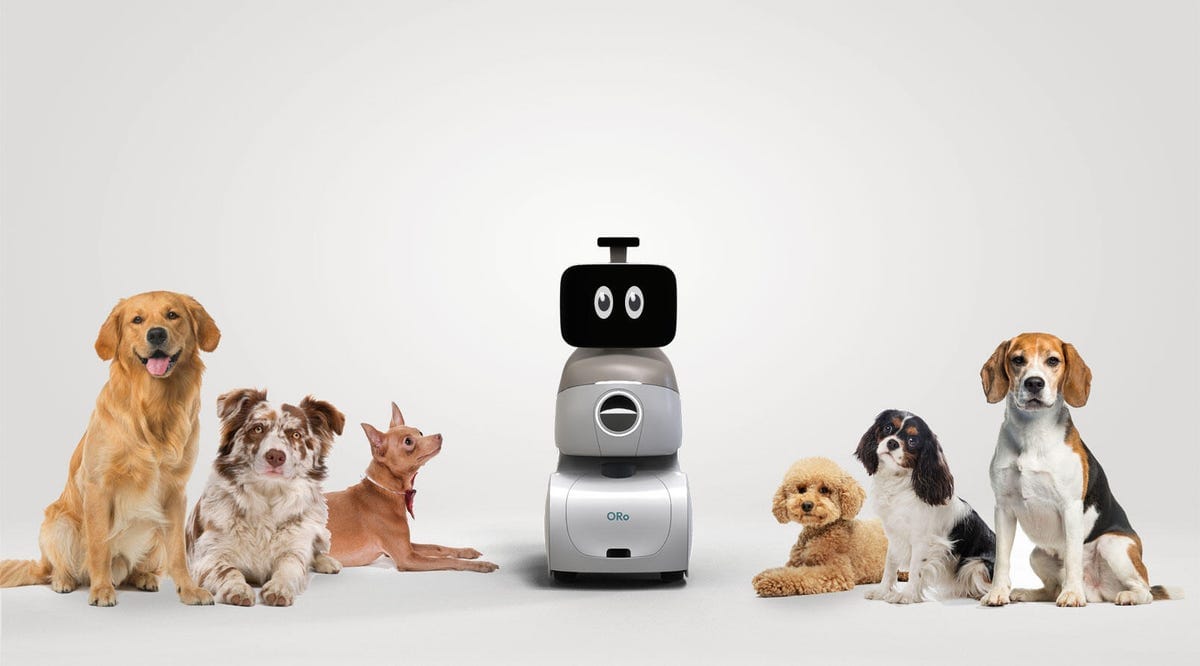
Little Dog tech refers to a category of small quadruped robotic systems designed to move in ways that resemble the gait and balance of a dog. These compact robots are widely used in robotics research, mobility testing, artificial intelligence development, and engineering experiments. Their small size makes them especially useful for laboratory environments where researchers want to study locomotion, stability, navigation, and machine learning without the cost and complexity of working with larger robotic platforms.
Quadruped robots have become an important area of robotics because they can move across uneven terrain more effectively than many wheeled systems. Small robotic dogs provide a practical platform for testing how machines can walk, climb, recover balance, and respond to dynamic environments. In this context, Little Dog tech represents the intersection of mechanical engineering, control systems, sensor integration, and intelligent mobility research.
What Is Little Dog Tech?
Little Dog tech generally describes small dog-like robots built for research and experimentation. These robots are usually equipped with four articulated legs, onboard sensors, embedded processors, and control software that allow them to perform coordinated movement. Instead of being designed purely for entertainment, many small robotic dog platforms are used in serious scientific and engineering work.
The value of these systems lies in their ability to mimic the movement patterns of animals while remaining programmable and measurable. Researchers can analyze every step, joint angle, and response to environmental changes. This makes Little Dog tech highly useful for studying balance, walking algorithms, terrain adaptation, and robotic decision-making.
Why Small Quadruped Robots Matter
Small quadruped robots matter because legged motion presents a difficult but important engineering problem. Real-world environments are often irregular, crowded, or unstable. While wheeled robots work well on flat surfaces, they may struggle on stairs, rubble, rocks, or natural terrain. Robots with legs can potentially handle these conditions better, but they require much more advanced control.
Little Dog tech provides a manageable way to explore these problems. Because the robots are smaller, they are easier to test indoors, less expensive to maintain, and safer to use in research spaces. Engineers can run experiments repeatedly, collect data efficiently, and refine movement algorithms before applying similar ideas to larger robotic platforms.
Core Components of Little Dog Tech
A small robotic dog may look simple from the outside, but it relies on several advanced systems working together. These components allow the robot to sense its environment, calculate movement, and physically execute stable walking patterns.
Mechanical Leg Design
The legs are one of the most important parts of any quadruped robot. Each leg usually includes multiple joints powered by actuators that allow bending, lifting, and extension. The design must be strong enough to support movement while also remaining lightweight and responsive.
Actuators and Motors
Actuators generate the movement required for walking, turning, and balancing. In Little Dog tech, these may be electric motors or other compact drive systems that precisely control joint motion. High-quality actuators are essential because they influence speed, stability, and energy efficiency.
Sensors
Small robotic dogs often use sensors such as cameras, inertial measurement units, force sensors, and joint encoders. These sensors help the robot understand its position, orientation, and interaction with the ground. Sensor data is critical for maintaining balance and adapting to new environments.
Control System
The control system acts as the robot’s decision-making core. It processes sensor inputs, calculates how the robot should move, and sends commands to the motors. Effective control software is necessary for smooth locomotion and quick responses to disturbances.
How Little Dog Robots Move
Movement in a quadruped robot is much more complex than it appears. A robot cannot simply move its legs randomly and expect to walk. It must coordinate all four legs in a stable sequence while maintaining its center of gravity. Different movement styles, called gaits, are used depending on speed, terrain, and the robot’s purpose.
Some common gait styles include walking, trotting, and bounding. A slow walk may keep more feet on the ground for greater stability, while a faster gait may require more dynamic balance. Little Dog tech is often used to study how different gait patterns affect energy use, speed, and stability in robotic systems.
Role of Artificial Intelligence in Little Dog Tech
Artificial intelligence has become increasingly important in legged robotics. Small robotic dog platforms are often used to test machine learning models that help robots adapt to changing environments. Instead of relying only on fixed movement rules, AI-based systems can learn how to move more efficiently or recover from unexpected disturbances.
For example, a robot might use learning algorithms to improve how it steps over obstacles or adjusts to slippery ground. Over time, the system can become better at selecting the right movements for specific conditions. This makes Little Dog tech an excellent platform for combining robotics with artificial intelligence research.
Little Dog Tech in Robotics Research
Research institutions and robotics labs often use small quadruped robots to explore questions related to movement, autonomy, and control. These robots provide a flexible testing environment for experiments that would be more expensive or difficult with larger machines.
Researchers may use these systems to study terrain mapping, locomotion control, reinforcement learning, path planning, and collaborative robot behavior. Because the robot’s actions can be measured precisely, each test generates useful data for improving future designs. In many cases, small robotic dogs serve as experimental prototypes for technologies that may later be used in larger field robots or commercial platforms.
Applications Beyond the Laboratory
Although much of Little Dog tech is associated with research, the concepts behind these robots have broader applications. Small legged robots can potentially be used in education, inspection, entertainment, and lightweight field tasks. Their compact design makes them easier to transport and safer to operate in controlled environments.
Educational programs may use small robotic dogs to teach students about programming, mechanics, and artificial intelligence. Engineering teams may use them for rapid prototyping of locomotion systems. In some cases, they may also be used for demonstrations that show how advanced mobility systems work in practice.
Advantages of Small Robotic Dog Platforms
There are several reasons why small quadruped robots are so useful in technology development. Their size offers practical benefits that make experimentation and testing more efficient.
- Lower development and maintenance costs
- Safer operation in indoor environments
- Easier transport and setup
- Faster testing cycles for research teams
- Ideal platform for studying locomotion algorithms
These advantages make Little Dog tech especially appealing for universities, robotics startups, and engineering teams that want to experiment without building full-scale robotic systems.
Challenges in Little Dog Tech
Despite their advantages, small quadruped robots also present technical challenges. Stable movement on four legs requires precise coordination, and even small errors in timing or sensing can cause instability. Designers must also deal with battery limitations, actuator efficiency, mechanical wear, and the complexity of integrating hardware with software.
Another challenge is terrain variability. A robot may walk well on a flat lab floor but struggle when it encounters slopes, loose surfaces, or obstacles. This is why so much research in Little Dog tech focuses on adaptive control and environmental awareness. The goal is not only to make the robot walk, but to make it walk reliably in changing conditions.
Little Dog Tech and Bio-Inspired Engineering
Many robotic dog systems are influenced by the study of animal movement. Engineers often look at how real dogs and other four-legged animals maintain balance, shift weight, and adapt to uneven ground. This bio-inspired approach helps researchers design more efficient and capable robots.
By studying nature, robotics teams can discover useful patterns for movement and stability. These insights can then be translated into mechanical designs and software control strategies. Little Dog tech is therefore part of a larger field of bio-inspired engineering, where natural systems guide the development of advanced machines.
The Future of Little Dog Tech
The future of Little Dog tech is likely to include more intelligent movement, better energy efficiency, and stronger autonomy. As sensors become more advanced and AI systems improve, small quadruped robots may become more capable of navigating real-world spaces with minimal human input.
Future developments may also include improved materials, quieter actuators, more efficient batteries, and greater coordination between perception and movement. These advances could make small robotic dogs even more useful for education, experimentation, and specialized tasks in controlled environments. Over time, lessons learned from these small robots may continue to influence the design of larger autonomous systems.
Why Little Dog Tech Is Important
Little Dog tech is important because it gives engineers and researchers a practical platform for solving one of robotics’ hardest challenges: reliable legged mobility. By working with compact quadruped robots, teams can study how machines perceive the world, maintain balance, and move through environments that are difficult for traditional robots.
The knowledge gained from this research extends far beyond the robots themselves. It contributes to broader progress in artificial intelligence, autonomous systems, mechanical design, and advanced control engineering. Even small experimental robots can have a major influence on the future of robotics.
Conclusion
Little Dog tech represents a fascinating area of robotics focused on small quadruped machines that combine mechanical engineering, sensors, control systems, and artificial intelligence. These compact robotic platforms are valuable tools for research, education, and innovation because they allow engineers to study complex locomotion problems in a practical and efficient way.
As robotics continues to advance, small robotic dog systems will likely remain important for testing new ideas in movement, autonomy, and adaptive behavior. Their size may be small, but their role in advancing robotics technology is significant. Little Dog tech continues to demonstrate how compact machines can help solve some of the biggest challenges in intelligent mobility and robotic design.

As a digital marketer, she has received multiple international awards, including Campaign of the Year at the 2023 European Content Awards and Best Use of Content Marketing at the 2022 Global Search Awards. Nicai holds an MSc in Marketing (First Class Honours) from the UCD Smurfit Graduate Business School and she has also completed the Artificial Intelligence Programme at Oxford University’s Saïd Business School. She is also a contributing writer for publications such as Entrepreneur and Esquire.