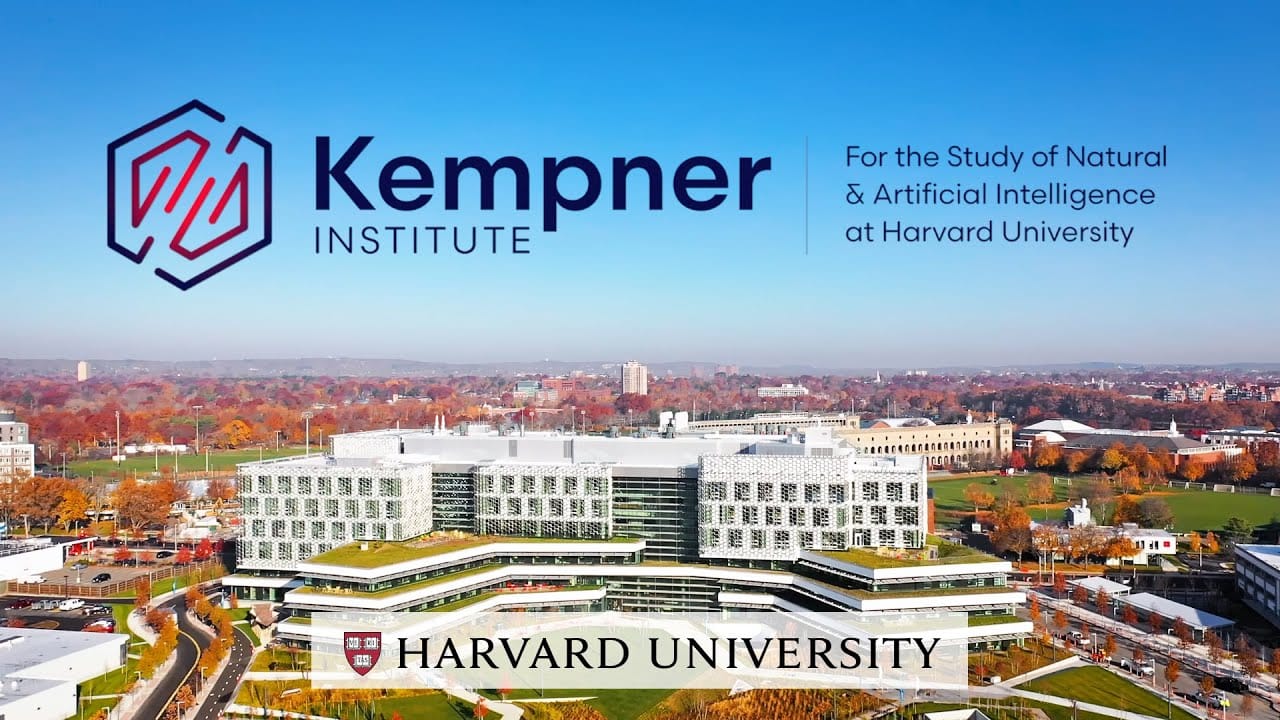
Kempner news in 2026 is increasingly focused on advances in artificial intelligence research, interdisciplinary collaboration, and the growing influence of academic institutions in shaping the future of intelligent systems. The Kempner Institute for the Study of Natural and Artificial Intelligence at Harvard University has emerged as a key player in this space, bringing together experts from computer science, neuroscience, and cognitive science.
As AI continues to transform industries and society, institutions like the Kempner Institute are working to deepen understanding of both artificial and natural intelligence. Their research aims to bridge gaps between machine learning and human cognition, offering insights that could redefine how intelligent systems are designed and applied.
What Is the Kempner Institute?
The Kempner Institute is a research center dedicated to studying intelligence in both biological and artificial systems. Located at Harvard University, it focuses on developing new computational models inspired by the brain, as well as advancing machine learning techniques.
The institute emphasizes interdisciplinary collaboration, bringing together researchers from diverse fields to explore complex questions about learning, perception, and decision-making.
Latest Kempner News Developments
Recent Kempner news highlights significant progress in AI research, including new models that aim to improve efficiency, adaptability, and interpretability. Researchers are working on systems that can learn more like humans, using fewer data and generalizing across different tasks.
The institute has also expanded its programs, including fellowships and research initiatives designed to attract top talent from around the world. These efforts are strengthening its position as a leading center for AI innovation.
Focus on Artificial and Natural Intelligence
A key aspect of Kempner news is the institute’s dual focus on artificial and natural intelligence. By studying how the human brain processes information, researchers aim to develop more advanced and efficient AI systems.
This approach contrasts with traditional AI development, which often relies on large datasets and computational power. By incorporating insights from neuroscience, the Kempner Institute is exploring new ways to make AI more adaptable and efficient.
Role in Academic and Industry Collaboration
The Kempner Institute collaborates with other academic institutions, technology companies, and research organizations. These partnerships enable the sharing of knowledge, resources, and expertise, accelerating the pace of innovation.
Such collaborations are essential for translating research findings into practical applications, including healthcare, robotics, and data analysis.
Impact on the AI Industry
Kempner news is relevant not only to academia but also to the broader technology industry. Advances in AI research can influence the development of new products, services, and business models.
Companies are closely monitoring research from institutions like the Kempner Institute to identify emerging trends and potential applications. This connection between academia and industry is driving rapid progress in AI technology.
Challenges in AI Research
Despite significant progress, AI research faces several challenges. These include issues related to data privacy, ethical considerations, and the interpretability of complex models. Ensuring that AI systems are transparent and accountable is a major focus for researchers.
Additionally, balancing innovation with responsible development is critical to maintaining public trust and ensuring the long-term success of AI technologies.
Future Outlook
The future of Kempner Institute research is expected to involve deeper integration of neuroscience and machine learning. This could lead to breakthroughs in areas such as general intelligence, adaptive learning systems, and human-AI interaction.
As the institute continues to grow, it is likely to play an increasingly important role in shaping the direction of AI research and its applications across various industries.
Conclusion
Kempner news highlights the importance of interdisciplinary research in advancing our understanding of intelligence. By combining insights from multiple fields, the Kempner Institute is contributing to the development of more sophisticated and efficient AI systems.
As artificial intelligence continues to evolve, the work being done at institutions like the Kempner Institute will be crucial in shaping the future of technology and its impact on society.

As a digital marketer, she has received multiple international awards, including Campaign of the Year at the 2023 European Content Awards and Best Use of Content Marketing at the 2022 Global Search Awards. Nicai holds an MSc in Marketing (First Class Honours) from the UCD Smurfit Graduate Business School and she has also completed the Artificial Intelligence Programme at Oxford University’s Saïd Business School. She is also a contributing writer for publications such as Entrepreneur and Esquire.