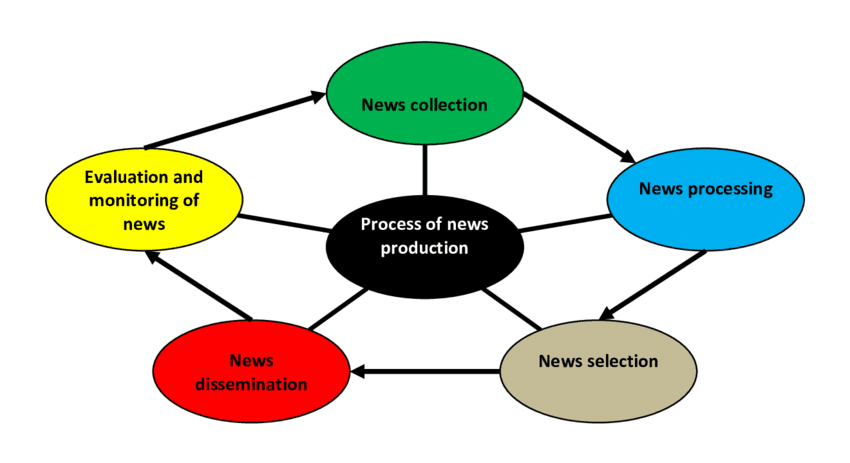
The news cycle has become one of the most defining features of modern media, shaping how information is produced, distributed, and consumed. In today’s 24/7 digital environment, the news cycle operates continuously, with stories emerging, evolving, and fading at a rapid pace. This constant flow of information influences public perception, political discourse, and societal priorities.
Understanding the news cycle is essential for anyone navigating the modern information landscape. It affects not only journalists and media organizations but also audiences who rely on timely and accurate information to make decisions.
What Is the News Cycle?
The news cycle refers to the process by which news stories are reported, disseminated, and eventually replaced by newer developments. Traditionally, this cycle followed a predictable pattern tied to print and broadcast schedules. However, the rise of digital media has transformed it into a continuous, real-time process.
Today, news can break at any moment, and updates can occur within minutes. This immediacy has shortened the lifespan of individual stories while increasing the overall volume of information available to the public.
Evolution of the News Cycle
The news cycle has evolved significantly over time. In the past, newspapers and scheduled television broadcasts determined when news was released. With the advent of the internet and social media, the cycle has accelerated dramatically.
Online platforms allow journalists and users to share information instantly, creating a constant stream of updates. This shift has reduced the delay between events and reporting, but it has also introduced new challenges related to accuracy and verification.
Role of Social Media
Social media platforms play a central role in the modern news cycle. They serve as both sources of information and distribution channels, enabling stories to reach global audiences within seconds.
Trending topics, hashtags, and viral content can amplify certain stories, sometimes elevating them to prominence regardless of their long-term significance. This dynamic can influence which issues receive attention and how they are perceived.
Impact on Journalism
The fast-paced nature of the news cycle has changed how journalists work. Reporters are under pressure to deliver information quickly, often providing updates as events unfold. This can lead to more dynamic coverage but also increases the risk of errors.
News organizations must balance speed with accuracy, ensuring that information is verified before publication. This challenge has led to the development of new editorial practices and fact-checking processes.
Public Attention and Information Overload
The continuous flow of news can lead to information overload for audiences. With so many stories competing for attention, it can be difficult for individuals to focus on specific issues or distinguish between important and less significant developments.
This environment can also contribute to shorter attention spans, as audiences move quickly from one story to another. As a result, some important topics may receive limited coverage before being replaced by new events.
Influence on Public Opinion
The news cycle plays a significant role in shaping public opinion. The way stories are framed, the frequency of coverage, and the platforms used for distribution all influence how audiences interpret information.
Repetition and prominence can make certain issues appear more important, while others may be overlooked. This dynamic highlights the power of media in guiding public discourse.
Challenges and Criticism
The modern news cycle faces several challenges. The emphasis on speed can sometimes compromise accuracy, leading to the spread of misinformation. Additionally, the focus on trending topics may result in superficial coverage of complex issues.
Critics also point to the potential for sensationalism, where stories are presented in ways that attract attention but may not fully reflect their significance. Addressing these challenges requires ongoing efforts from both media organizations and audiences.
Future of the News Cycle
The future of the news cycle is likely to be shaped by technological advancements and changing audience behaviors. Artificial intelligence, data analytics, and personalized content delivery are expected to influence how news is produced and consumed.
At the same time, there may be increased emphasis on quality journalism, with efforts to provide deeper analysis and context in response to concerns about information overload and misinformation.
Conclusion
The news cycle is a fundamental aspect of modern media, reflecting the speed and complexity of today’s information environment. While it offers immediate access to information, it also presents challenges related to accuracy, attention, and public understanding.
By understanding how the news cycle works, individuals can better navigate the flow of information and make more informed decisions. As media continues to evolve, the news cycle will remain a key factor in shaping how society engages with news and current events.

As a digital marketer, she has received multiple international awards, including Campaign of the Year at the 2023 European Content Awards and Best Use of Content Marketing at the 2022 Global Search Awards. Nicai holds an MSc in Marketing (First Class Honours) from the UCD Smurfit Graduate Business School and she has also completed the Artificial Intelligence Programme at Oxford University’s Saïd Business School. She is also a contributing writer for publications such as Entrepreneur and Esquire.