Navigating the ever-changing landscape of digital marketing requires more than just a surface-level understanding of search engines. To truly succeed and drive consistent organic traffic to your website, businesses need a comprehensive seo basics framework. This framework acts as the foundational blueprint for everything from keyword research and content creation to deep technical optimization. With the rapid evolution of AI and search technology, staying ahead means going back to the core principles that dictate how search algorithms read, index, and rank your site. By mastering these foundational elements, you can build a resilient digital presence that withstands algorithm updates and continuously attracts high-quality traffic.
Search engine optimization is not a guessing game; it is a strategic discipline. Whether you are running a massive global corporation or a specialized local shop, the core concepts of visibility remain largely the same. Understanding these concepts allows webmasters and marketers to systematically diagnose traffic drops, discover new opportunities, and outmaneuver competitors. In this comprehensive guide, we will break down the essential components of modern search visibility, ensuring you have the actionable knowledge needed to elevate your digital strategy.
What Is an SEO Basics Framework?
An seo basics framework is essentially a structured, step-by-step methodology used to improve a website’s visibility on search engine results pages (SERPs). Instead of applying random tactics and hoping for the best, a framework provides a logical sequence for optimization. It ensures that you are not just blindly creating content or tweaking code, but rather aligning every action with a broader, measurable strategy.
At its core, this framework encompasses the entire lifecycle of a website’s interaction with search engines. It starts with ensuring the site is accessible to search engine crawlers, moves on to understanding what your target audience is actively searching for, and culminates in creating an authoritative web presence that commands trust. A robust framework removes the guesswork from digital marketing. It creates a standardized operating procedure that your entire team—from developers to copywriters—can follow to achieve unified growth goals.
Understanding the SEO Periodic Table
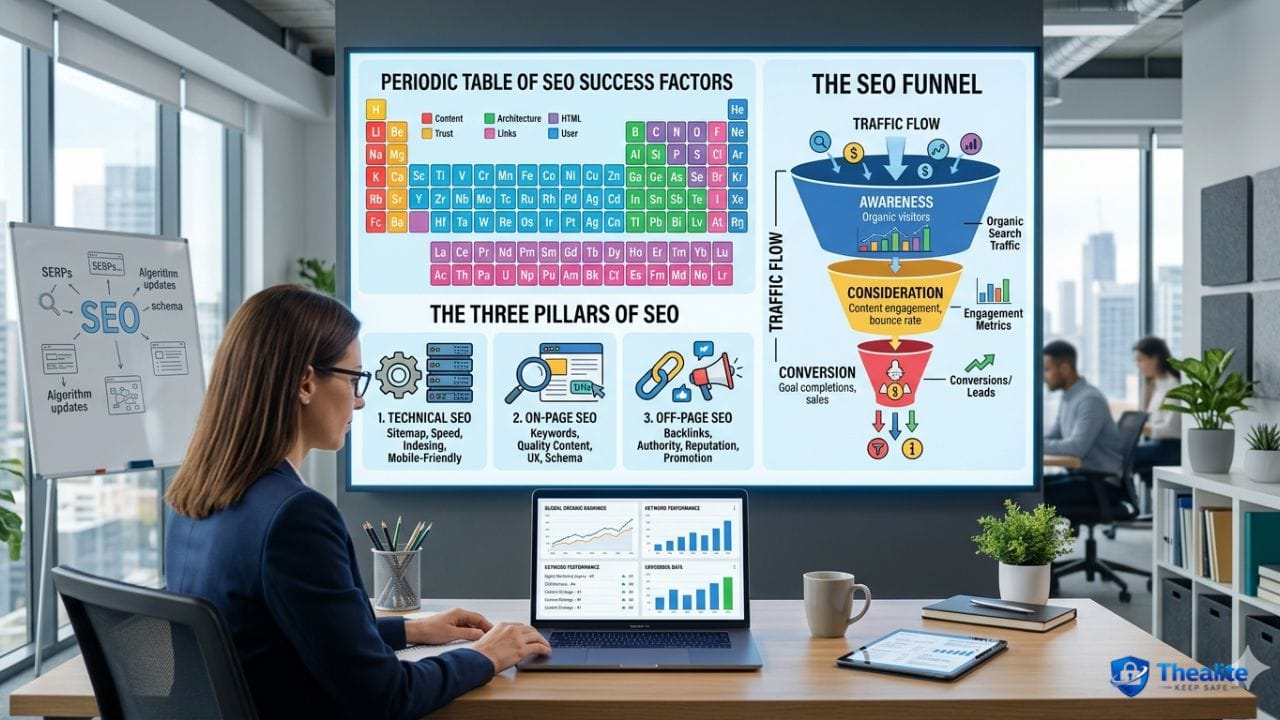
To visualize the many different factors that influence search rankings, industry experts developed the seo periodic table. Much like the scientific periodic table categorizes elements by their properties, the periodic table seo categorizes ranking factors by their importance and nature. It is a brilliant visual aid that helps demystify the complex algorithms used by Google, Bing, and other major search engines.
The table is typically divided into overarching groups, such as Content, Architecture, HTML, Trust, Links, and User behavior. Each “element” carries a different weight. For example, high-quality content and robust site architecture are foundational elements with significant positive weight. Conversely, the table also highlights “toxins”—negative elements like keyword stuffing, cloaking, or unnatural link building that can result in severe manual penalties or algorithmic demotions.
By studying this visual guide, beginners and intermediate marketers alike can quickly grasp which elements require immediate attention. It shifts the focus away from “tricking” the search engine toward building a genuinely valuable, well-structured, and authoritative website. Using this table as a reference ensures that your strategy remains balanced, addressing both the creative and technical sides of search optimization.
The 3 Pillars of SEO Explained
To simplify the vast world of search engine optimization, professionals often divide the discipline into three distinct categories. These are known as the 3 pillars of SEO. Mastering these three areas ensures a holistic approach to website optimization, preventing any single point of failure in your digital strategy. Interestingly, this concept is so universal that in international marketing, particularly in French-speaking regions, it is referred to as the 3 piliers du seo, proving that these foundational rules apply globally regardless of language.
- Technical SEO: This is the foundation of your website. Technical optimization ensures that search engine spiders can efficiently crawl, render, and index your pages. It involves improving site speed, ensuring mobile-friendliness, implementing secure protocols (HTTPS), and optimizing your XML sitemaps and robots.txt files. Without a solid technical foundation, even the best content will remain unseen.
- On-Page SEO: Once the site is technically sound, the focus shifts to the content itself. On-page optimization involves tailoring individual webpages to rank for specific queries. This includes optimizing title tags, meta descriptions, header structures (H1, H2, H3), and ensuring the primary topic is covered comprehensively and naturally within the text. It also involves optimizing images with alt text and using strategic internal linking to guide users.
- Off-Page SEO: The final pillar revolves around authority and trust, which are primarily built outside of your own website. The most prominent factor here is acquiring high-quality backlinks from reputable sites in your industry. However, off-page strategies also encompass brand mentions, social media signals, influencer outreach, and digital PR. It tells search engines that others vouch for the quality of your content.
How the SEO Funnel Supports Better Keywords
The seo funnel is a conceptual model that maps the customer journey from their initial search query to the final conversion. By understanding this funnel, marketers can select far more effective keywords that align with the user’s specific intent at each stage of their buying journey. Choosing the wrong terms can lead to high traffic but zero sales, which defeats the purpose of your marketing efforts.
At the top of the funnel (TOFU), users are looking for general information. Here, you target broad, educational queries (e.g., “What is artificial intelligence?”). In the middle of the funnel (MOFU), users are evaluating their options. They use comparison queries. For instance, someone might search for an OpenAI vs Google analysis to decide which AI tool fits their needs. At the bottom of the funnel (BOFU), the user is ready to make a decision or a purchase. These queries are highly specific and transactional (e.g., “Buy AI enterprise software online”).
Mapping your terms to the SEO funnel ensures that you create the right type of content for the right audience at the exact right time. A well-optimized website will have educational blog posts for the top of the funnel, detailed comparison guides for the middle, and highly optimized product or service pages for the bottom, capturing users at every stage of their journey.
Why SEO Benchmarking Matters for Growth
You cannot improve what you do not measure. This is where seo benchmarking becomes a critical step in your marketing lifecycle. Benchmarking involves establishing a baseline of your current website performance, taking note of your current organic traffic, keyword rankings, backlink profile, and site speed metrics. Once this baseline is established, you can continually compare future performance against it to measure growth and ROI.
Furthermore, effective benchmarking requires competitive analysis. You must analyze your direct competitors to see where they outrank you and identify the gaps in your own content. The digital ecosystem is always shifting—for example, as new technologies emerge, search trends shift dramatically, such as the rising queries around software engineers and AI. By regularly benchmarking your performance, you can quickly spot these shifting trends, identify when your rankings are slipping, and pivot your strategy before you lose significant market share.
The Role of SEO Code in Technical Optimization
When we talk about the technical backbone of a website, we are largely referring to seo code. This encompasses the underlying HTML, CSS, JavaScript, and structured data that dictate how a search engine interprets a webpage. Search engines do not “see” a webpage the way humans do; they read the code. If your code is bloated, messy, or lacking semantic structure, search engine crawlers will struggle to understand your content.
Proper code optimization involves several critical practices. First, using semantic HTML tags (like `header`, `nav`, `article`, and `footer`) helps search engines understand the hierarchy and layout of your page. Second, implementing Schema Markup (JSON-LD) translates your content into a structured format that search engines instantly understand, which can help you win rich snippets in the search results. Finally, minimizing render-blocking JavaScript and optimizing CSS files ensures that your site loads quickly, passing Google’s Core Web Vitals assessment with flying colors.
What to Check in an Enterprise SEO Audit
When a website scales to thousands or even millions of pages, standard optimization tactics are no longer sufficient. This requires a comprehensive enterprise seo audit. An enterprise-level audit goes far beyond simple on-page checks; it dives deep into server logs, complex site architectures, and automated template issues that can impact indexability on a massive scale.
A thorough enterprise SEO audit should always include an analysis of the site’s “crawl budget”—the number of pages a search engine will crawl on your site within a specific timeframe. If an enterprise site has millions of low-value, dynamically generated pages (like internal search results or unoptimized faceted navigation), search engines waste their crawl budget on junk pages, leaving important product pages unindexed.
Additionally, enterprise audits must address internationalization and localization (using hreflang tags correctly), manage complex internal linking structures across massive category silos, and resolve index bloat. The goal is to ensure that the site’s massive scale acts as an advantage rather than a technical hindrance.
SEO Tips for a Local SEO Business Strategy
If you run a company that serves a specific geographic area, competing globally is not your primary concern. Instead, you need a robust local seo business strategy. Local search optimization focuses on ensuring your business appears in the “Local Pack”—the map and top three local listings that appear at the top of Google for geographically related queries.
The cornerstone of any local strategy is claiming, verifying, and meticulously optimizing your Google Business Profile (GBP). You must ensure that your Name, Address, and Phone number (NAP) are completely consistent across your website, your GBP, and all external local directories (like Yelp, YellowPages, and industry-specific aggregators).
Furthermore, local businesses must actively manage their online reputation by encouraging satisfied customers to leave positive reviews. Generating locally relevant content—such as sponsoring local events or writing guides specific to your city—also sends strong geographic signals to search engines, proving that your business is highly relevant to local searchers.
When to Hire an SEO Content Marketing Agency
As a business scales, managing a comprehensive search strategy in-house can become overwhelming. There comes a point where the technical demands, the volume of content required, and the need for high-tier link building exceed the capacity of an internal team. This is precisely when you should consider hiring an seo content marketing agency.
A specialized agency brings a wealth of cross-industry experience and access to expensive enterprise-level tools that most small-to-medium businesses cannot afford. They can scale your content production rapidly while maintaining strict quality standards. Moreover, the digital landscape changes rapidly. By partnering with experts, you gain access to cutting-edge technology and AI insights that agencies use to predict algorithm updates and identify untargeted keyword niches. Hiring an agency transitions your strategy from reactive to proactive, allowing your internal team to focus on core business operations.
How to Combine SEO Benchmarking, SEO Code, and Content Strategy
The true power of an seo basics framework is realized when all these individual components are synchronized. A beautiful website with perfect SEO code will still fail if the content doesn’t align with the SEO funnel. Conversely, brilliant content will never rank if technical roadblocks prevent search engines from crawling it.
To succeed, start with SEO benchmarking to understand your current standing and identify your weaknesses. Next, audit your SEO code to ensure your technical foundation is flawless and capable of fast loading speeds. Finally, deploy a content strategy based on the three pillars of SEO, targeting terms throughout the entire customer funnel. By creating a feedback loop where data from your benchmarking informs your content and technical updates, you create a sustainable, ever-improving engine for organic growth.
Frequently Asked Questions
What is the SEO periodic table?
The SEO periodic table is a visual guide created by industry experts that categorizes and weights the various ranking factors used by search engines. It groups elements into categories like Content, Architecture, and HTML, helping marketers understand which tactics have a positive impact and which “toxins” to avoid.
Why is the periodic table SEO useful for beginners?
The periodic table SEO is incredibly useful for beginners because it simplifies complex search algorithms into an easy-to-understand visual format. Instead of feeling overwhelmed by hundreds of ranking signals, beginners can use the table to focus on the most important, high-impact factors first.
What are the 3 pillars of SEO?
The 3 pillars of SEO are Technical SEO (ensuring a site is crawlable, secure, and fast), On-Page SEO (optimizing the content, keywords, and HTML tags on individual pages), and Off-Page SEO (building authority and trust through backlinks, social signals, and brand mentions).
What does 3 piliers du seo mean in English SEO strategy?
The phrase “3 piliers du seo” translates directly to the “3 pillars of SEO” in English. It refers to the universal strategy of dividing search engine optimization into Technical, On-Page, and Off-Page optimization, demonstrating that core search principles remain identical across different languages and regions.
How does the SEO funnel help with keyword planning?
The SEO funnel helps with keyword planning by mapping search terms to the user’s intent. It allows marketers to categorize keywords into awareness (top of funnel), consideration (middle of funnel), and conversion (bottom of funnel), ensuring that the right content is created for users at every stage of their buying journey.
What is SEO benchmarking?
SEO benchmarking is the process of establishing a baseline of your website’s current search performance metrics, such as organic traffic, keyword rankings, and domain authority. It involves comparing these metrics against competitors and tracking them over time to measure the success and ROI of your optimization campaigns.
Why does SEO code matter in technical SEO?
SEO code matters because search engine bots crawl the underlying code (HTML, CSS, JavaScript, and schema) of your website, not the visual layout. Clean, semantic, and optimized code ensures that search engines can quickly render your pages, understand your content’s hierarchy, and load the site fast, all of which are critical ranking factors.
What should an enterprise SEO audit include?
An enterprise SEO audit must go beyond standard checks and include deep technical analysis such as crawl budget optimization, log file analysis, managing index bloat, fixing automated template errors, and ensuring proper international setup (hreflang) across millions of pages.
How does local SEO business strategy help small companies?
A local SEO business strategy helps small companies compete by focusing visibility on geographically relevant searches. By optimizing a Google Business Profile, managing local citations, and earning local reviews, small businesses can dominate the “Local Pack” and attract foot traffic or local leads without competing against global giants.
When should a brand hire an SEO content marketing agency?
A brand should hire an SEO content marketing agency when they lack the internal resources, technical expertise, or time to scale their organic growth strategies. Agencies provide access to premium tools, specialized knowledge, and scalable content production to aggressively increase market share.