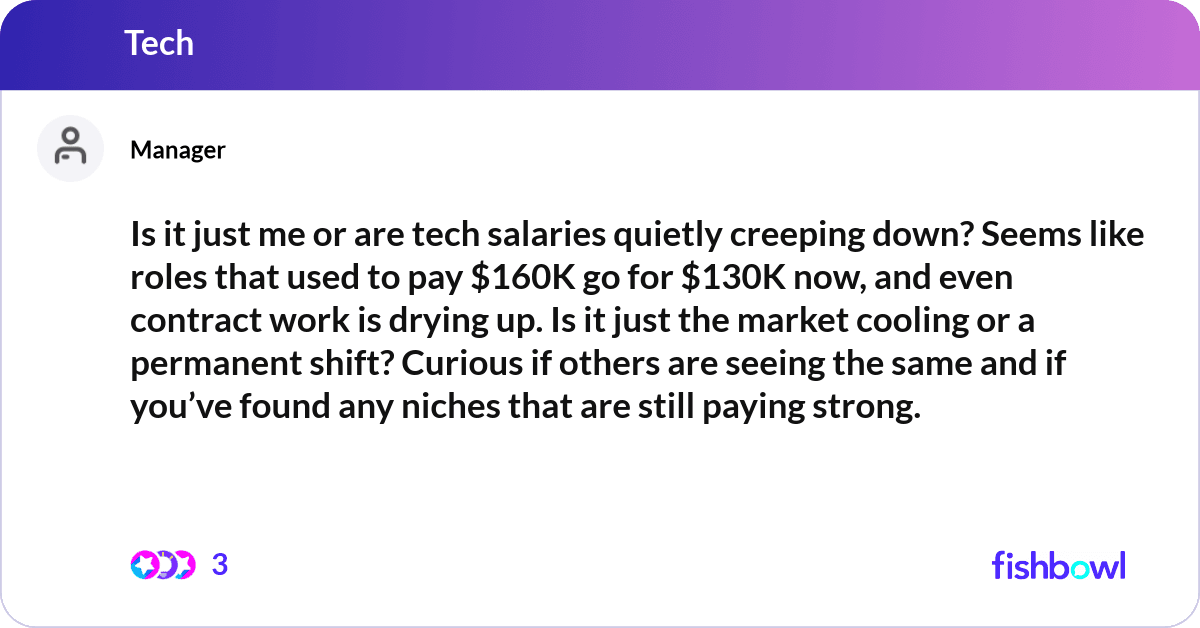
The question “are tech salaries going down” has become more common as the technology industry experiences market changes, hiring slowdowns, and shifts in employer demand. Over the past few years, the tech sector has moved through rapid expansion, workforce reductions, and increased competition for certain roles. As a result, many professionals are wondering whether salaries in technology are falling or simply returning to more sustainable levels.
The answer is not entirely simple because tech salaries do not move in the same direction across every role, company, or location. In some areas, salaries have become less aggressive than they were during peak hiring periods, while in other specialized fields, compensation remains very strong. Understanding the broader market helps explain why some professionals feel salary pressure while others continue to see high earning potential.
Why People Think Tech Salaries Are Going Down
There are several reasons why many workers believe salaries in technology are declining. One of the biggest reasons is that the industry experienced an unusually strong hiring boom, especially during periods when digital transformation accelerated rapidly. Companies competed intensely for engineers, developers, and technical specialists, often offering high salaries, signing bonuses, and generous benefits.
When that hiring surge slowed, compensation growth also became less aggressive. In many cases, salaries did not collapse, but they stopped rising at the same pace. For workers who became used to fast salary increases, this slowdown can feel like a decline even when total pay remains relatively strong.
How the Hiring Market Affects Tech Salaries
Technology salaries are closely tied to hiring demand. When companies are expanding quickly and competing for talent, compensation often increases. When hiring slows, employers gain more leverage, and salary offers may become more conservative.
Recent changes in the job market have made companies more cautious. Some businesses reduced headcount, delayed expansion plans, or shifted budgets toward automation and efficiency. These decisions can limit salary growth, especially in roles where there are many applicants competing for fewer openings.
Are All Tech Salaries Going Down?
Not all tech salaries are going down. The market is more uneven than that. Some positions have seen reduced salary growth or slightly lower compensation offers, while other roles continue to command premium pay because they require scarce and highly valuable expertise.
General software development roles may face more salary pressure than highly specialized positions. Employers are often willing to pay significantly more for professionals who can work in complex and high-impact areas that directly support business growth or security.
Roles That May Feel More Salary Pressure
Some areas of tech face more competition and slower compensation growth. These may include junior developer positions, general support roles, and jobs where tasks can be partially automated or standardized. Entry-level candidates often feel the most pressure because they compete with large numbers of applicants and usually have less experience.
Roles That Still Command Strong Salaries
Highly specialized positions continue to offer strong pay. These often include artificial intelligence engineers, machine learning specialists, cloud architects, cybersecurity experts, data engineers, and senior infrastructure professionals. Companies value these skills because they are difficult to replace and closely connected to strategic business priorities.
The Impact of Remote Work on Tech Pay
Remote work has also changed how technology salaries are structured. In the past, companies often paid salaries based heavily on local market conditions in major technology hubs. As remote work expanded, employers gained access to talent from a wider range of locations. This broader talent pool can sometimes reduce salary pressure in expensive markets.
At the same time, remote work has opened opportunities for skilled professionals to work for companies outside their local region. For some workers, this has improved earning potential. For others, it has created more competition, which can influence salary offers.
Why Entry-Level Tech Salaries Can Feel Lower
Entry-level candidates often experience the greatest uncertainty in the salary market. Many employers want workers who can contribute immediately, and this increases demand for experienced professionals over beginners. At the same time, junior roles may attract large numbers of applicants, which can weaken salary leverage for new graduates and career changers.
Another factor is that companies now place more value on practical experience, portfolios, internships, and specialized knowledge. Candidates who only have basic technical skills may find that salary offers are not as strong as they expected.
Technology Skills That Support Higher Salaries
Even when parts of the market become more cautious, certain skills continue to support strong earning potential. Professionals who invest in in-demand areas are often better positioned to earn competitive compensation.
- Artificial intelligence and machine learning
- Cloud computing and cloud architecture
- Cybersecurity and risk management
- Data engineering and analytics
- DevOps and infrastructure automation
- Product engineering and scalable system design
These skill areas remain valuable because they solve important business problems and are often linked to long-term digital strategy. Workers who build expertise in these fields may continue to see strong salary opportunities even when the broader market feels more cautious.
Are Tech Salaries Falling or Normalizing?
In many cases, tech salaries are not dramatically falling but normalizing after an unusually aggressive hiring cycle. During periods of intense competition, compensation can rise faster than normal market conditions would support. When the market stabilizes, salary growth often becomes more balanced.
This normalization can feel disappointing to workers who expected continuous salary jumps. However, technology still remains one of the better-paying industries compared to many other professional fields. Even where growth has slowed, salaries in tech often remain attractive due to the high value of technical skills.
What the Future May Look Like
The future of tech compensation will likely depend on several factors, including economic conditions, business investment, global hiring patterns, and the continued growth of emerging technologies. Companies are expected to keep investing in areas such as artificial intelligence, cybersecurity, cloud infrastructure, and automation. These investments will likely continue to support strong compensation in specialized roles.
At the same time, workers in more general positions may need to adapt by strengthening their skills, gaining practical experience, and learning technologies that align with changing employer priorities. The market is becoming more selective, but there are still many opportunities for professionals who stay current and continue developing valuable expertise.
Conclusion
So, are tech salaries going down? In some roles, salary growth has slowed and compensation may feel less aggressive than it was during the peak hiring boom. However, this does not mean the entire tech industry is experiencing a sharp decline in pay. Instead, the market is becoming more selective and more focused on specialized, high-impact skills.
Technology remains a strong career field with solid long-term earning potential. Professionals who continue learning, build real-world experience, and focus on in-demand areas can still find excellent salary opportunities. Rather than a broad collapse in pay, the industry is experiencing a shift toward more sustainable compensation patterns and greater emphasis on advanced expertise.

As a digital marketer, she has received multiple international awards, including Campaign of the Year at the 2023 European Content Awards and Best Use of Content Marketing at the 2022 Global Search Awards. Nicai holds an MSc in Marketing (First Class Honours) from the UCD Smurfit Graduate Business School and she has also completed the Artificial Intelligence Programme at Oxford University’s Saïd Business School. She is also a contributing writer for publications such as Entrepreneur and Esquire.