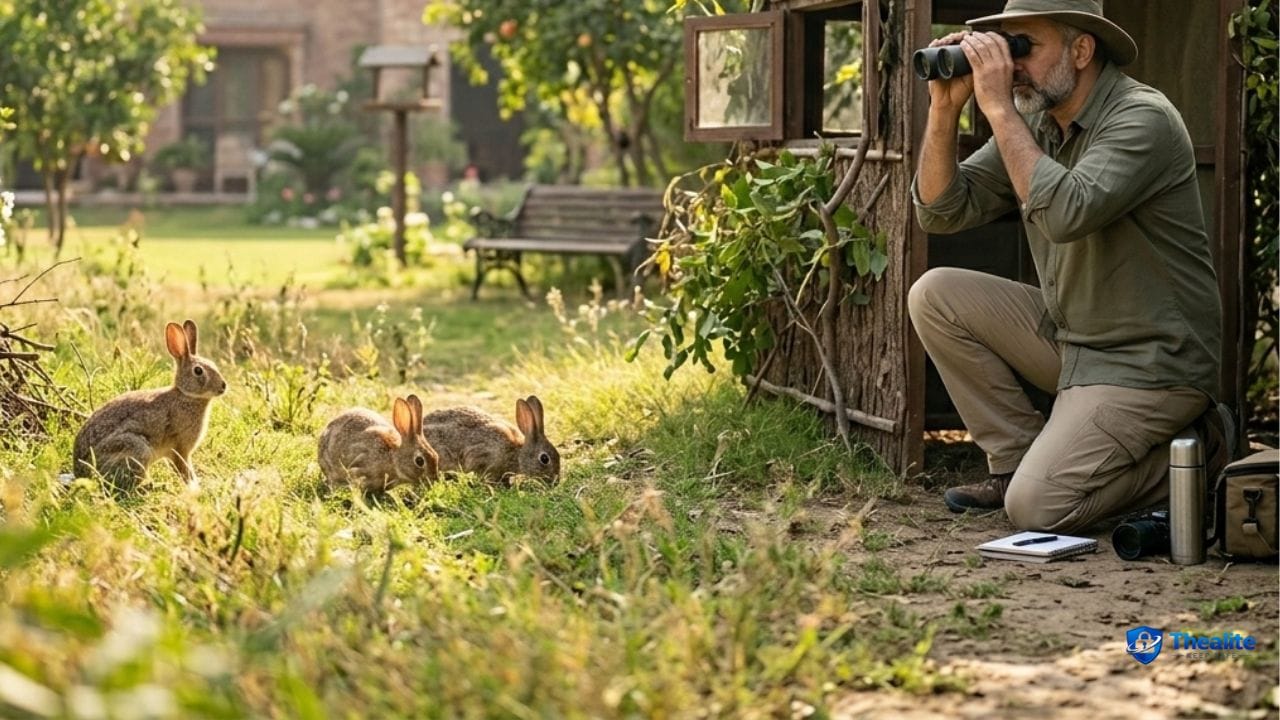
Wild rabbits are a key part of many U.S. ecosystems—and they’re also a favorite meal for a long list of predators. Coyotes, foxes, bobcats, dogs, outdoor cats, hawks, owls, and even large snakes can all prey on rabbits, especially kits (baby bunnies). So if you’re seeing rabbits in your yard and want to help, the goal isn’t to ‘fight predators’—it’s to make your yard a safer habitat where rabbits can hide, move safely, and avoid being targeted.
This guide focuses on ethical, realistic backyard steps that help wild rabbits without harming wildlife. You’ll learn what works (cover and escape routes), what doesn’t (feeding that attracts predators), how to handle nests, and what to do if you find babies.
Quick Answer (The 7 Best Ways to Help Wild Rabbits)
- Add dense cover and safe ‘escape routes’ (shrubs, brush piles, tall native plants).
- Keep dogs supervised and discourage chasing (especially at dawn/dusk).
- Discourage outdoor cats hunting in your yard (cats are a major rabbit predator).
- Reduce predator attractants (open trash, pet food outside, rodents).
- Avoid feeding rabbits (can attract predators and cause health issues).
- Protect nests with a simple barrier only when needed—and minimize disturbance.
- If you find baby rabbits, verify the situation before “rescuing” (most are not abandoned).
Know the Predators (So You Design the Right Yard)
Wild rabbits face four main predator categories:
- Ground predators: coyotes, foxes, bobcats, dogs.
- Domestic predators: outdoor cats (very high impact in many neighborhoods).
- Aerial predators: hawks and owls.
- Opportunists: snakes, raccoons, and other wildlife depending on region.
Because you can’t control wildlife, the smartest solution is habitat design: give rabbits places to hide and ways to move without crossing open ground.
Step 1: Create Safe Cover (Rabbits Survive by Hiding)
A rabbit in an open lawn is easy to spot and catch. A rabbit near dense cover has options. The more ‘edge habitat’ you have, the safer rabbits are.
High-value cover ideas
- Dense shrubs and hedges (native shrubs are ideal).
- Tall grasses and native groundcover patches.
- Brush piles (stacked branches in a corner of the yard).
- Low evergreen plants that provide year-round cover.
- A ‘no-mow’ strip near a fence line (safer travel corridor).
Cover placement tips
- Create cover in multiple spots—not just one corner—so rabbits can move between them.
- Place cover near fences or natural boundaries where rabbits already travel.
- Avoid placing cover directly next to busy roads (rabbits may run into traffic when startled).
Step 2: Build ‘Escape Routes’ Across the Yard
Rabbits often get caught when they have to cross open space. You can help by creating a chain of hiding spots.
- Use shrubs or tall plantings like stepping stones from one area to another.
- Leave small gaps under fences (where legal and safe) so rabbits can escape to cover.
- Avoid removing every “messy” natural area—some mess is rabbit safety.
Step 3: Make Your Yard Less Attractive to Predators
Predators go where food is easy. If your yard has pet food, trash, compost, rodents, or outdoor birdseed on the ground, you may be creating a predator hotspot.
Reduce attractants
- Bring pet food and water bowls inside at night.
- Secure trash cans with tight lids.
- Clean up fallen fruit from trees (attracts wildlife and rodents).
- Store birdseed securely; clean spilled seed under feeders.
- Reduce rodent hiding spots (wood piles against the house, cluttered corners).
Snake/rodent link: fewer rodents can reduce snake activity too—see How to Keep Snakes Out of Your Yard Safe for Pets.
Step 4: Keep Dogs From Chasing Rabbits
Even friendly dogs can injure or kill wild rabbits by chasing. Supervision is the most effective tool.
- Keep dogs leashed or supervised during dawn and dusk (high rabbit activity).
- Train a strong recall (“come”) and interrupt chase behavior early.
- Block access to nest areas if you know where they are.
- Use fencing or a designated dog run so the rest of the yard can function as wildlife habitat.
Step 5: Address Outdoor Cats (Biggest Local Predator in Many Areas)
Outdoor cats hunt—even when well-fed—and they can devastate local wildlife. If you want to help rabbits, reducing cat hunting pressure matters.
Practical, non-confrontational steps
- Keep your own cats indoors (or use a catio/controlled outdoor time).
- Ask neighbors politely to bring cats in at night (when predation risk rises).
- Use motion-activated sprinklers in rabbit areas (deterrent for cats and some wildlife).
- Avoid feeding feral cats in areas where rabbits nest or travel (it concentrates predators).
Cat safety + night risk: How to Keep Outdoor Cats Safe at Night.
Step 6: Protect Rabbit Nests the Right Way
Wild rabbit nests are shallow depressions in grass or soil, often hidden with fur and dry grass. People accidentally disturb them while mowing or gardening. If you find a nest, your priority is to avoid disturbing it and keep pets away.
What to do if you find a nest
- Keep children and pets away from the area.
- Mark the area discreetly so you don’t mow over it (a small marker a few feet away).
- Avoid touching or moving the babies—mom rabbits usually visit briefly at dawn/dusk.
- If predators are a concern, consider a simple protective cover: a laundry basket/wire dome with an opening large enough for mom but not for dogs (ensure it doesn’t trap the mother).
Important: Don’t ‘rescue’ babies unless truly necessary
Baby rabbits are often not abandoned. Mothers stay away most of the day to avoid attracting predators. If babies are warm, quiet, and the nest looks intact, the mother is likely caring for them.
Step 7: What NOT to Do (Common ‘Helpful’ Mistakes)
- Don’t feed wild rabbits regularly (can attract predators and cause digestive problems).
- Don’t relocate nests or rabbits yourself (often illegal and can reduce survival).
- Don’t clear all brush and ‘messy’ habitat—rabbits need cover.
- Don’t use poisons for rodents/insects that could harm wildlife indirectly.
- Don’t chase predators or attempt harmful control methods (unsafe and often illegal).
Seasonal Safety: Heat and Cold
Weather stress can increase predation risk because rabbits spend more time seeking shelter and moving at odd hours.
Heat season tips
- Provide shaded cover areas (shrubs, dense plants).
- Avoid leaving water bowls outside that attract predators (if you provide water, keep it in a safe, low-risk location).
- Limit yard disturbance during peak heat (rabbits hide to stay cool).
Heat readiness mindset: How to Keep Pets Safe in Hot Weather.
Cold season tips
- Leave some winter cover (evergreens, brush piles).
- Avoid removing every leaf pile or sheltering debris during winter.
Cold readiness mindset: How to Keep Pets Safe in Cold Weather.
Copy/Paste Checklist: Help Wild Rabbits Avoid Predators
- Add dense cover: shrubs, tall native plants, brush pile
- Create escape routes (cover ‘stepping stones’ across yard)
- Keep dogs supervised; prevent chasing at dawn/dusk
- Discourage outdoor cats hunting; use deterrents like motion sprinklers
- Reduce attractants: no pet food outside, secure trash, reduce rodents
- If you find a nest: mark it, keep pets/kids away, avoid touching babies
- Avoid feeding or relocating wild rabbits; minimize yard disturbance near nests
FAQs
Can I protect wild rabbits from predators without harming wildlife?
Yes. The best method is habitat design: add cover and safe movement routes, reduce attractants, and manage pets so rabbits have a chance to hide.
Should I feed wild rabbits to help them survive?
Regular feeding can increase danger by concentrating rabbits in one spot and attracting predators. Habitat improvements are safer.
What do I do if I find baby rabbits in my yard?
Most are not abandoned. Keep pets/kids away, avoid touching them, and don’t mow the area. The mother typically visits briefly at dawn/dusk.
How do I keep neighborhood cats from killing rabbits?
Keep your own cats indoors, discourage feeding cats near rabbit habitat, and consider motion-activated sprinklers in rabbit areas.
Will a fence protect wild rabbits?
Fences can help with dogs, but they can also trap rabbits if there are no escape routes. If fencing is used, ensure rabbits can still reach cover.
Conclusion
You can’t remove predators from nature, but you can give wild rabbits a better chance. Focus on what works: dense cover, safe movement routes, fewer attractants, and responsible pet management. If you find a nest, protect it by minimizing disturbance and keeping pets away. With a few habitat changes, your yard can become a safer place for rabbits.

As a digital marketer, she has received multiple international awards, including Campaign of the Year at the 2023 European Content Awards and Best Use of Content Marketing at the 2022 Global Search Awards. Nicai holds an MSc in Marketing (First Class Honours) from the UCD Smurfit Graduate Business School and she has also completed the Artificial Intelligence Programme at Oxford University’s Saïd Business School. She is also a contributing writer for publications such as Entrepreneur and Esquire.