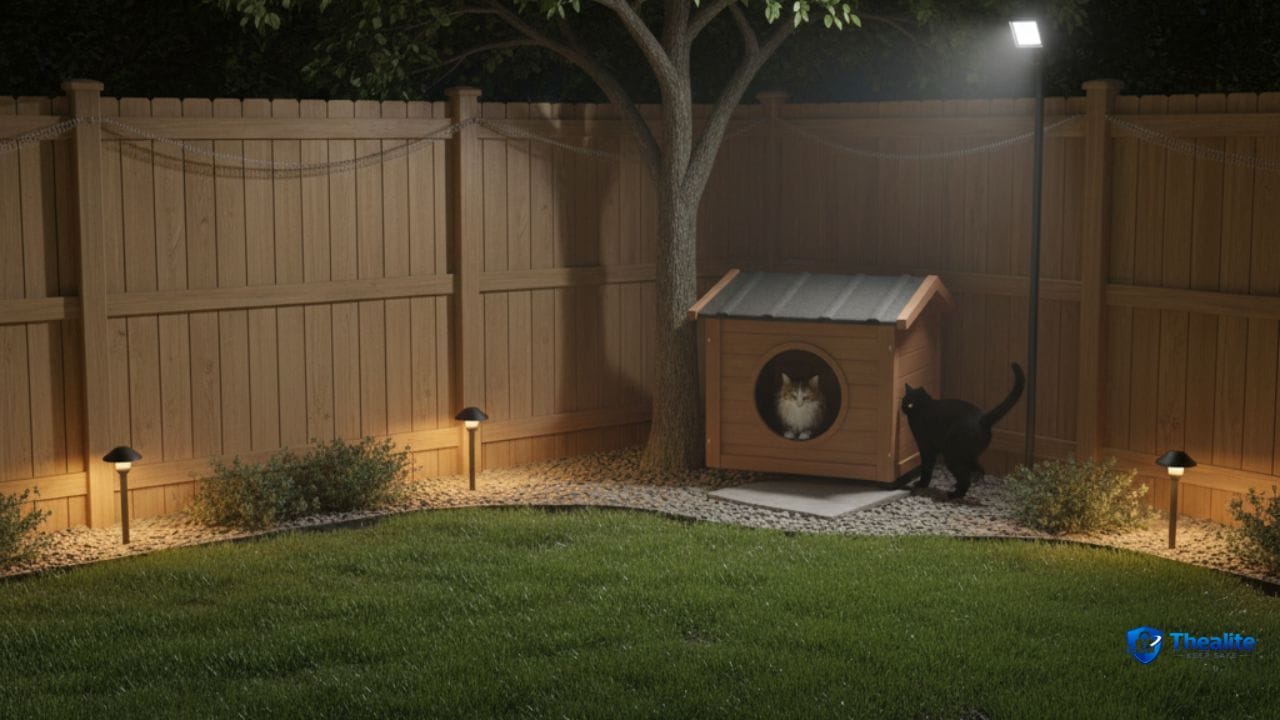
Nighttime is when outdoor cats face the highest risk. Visibility drops, traffic is harder to judge, and many predators (like coyotes, foxes, raccoons, owls, and stray dogs) become more active. Even in quiet neighborhoods, cats can get into fights, become trapped in sheds/garages, or simply wander farther than usual.
If you have an outdoor cat—or a cat that insists on time outside—your best protection is a system: a safer nighttime routine, a secure place to sleep, and smart deterrents that reduce predator and traffic risk. This guide is written for U.S. households and focuses on humane, practical steps that work in real life.
Related reading on your site: How to Keep Outdoor Cats Safe • How to Keep Pets Safe in Hot Weather • How to Keep Pets Safe During a Tornado
Quick Answer: The Safest Night Plan (If You Only Do 3 Things)
If you want the biggest safety improvement with the least effort, start here:
1) Bring your cat inside at night (or set a nightly curfew).
2) Provide a safe alternative: a secure catio or predator-resistant shelter.
3) Reduce night risks around your home: remove food attractants, improve lighting, and lock down hiding spots predators use.
Most serious cat injuries happen at night. A curfew alone can dramatically reduce risk.
Why Nighttime Is More Dangerous for Outdoor Cats
Outdoor cats are capable and adaptable, but the night shifts the odds:
• Predators hunt more actively after dark.
• Drivers have less time to react.
• Cats may roam farther when it’s cooler and quieter.
• Fights with other cats or wildlife are more likely.
• It’s harder for you to see trouble early (injuries, limping, dehydration).
Step 1: Set a Night Curfew (The #1 Cat Safety Upgrade)
If your cat has outdoor access, the simplest way to keep them safe at night is a consistent curfew—for example, outdoors during daylight hours and indoors from dusk to dawn.
How to make a curfew work (without a daily battle)
- Feed dinner at the same time each evening, ideally 30–60 minutes before dusk.
- Use a consistent “call-in” cue (treat bag sound, whistle, or phrase).
- Reward coming inside with something your cat loves (wet food, a toy, brushing).
- Keep the indoor environment enriching (window perch, scratching post, play session).
- If your cat is stubborn, start with “inside by full dark” and gradually move earlier.
If your cat slips out occasionally, don’t give up. Consistency builds habit.
Step 2: Use a Safer Outdoor Option (Catio or Enclosed Run)
If your cat truly needs outdoor time, a catio (cat patio) or enclosed run gives fresh air and stimulation with far less risk. This is one of the best long-term solutions for night safety because it reduces predation and traffic risk dramatically.
Catio safety essentials
- Use sturdy framing and strong mesh (small openings so paws and predators can’t reach through).
- Secure the roof (hawks/owls can target cats).
- Anchor it to the house or ground so it can’t be pushed or lifted.
- Include a weather-protected sleeping area (shade + wind/rain protection).
- Use a double-door entry if possible to prevent escape.
Step 3: Predator-Proof Your Yard Around ‘Cat Zones’
Predators are drawn to easy meals and quiet hiding places. You can’t control everything, but you can make your property less attractive—especially near where your cat sleeps or hangs out.
Reduce predator attractants
- Don’t leave pet food outside overnight (it attracts raccoons, skunks, rodents, and then predators).
- Secure trash cans with tight lids.
- Clean up fallen fruit and bird seed spills (rodents attract larger predators).
- Keep compost covered and tidy.
Make hiding harder
- Keep grass trimmed and remove brush piles.
- Trim shrubs so you can see underneath (raise the canopy).
- Store wood piles and scrap materials off the ground.
- Seal gaps under sheds/decks where predators can den (hardware cloth helps).
If predators are a known issue in your area, you may also like How to Keep Barn Cats Safe From Coyotes and How to Keep Snakes Out of Your Yard Safe for Pets.
Step 4: Provide a Safe Night Shelter (If Your Cat Must Stay Outside)
The safest choice is indoors at night. But if you’re caring for a community cat, barn cat, or a cat that cannot safely be indoors yet, a proper shelter is essential.
What a good outdoor cat night shelter needs
- Insulation (especially in winter) and ventilation (to prevent moisture buildup).
- A small entrance (reduces wind and makes predators less likely to enter).
- A dry, elevated base (off the ground to reduce dampness).
- A waterproof roof and wind protection.
- Placement in a quiet spot near the home—not deep in brush.
Bedding tips
Choose bedding that stays warm even if it gets slightly damp. Avoid materials that hold moisture. Replace bedding regularly and keep the shelter clean.
Cold and heat safety
Extreme temperatures increase nighttime danger. In cold snaps, cats can suffer hypothermia or frostbite. In heat waves, dehydration can become serious—even at night.
Related: How to Keep Pets Safe in Hot Weather (heat safety tips that apply to cats too).
Step 5: Improve Visibility and ID (So Your Cat Comes Home)
Even if you do everything right, cats can slip out, get spooked, or wander. Identification and visibility improve the odds of a safe return.
Must-have ID basics
- Microchip (and keep the registration updated).
- Breakaway collar with ID tag (never a non-breakaway collar outdoors).
- Consider reflective material on the collar for better visibility.
A microchip is not a GPS, but it’s a powerful safety net if someone finds your cat and takes them to a shelter or vet.
Step 6: Build a “Return Home” Routine
Cats are routine-driven. You can use that to keep them safer. The goal is to make ‘home at night’ feel automatic.
- Evening play session: 10–15 minutes of hunting-style play, then dinner.
- Call-in cue: same sound and same time daily.
- Create a comfortable indoor sleeping spot (warm, quiet, familiar scent).
- Avoid scolding when they come back late—reward the return so they repeat it.
Step 7: Know the Biggest Night Hazards (and How to Reduce Each)
Traffic
- Keep cats indoors at night and early morning (peak low-visibility times).
- Avoid letting cats out near high-speed roads—use an enclosed run instead.
- Use reflective collars if outdoor time happens near dusk.
Predator encounters
- Remove food attractants and reduce rodent activity.
- Keep cat areas close to the home and well-lit.
- Bring cats in before dusk; predators are most active then.
Fights and disease exposure
- Spay/neuter reduces roaming and fighting in many cats.
- Stay current on vaccines and parasite prevention (ask your vet).
- Avoid shared feeding stations that draw multiple animals at night.
Traps and accidental lock-ins
- Check garages/sheds before closing doors.
- Ask neighbors to check before shutting storage buildings if your cat roams.
- Create an accessible “home base” shelter so the cat isn’t tempted to hide elsewhere.
Step 8: Emergency Plan (If Your Cat Doesn’t Come Home)
If your cat misses curfew, act quickly but calmly. Most cats hide nearby at first.
What to do the first night
- Search quietly with a flashlight (eyes can reflect).
- Call softly and listen—avoid loud yelling that can spook them.
- Leave familiar scent outside (their blanket or bed).
- Put food inside near the door, not outside (outside food can attract wildlife).
- Check under decks, porches, bushes, and nearby hiding spots.
Next steps if 24–48 hours pass
- Contact local shelters and vets; provide a photo and microchip info.
- Post in local neighborhood groups and lost pet networks.
- Set up a humane cat trap if appropriate (especially for shy cats).
Common Mistakes to Avoid
- Leaving food outside overnight (draws wildlife and predators).
- Assuming a collar is enough—use microchipping too.
- Using non-breakaway collars outdoors (safety risk).
- Letting cats roam freely at night because “they’re used to it.” Night is the highest-risk window.
- Placing shelters deep in brush where predators can hide nearby.
Night Safety Checklist (Copy/Paste)
- Set a nightly curfew: indoors from dusk to dawn
- Feed dinner before dusk + use a consistent call-in cue
- Provide enrichment indoors so curfew is easier
- If outdoor time is needed: use a catio/enclosed run
- Remove attractants: no food outside overnight, secure trash, clean bird seed
- Reduce hiding spots: trim grass, remove brush piles, seal gaps under sheds/decks
- ID protection: microchip + breakaway collar + tag (reflective preferred)
- Have an emergency plan if your cat doesn’t come home
FAQs
Is it safe for cats to be outside at night?
Nighttime is the highest-risk period for outdoor cats due to predators, traffic visibility, and fights. A nightly curfew (indoors at night) is one of the most effective safety steps.
What if my cat refuses to come inside at night?
Start with a consistent routine: play, dinner, and a call-in cue before dusk. Reward coming inside. If needed, gradually shift earlier. For stubborn cats, an enclosed catio/run can provide a safer nighttime option.
Do reflective collars help?
They can improve visibility to drivers and help you spot your cat with a flashlight. Use a breakaway collar for safety.
How can I protect my cat from coyotes?
Bring cats inside before dusk, remove food attractants, reduce hiding spots near the home, and consider a catio or secure fenced zone. Coyotes are most active at dawn, dusk, and night.
Should outdoor cats be microchipped?
Yes. A microchip is one of the most reliable ways to reunite you with your cat if they’re found and taken to a vet or shelter.
Conclusion
To keep outdoor cats safe at night, focus on reducing the two biggest risks: predators and low-visibility hazards. A nightly curfew (indoors from dusk to dawn) is the single best step. If your cat must be outside, provide a secure shelter or—better yet—a catio or enclosed run. Combine that with smart yard habits (no food outside overnight, fewer hiding spots, solid ID), and you’ll dramatically improve your cat’s odds of staying safe and coming home.

As a digital marketer, she has received multiple international awards, including Campaign of the Year at the 2023 European Content Awards and Best Use of Content Marketing at the 2022 Global Search Awards. Nicai holds an MSc in Marketing (First Class Honours) from the UCD Smurfit Graduate Business School and she has also completed the Artificial Intelligence Programme at Oxford University’s Saïd Business School. She is also a contributing writer for publications such as Entrepreneur and Esquire.