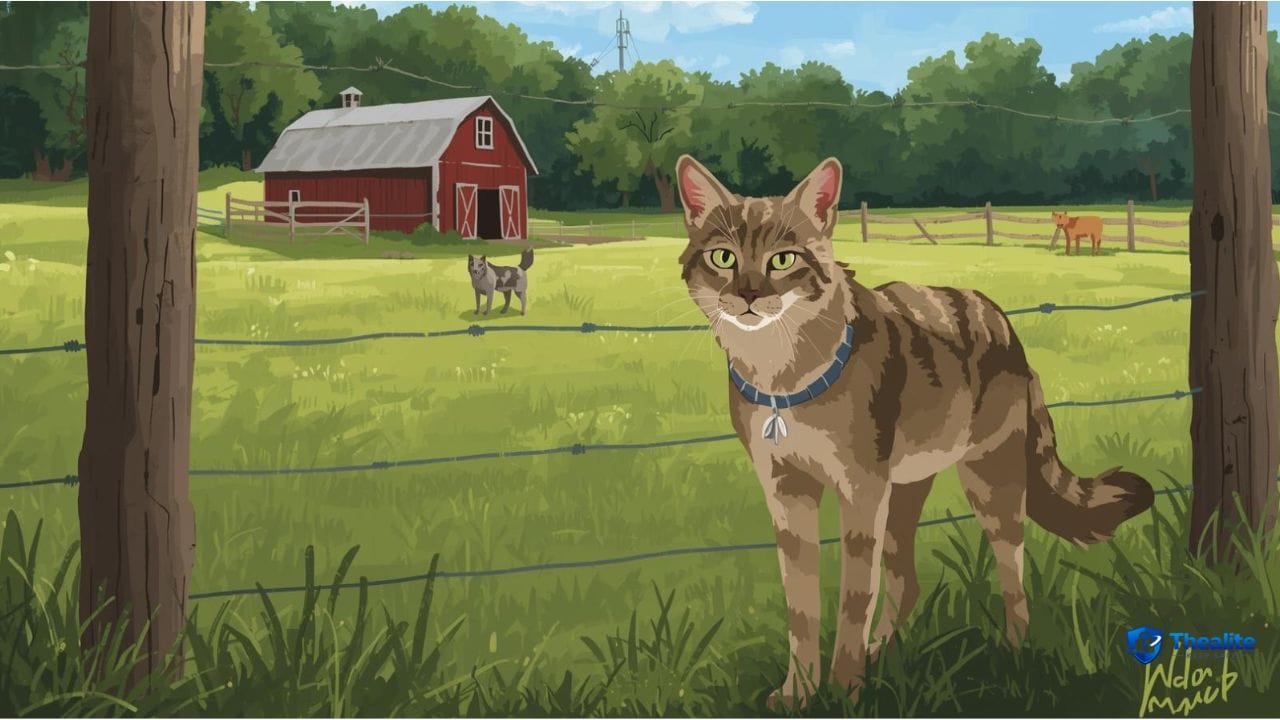
Barn cats can be great mousers, but living outdoors (or semi‑outdoors) also puts them on the menu for predators—especially coyotes. Coyotes are common across much of the United States and they’re opportunistic hunters. That means a “working cat” setup needs more than a bowl of food and a warm corner in the hay.
This guide explains practical, humane steps to reduce risk. You’ll learn what attracts coyotes, what times are most dangerous, how to build a safer nightly routine, and how to create a secure shelter so your cats can still do their job—without becoming prey.
Related reading on your site: How to Keep Outdoor Cats Safe (general outdoor cat safety).
Why Coyotes Target Barn Cats
Coyotes don’t need a “reason” to take a cat—if the opportunity is easy, they may try. The biggest risk factors usually include:
- Cats roaming at dusk, night, and dawn (peak coyote activity).
- Food left out overnight (attracts coyotes and rodents—which also attract coyotes).
- Cats sleeping in open areas or poorly secured sheds.
- Dense brush or tall grass nearby (gives coyotes cover).
- Small cats/kittens, senior cats, or cats that are sick/injured.
When Barn Cats Are Most At Risk
Coyotes can be active any time, but attacks on small animals are most common during low-light hours. If your cats are out roaming freely overnight, risk increases dramatically.
The #1 Strategy: Nighttime Containment (Secure Them at Night)
The most effective way to protect barn cats from coyotes is simple: bring them into a secure enclosure from dusk to dawn. You can still keep them as barn cats—they can roam during daylight hours and work the property, then sleep safely at night.
What “secure” means for a barn cat enclosure
- Four solid walls (wood/metal), a roof, and a locking door.
- No large gaps: use 1/2″ hardware cloth (not chicken wire) over vents/windows.
- A floor that prevents digging in (concrete, wood floor, or buried wire apron).
- Safe interior: bedding, litter area, water, and elevated shelves/perches.
Simple option: convert a tack room or feed room corner
Many farms already have a small room that can be converted with minimal work: reinforce vents, add a solid door latch, and add shelves so cats feel secure and choose it as a sleep spot.
Build a Coyote-Resistant Barn Cat Shelter (Day & Night)
Even if your cats roam during the day, they should have a shelter they can retreat to quickly. A good shelter reduces exposure and gives you an anchor point for feeding and routine.
Shelter features that help
- Two exits (so a cat isn’t trapped if a predator blocks one entrance).
- Raised entry or short tunnel entrance (reduces direct line-of-sight).
- Weatherproof insulation and straw bedding (avoid loose fabric that stays damp).
- Elevated resting areas (cats feel safer above ground).
Feeding Rules That Reduce Predators
Feeding routines can either protect cats or attract coyotes. Food left out overnight is one of the biggest mistakes because it creates a predictable “restaurant.” Even if coyotes aren’t hungry, they may show up and opportunistically attack.
Best feeding routine for barn cats
- Feed during daylight (morning/late afternoon), not at night.
- Pick up bowls after 20–30 minutes.
- Store food in sealed metal/plastic bins with tight lids.
- Clean spilled food and reduce rodent activity around feed storage.
Lighting, Noise, and Human Activity
Coyotes prefer to avoid people. Smart lighting and occasional activity can push them away from barns and cat areas.
Practical deterrents that often help
- Motion-activated flood lights near barns, coops, and feeding areas.
- Motion-activated sprinklers (season/weather dependent).
- Radio or occasional human noise near high-risk spots (not constant, or coyotes adapt).
- Keep brush trimmed and remove hiding cover near buildings.
Fencing: What Works (and What Usually Doesn’t)
Fencing can help, but only if it’s designed for coyotes. Coyotes can jump, climb, and squeeze through gaps. A basic livestock fence might slow them down—but won’t reliably protect cats.
If you’re fencing a cat-safe yard/run
- Aim for 6 feet or taller fencing, with a coyote roller or outward overhang on top.
- Use tight mesh (hardware cloth or welded wire) near the bottom to prevent squeezing through.
- Add a buried apron or dig barrier to reduce digging under the fence.
- Keep gates tightly latched; gaps at gates are common failure points.
Guardian Animals: Helpful, But Not a Magic Shield
Some farms use guardian dogs, donkeys, or llamas to deter predators. These can reduce coyote presence, but they’re not guaranteed protection for cats—and some guardian animals may chase cats. If you use guardian animals, the cats still need a secure night enclosure.
Ways to improve success with guardian animals
- Choose animals with known compatibility around cats.
- Provide separate feeding spaces so cats aren’t competing.
- Maintain a routine so cats know where to retreat safely.
How to Train Barn Cats to Use the Safe Shelter
Barn cats won’t automatically choose the safest spot—you have to make it the most rewarding. Training is mostly routine: feed near the shelter, then feed inside, then close them in overnight.
A simple 2–3 week routine
- Week 1: Feed near the shelter at consistent times. Keep the shelter door open.
- Week 2: Feed inside the shelter. Add soft bedding and elevated shelves.
- Week 3: Close cats in at dusk, release at sunrise. Keep it consistent.
Pro tip: use the same sound cue (shaking a treat container) so they come when called.
Extra Safety Steps for Kittens and Smaller Cats
Kittens and small cats are at higher risk and should not free-roam at night—period. If you’re raising kittens into barn cats, plan for a secure transition space.
- Use a fully enclosed “training pen” or catio-style run.
- Spay/neuter (reduces roaming, fighting, and risky wandering).
- Keep kittens inside overnight even after they start exploring.
Common Mistakes That Increase Risk
- Leaving food out all night (invites coyotes and other wildlife).
- Assuming ‘a big barn’ is secure (barns often have gaps and open loft access).
- Letting cats roam overnight because they “want to” (cats can’t out-run or out-fight a coyote).
- Not trimming brush/cover near barns and fence lines.
- Storing trash or compost near cat areas (attracts wildlife).
What to Do If You See a Coyote Near Your Barn
A sighting doesn’t mean an attack is guaranteed, but it’s a signal to tighten your routine immediately.
Immediate steps
- Bring cats into the secure enclosure before dusk.
- Remove pet food and clean up any scraps.
- Turn on motion lighting and check camera/monitoring if you have it.
- Haze coyotes if safe and legal in your area (loud noise, bright light, firm presence—never approach closely).
- Document repeated sightings and contact local animal control or wildlife agency if coyotes are bold/aggressive.
Health & Tracking: Make Cats Easier to Protect
The healthier and more predictable your cats are, the easier it is to keep them safe. Basic health care also reduces roaming and risk-taking.
- Spay/neuter to reduce roaming.
- Vaccinations appropriate to your region (ask a local vet).
- Consider breakaway collars with ID if safe for your setting (avoid snag risks), or microchip for permanent ID.
- Use routine feeding to keep cats close and easier to count nightly.
Quick Barn Cat Safety Checklist (Copy/Paste)
- Secure cats from dusk to dawn in a coyote-resistant enclosure
- Feed during daylight; remove bowls after meals
- Use motion lights near barns and feeding areas
- Trim brush and remove hiding cover close to buildings
- Provide a shelter with two exits + elevated perches
- Keep kittens inside overnight and use a training pen
- Track cats daily—know who is missing quickly
FAQs
Do coyotes really eat cats?
Yes. Coyotes are opportunistic and may prey on outdoor cats, especially at night or during dawn/dusk. Reducing nighttime roaming and removing food attractants are key.
What is the best way to protect barn cats at night?
Bring them into a secure enclosure from dusk to dawn. That single change usually reduces risk more than any deterrent alone.
Will motion lights keep coyotes away?
They can help, especially combined with removing food and adding secure shelter. But coyotes can adapt, so lighting should be one layer—not the only one.
Can I use chicken wire to secure a cat shelter?
Chicken wire is not strong enough to keep predators out. Use hardware cloth or welded wire for openings and vents.
Should I stop having barn cats because of coyotes?
Not necessarily. Many farms safely keep barn cats by using secure nighttime housing, smart feeding routines, and habitat management to reduce predator opportunities.
Conclusion
Barn cats can live safer lives with a few changes: reduce overnight roaming, remove food attractants, and give them a secure place to sleep. Think in layers—secure night housing, smart feeding, lighting, habitat cleanup, and routine. Coyotes may still pass through, but your cats won’t be easy targets.
More related resources on your site: How to Keep Outdoor Cats Safe • How to Keep Pets Safe in Hot Weather • How to Keep Pets Safe During a Tornado

As a digital marketer, she has received multiple international awards, including Campaign of the Year at the 2023 European Content Awards and Best Use of Content Marketing at the 2022 Global Search Awards. Nicai holds an MSc in Marketing (First Class Honours) from the UCD Smurfit Graduate Business School and she has also completed the Artificial Intelligence Programme at Oxford University’s Saïd Business School. She is also a contributing writer for publications such as Entrepreneur and Esquire.