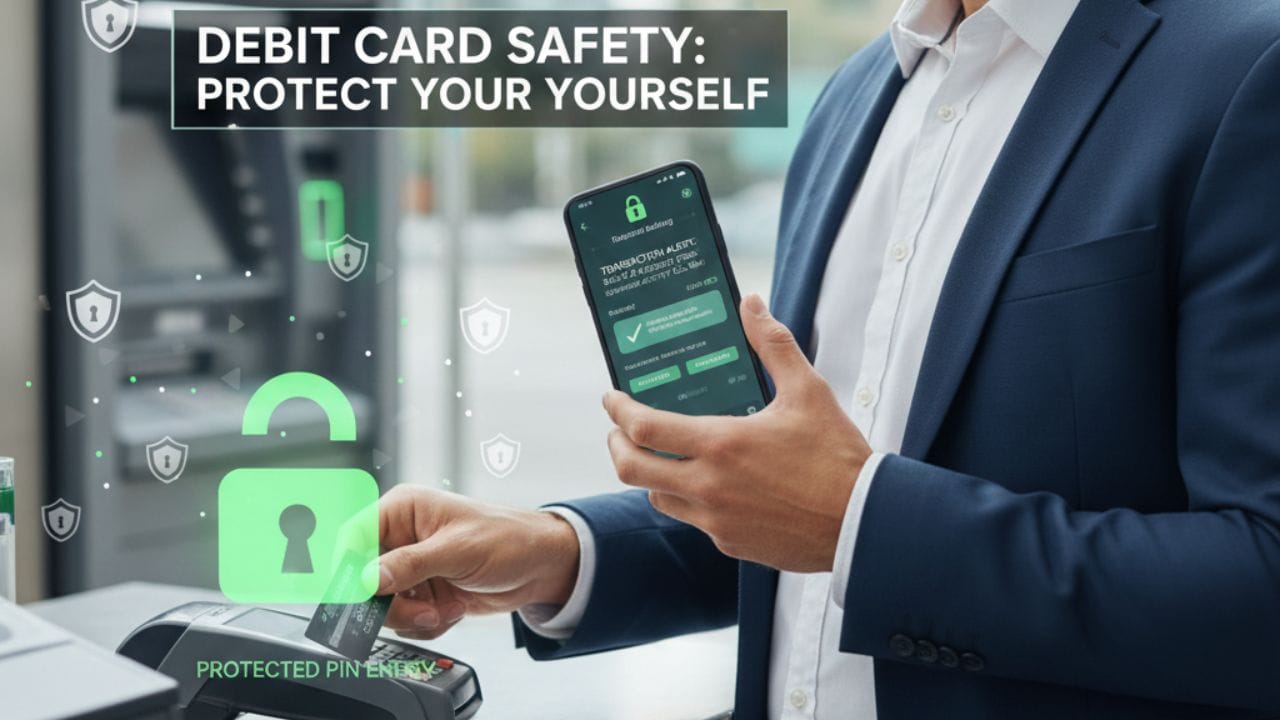
Debit cards are convenient, but they come with one big downside: they pull money directly from your bank account. That means if someone steals your card details (or your PIN), they can drain funds fast—and your rent, groceries, and bills can be affected immediately.
The goal isn’t to live in fear. It’s to build a few smart habits that make fraud much harder and help you respond quickly if something happens. This guide covers the most practical ways to keep your debit card safe in the U.S., including ATM skimmer protection, online shopping, travel, and the exact steps to take if your card is lost or compromised.
Why Debit Card Safety Matters More Than Credit Card Safety
When a credit card is compromised, you’re usually dealing with a credit line. When a debit card is compromised, you’re dealing with your actual cash. Even if your bank refunds fraud, the time between the loss and the refund can be stressful. So debit card protection is about minimizing two risks:
• Preventing unauthorized transactions in the first place
• Detecting and stopping fraud quickly so the damage is limited
The 3 Biggest Ways Debit Cards Get Compromised
Most debit card fraud comes from a few predictable scenarios:
1) Skimmers at ATMs or gas pumps
A skimmer is a device that captures card data when you insert or swipe. Sometimes criminals also add a tiny camera or fake keypad overlay to capture your PIN.
2) Online breaches or phishing
If you enter your debit card on a compromised site, click a fake bank message, or get tricked into sharing details, criminals can use your info quickly.
3) Physical theft (wallet, purse, or phone wallet)
A stolen wallet can turn into a bank account problem—especially if your PIN is easy to guess or stored with your card.
Everyday Habits That Keep Your Debit Card Safe
1) Keep your debit card separate from your ‘identity kit’
If possible, don’t carry everything together (debit card, ID, and a list of passwords/PIN hints). If your wallet gets stolen, separating items reduces how much a thief can do immediately.
2) Use a strong, unique PIN (and never write it down in your wallet)
Avoid PINs that are easy to guess (birthdays, 1234, address numbers). Use a unique PIN you don’t reuse elsewhere. If you must store it, store it in a secure password manager—not in notes or a photo.
3) Turn on bank alerts (this is huge)
Set alerts for transactions, low balance, and login attempts. Fast detection is one of the best protections because you can freeze the card immediately.
4) Treat your email as the ‘master key’ to your bank
If someone gets into your email, they can often reset bank passwords. Protect email with a strong password and two-factor authentication.
Internal reading that supports this: How to Keep Your Password Safe • How to Keep Passwords Safe • Keep Bank Account Safe Online • Keep Personal Information Safe Online
ATM Safety: How to Avoid Skimmers and Shoulder-Surfing
ATMs are still one of the biggest risk points for debit cards because they can involve both card data and your PIN.
Before you insert your card, do a 10-second check
- Wiggle the card reader: loose or bulky attachments can indicate a skimmer.
- Look for anything unusual on the keypad (raised overlays, sticky residue).
- Check for suspicious cameras aimed at the keypad area.
- If anything feels ‘off,’ use another ATM—preferably inside a bank branch.
Cover the keypad every time
Even without a skimmer, someone can watch you enter your PIN. Use your hand and body to block the keypad.
Use safer locations
- Prefer ATMs inside bank branches or well-lit, monitored locations.
- Avoid isolated ATMs late at night when possible.
- Be extra cautious at tourist areas and busy convenience stores.
Gas Station & Retail Card Readers: Tap When You Can
Skimmers also show up at gas pumps and older card terminals. A simple way to reduce risk: use contactless tap-to-pay when available.
- Use tap-to-pay (or mobile wallet) instead of swipe when possible.
- At gas stations, choose pumps closest to the store entrance if you must insert/swipe.
- If the pump looks tampered with, go inside and pay at the counter.
Online Shopping: How to Use Your Debit Card Safely
Online fraud happens when card details are stolen or you’re tricked into paying on fake sites. Reduce risk with these habits:
Best practices for online debit card use
- Avoid entering your debit card on unfamiliar sites—use a credit card or payment service when possible.
- Use strong account passwords and enable 2FA on shopping accounts.
- Don’t click login links from texts/emails—type the website yourself.
- Use secure Wi‑Fi; avoid making purchases on public Wi‑Fi without a VPN.
Helpful related guides: How to Keep Your Identity Safe Online • How to Keep Data Safe and Secure • Keep Phone Safe From Hackers
Travel Safety: How to Protect Your Debit Card Away From Home
Travel increases risk because you use unfamiliar ATMs, you’re distracted, and you may carry more than usual.
- Carry one debit card and keep a backup payment method separate.
- Use bank ATMs rather than standalone tourist-area ATMs when you can.
- If you’ll withdraw cash, do it in daylight and store cash discreetly.
Related internal travel safety: How to Keep Money Safe When Traveling • Keep Passport Safe While Traveling • How to Keep Phone Safe From Pickpockets
What to Do If Your Debit Card Is Lost or Stolen
Speed matters. The faster you act, the less likely you are to lose money or deal with cascading account problems.
Step-by-step (do this immediately)
- Lock/freeze the card in your banking app (if available) or call the number on your bank’s website.
- Report the card as lost/stolen and request a replacement.
- Review recent transactions and dispute anything you don’t recognize.
- Change your online banking password (and your email password if you suspect compromise).
- If your phone was stolen too, secure your phone account and change key passwords fast.
If your PIN may be compromised
Change the PIN immediately. If you used the same PIN elsewhere (e.g., another card), change those too.
If money is missing from your account
Ask the bank about provisional credit and the dispute process. Keep records: dates, transaction IDs, and who you spoke with.
Extra Protection Options (Worth It for Many People)
These aren’t required, but they can reduce headaches:
- Keep a small ‘spending’ account and limit the balance on the debit card account.
- Use a credit card for online purchases and reserve debit for ATM withdrawals only.
- Enable biometric login in your banking app (Face ID/Touch ID).
- Set daily spending/withdrawal limits if your bank allows it.
Common Mistakes to Avoid
- Using your debit card on unfamiliar websites or sketchy checkout pages.
- Ignoring bank alerts or leaving them turned off.
- Using an easy PIN or storing your PIN with the card.
- Withdrawing cash from isolated ATMs late at night.
- Handing your card to someone out of sight (always keep it in view).
Quick Debit Card Safety Checklist (Copy/Paste)
- Use a strong unique PIN; never store it with the card
- Turn on transaction + login alerts
- Tap to pay when possible; avoid swiping at older terminals
- Use bank-branch ATMs; cover the keypad
- Avoid public Wi‑Fi for banking; don’t click login links in messages
- Freeze card immediately if lost; change banking + email passwords
FAQs
Is it safe to use a debit card online?
It can be, but it’s riskier than using a credit card because debit pulls directly from your bank balance. If you must use debit online, stick to reputable sites, enable alerts, and avoid public Wi‑Fi.
What is the safest way to use an ATM?
Use an ATM inside a bank branch when possible, check for tampering, and always cover the keypad while entering your PIN.
Should I keep my debit card in my wallet?
Yes, but avoid carrying extra cards and avoid storing any PIN reminders with it. If possible, keep a backup payment method separate from your wallet.
What should I do first if my debit card is stolen?
Freeze the card immediately using your bank app or by calling your bank, then review transactions and change your online banking password.
Can someone steal my money with just my debit card number?
They may be able to attempt online purchases, especially if they also have security details. That’s why monitoring transactions and using alerts is important.
Conclusion
Keeping your debit card safe comes down to a few high-impact habits: protect your PIN, avoid skimmers, use safer payment methods online, turn on alerts, and act fast if anything feels wrong. Debit card fraud is common—but with the right routine, you can make yourself a much harder target and limit damage if something does happen.
More helpful internal resources: How to Keep Your Money Safe • How to Keep Money Safe at Home • How to Keep Important Documents Safe at Home

As a digital marketer, she has received multiple international awards, including Campaign of the Year at the 2023 European Content Awards and Best Use of Content Marketing at the 2022 Global Search Awards. Nicai holds an MSc in Marketing (First Class Honours) from the UCD Smurfit Graduate Business School and she has also completed the Artificial Intelligence Programme at Oxford University’s Saïd Business School. She is also a contributing writer for publications such as Entrepreneur and Esquire.