To keep important documents safe at home, store originals in a secure, protected place (ideally a fire-resistant safe), protect them from water and humidity, and create secure digital backups. The goal is simple: prevent loss from theft, fire, flooding, and everyday damage—while still being able to access what you need quickly.
What Counts as “Important Documents”?
Start by listing what you truly need to protect. Common examples include:
- Birth certificates, Social Security cards, passports
- Marriage/divorce papers, custody documents
- Property deeds, mortgage paperwork, car titles
- Insurance policies, wills, medical directives
- Tax returns and key financial statements
- Business documents (licenses, contracts)
Step 1: Separate Originals From “Everyday Use” Copies
Not every document needs to be handled weekly. Keep originals protected and use copies for daily tasks when possible.
Simple system:
- Originals: locked and protected
- Working copies: easy-to-reach folder
- Digital backups: stored securely
Step 2: Use the Right Storage (Safe vs Lockbox vs File Cabinet)
Best option: fire-resistant safe
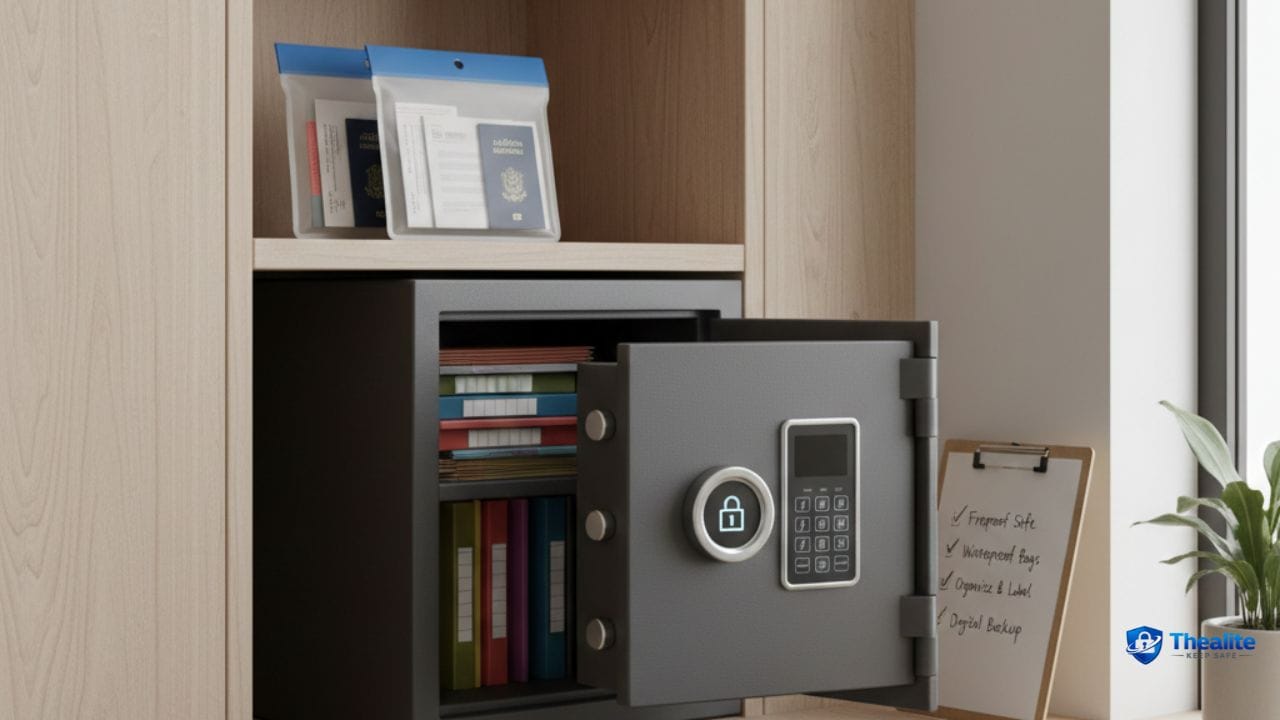
A fire-resistant safe protects against fire and basic theft. If you can, choose a safe that can be bolted down. A safe that can be carried away isn’t ideal.
Good option: locking fire-resistant document bag/box
A fire-resistant document bag or lockbox is helpful if you need portability. It’s better than a drawer, but not as strong as a bolted safe.
Okay for organization (not true protection): file cabinet
A file cabinet is good for organizing, but it usually won’t protect you from fire or serious theft. Use it for copies, not your most important originals.
Step 3: Protect Documents From Water and Humidity
Water damage is more common than people think: floods, burst pipes, roof leaks, and humidity. Paper can warp, ink can bleed, and mold can form.
Practical protection:
- Use zip pouches or sealed document sleeves inside your safe/box.
- Keep storage off the floor (especially in basements).
- Avoid storing documents in humid bathrooms or damp basements.
- Use moisture control inside a safe if you live in a humid area.
Helpful: what can I put in my safe to keep moisture out.
Step 4: Make Secure Digital Backups (So You’re Not Stuck)
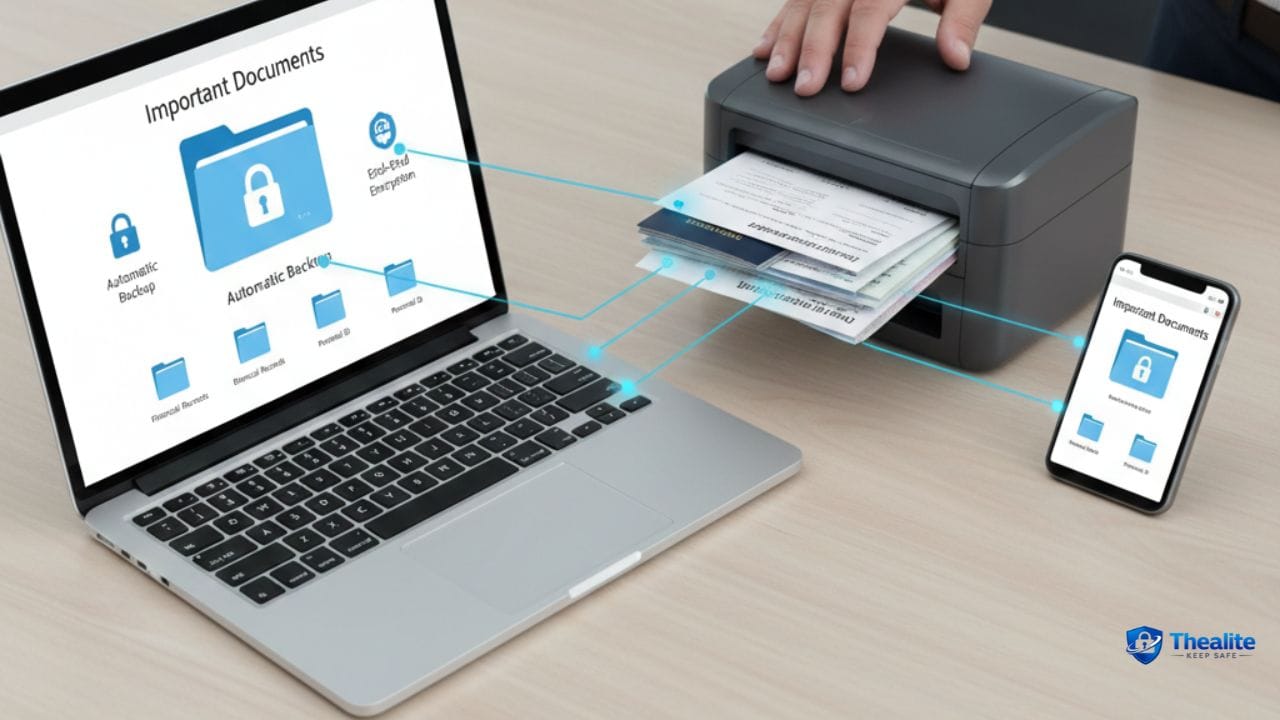
Even if your originals are protected, backups make life easier. A digital copy helps you replace documents faster after loss.
Keep digital backups safe by doing this:
- Scan or photograph documents clearly (front and back if needed).
- Name files in a simple way (e.g., “Passport_Alex_2026”).
- Store them in a secure location with strong passwords and 2FA.
- Keep at least one backup that’s separate from your main device.
Full guide: how to keep important documents safe online.
Step 5: Don’t Keep Everything in One Place
Keeping everything together is convenient, but it increases the impact of a single event (theft, fire, flood). You can reduce risk by splitting storage.
A simple split:
- Home safe: most originals
- Go-bag folder: a few must-grab documents (or a list)
- Secure digital backup: scanned copies
Step 6: Create a “Grab in 60 Seconds” Plan
In an emergency, you won’t have time to think. Create a short checklist now.
Include:
- Where the safe key/code is stored (securely)
- Which items you would grab first
- A list of critical phone numbers (insurance, bank, doctor)
- A reminder that digital backups exist
Step 7: Update Once a Year (It’s Quick)
Document storage fails when it gets outdated. Set a yearly refresh: remove old papers, add new insurance pages, and update contact info.
Good times to update: after tax season, moving, marriage, divorce, new baby, or buying a home.
Common Mistakes to Avoid
- Keeping originals in a drawer, closet, or shoebox
- Storing documents on the floor in a basement
- No digital backups (or backups saved only on one phone)
- Keeping the safe key/code in an obvious place
- Mixing originals with everyday papers (hard to find fast)
FAQs
Where is the safest place to keep important documents at home?
A bolted-down, fire-resistant safe in a discreet location is one of the safest options for most households.
Should I keep documents in plastic sleeves?
Yes. Sleeves or sealed bags help protect against water and humidity, especially inside a safe.
Do I need to keep originals of everything?
Not always. Some items can be replaced easily, but core identity documents and ownership papers usually should be stored as originals.
Is it better to keep documents at home or online?
Best is both: originals protected at home, plus secure digital backups for fast recovery.
More “Keep Safe” Guides
For related safety planning, read how to keep cash safe at home. Explore more topics at Thealite Keep Safe.

As a digital marketer, she has received multiple international awards, including Campaign of the Year at the 2023 European Content Awards and Best Use of Content Marketing at the 2022 Global Search Awards. Nicai holds an MSc in Marketing (First Class Honours) from the UCD Smurfit Graduate Business School and she has also completed the Artificial Intelligence Programme at Oxford University’s Saïd Business School. She is also a contributing writer for publications such as Entrepreneur and Esquire.