To keep cash safe at home, use a layered approach: store most of it in a bolted-down home safe, keep a smaller “easy access” amount in a separate spot, and protect the cash from moisture, fire, and curious visitors. Most cash losses happen because people hide money in obvious places (drawer, closet, under mattress) or store it where it can get wet or burned.
How Much Cash Should You Keep at Home?
For many households, a small emergency cash reserve can be useful for power outages, card network issues, or urgent needs. The best amount depends on your situation, but the key is not keeping more at home than you can afford to lose.
If you’re keeping large amounts, consider spreading risk: some at home for emergencies, and the rest in insured bank accounts.
Related: Is it safe to keep money in checking account.
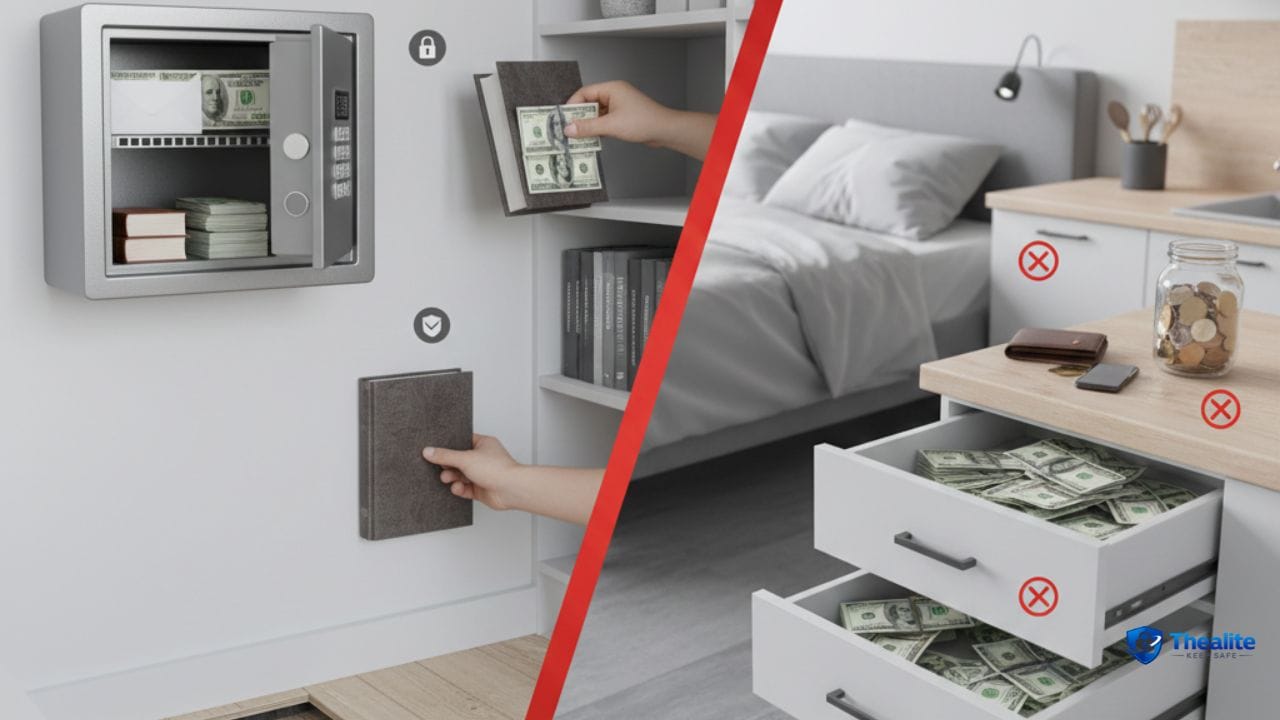
1) Use a Real Home Safe (Best Protection)
A home safe is the best option for keeping cash safe—if it’s installed correctly. If a thief can carry it, they will.
Safe tips that matter:
- Choose a safe that can be bolted to the floor or a wall stud.
- Pick a discreet location (not the first closet shelf thieves check).
- Use a strong code and don’t share it widely.
- Don’t keep all cash in one envelope—separate it inside the safe.
2) Avoid Common Hiding Spots (Thieves Check These First)
If you hide cash instead of using a safe, avoid the obvious spots:
- Under the mattress or in pillowcases
- Sock/underwear drawers
- Nightstands and dresser tops
- Kitchen jars and pantry boxes
- Freezer, fridge, or cereal boxes
- Closet shoe boxes
3) Split Your Cash (Don’t Keep Everything Together)
One easy way to reduce risk is to split your cash into two or three separate locations.
Simple split that works:
- Emergency cash: small amount, quick access
- Reserve cash: larger amount, locked in a bolted safe
- Travel cash (if needed): packed later, not stored long-term
4) Protect Cash From Moisture (Prevent Mold and Damage)
Cash can absorb moisture, grow mold, or get damaged in humid areas. If you store cash in a safe, add moisture protection.
Practical moisture protection:
- Put cash in a sealed envelope or zip bag inside the safe.
- Add desiccant packs or a rechargeable silica canister.
- Keep the safe off bare concrete (use a barrier/platform).
Helpful: What can I put in my safe to keep moisture out.
5) Think About Fire Risk (Cash Burns)
A burglary isn’t the only risk. Fire and water damage can destroy cash. If possible, choose a safe with fire resistance and keep cash in a protective pouch inside.
Tip: keep important documents stored safely too, so you can recover faster after emergencies.
6) Be Smart About Who Knows You Keep Cash
The fewer people who know about home cash storage, the safer it is. Loose talk and social media posts increase risk.
- Don’t mention cash storage casually.
- Avoid posting “vacation” updates while away.
- Secure cash before hosting gatherings or having workers in the home.
7) Build a Simple “Cash Plan”
Cash is only useful if it’s organized.
Easy plan:
- Keep small bills ($1, $5, $10, $20) so you can pay exactly.
- Store it in labeled envelopes (gas, food, emergency).
- Review it every 3–6 months to make sure it’s still there and in good condition.
What NOT to Do
- Don’t store cash in obvious drawers or jewelry boxes.
- Don’t keep all cash in one place.
- Don’t store cash in humid bathrooms, basements, or garages without moisture control.
- Don’t leave cash visible when guests or workers visit.
- Don’t forget where you hid it—use a secure private note system if needed.
FAQs
Is it safe to keep cash at home?
It can be, if you keep a reasonable amount, store it in a bolted-down safe, and protect it from fire and moisture. The risk is higher if cash is hidden in obvious places.
Where is the safest place to keep cash at home?
A bolted-down home safe in a discreet location is one of the safest options for most households.
How do I keep cash from molding?
Store cash in a sealed bag/envelope and use desiccant or a dehumidifier setup, especially in humid climates.
Should I keep all my savings as cash at home?
Most people are safer keeping the majority of savings in insured bank accounts and only a smaller emergency reserve at home.
More “Keep Safe” Guides
For more money protection tips, read how to keep your money safe. You can explore more topics at Thealite Keep Safe.

As a digital marketer, she has received multiple international awards, including Campaign of the Year at the 2023 European Content Awards and Best Use of Content Marketing at the 2022 Global Search Awards. Nicai holds an MSc in Marketing (First Class Honours) from the UCD Smurfit Graduate Business School and she has also completed the Artificial Intelligence Programme at Oxford University’s Saïd Business School. She is also a contributing writer for publications such as Entrepreneur and Esquire.