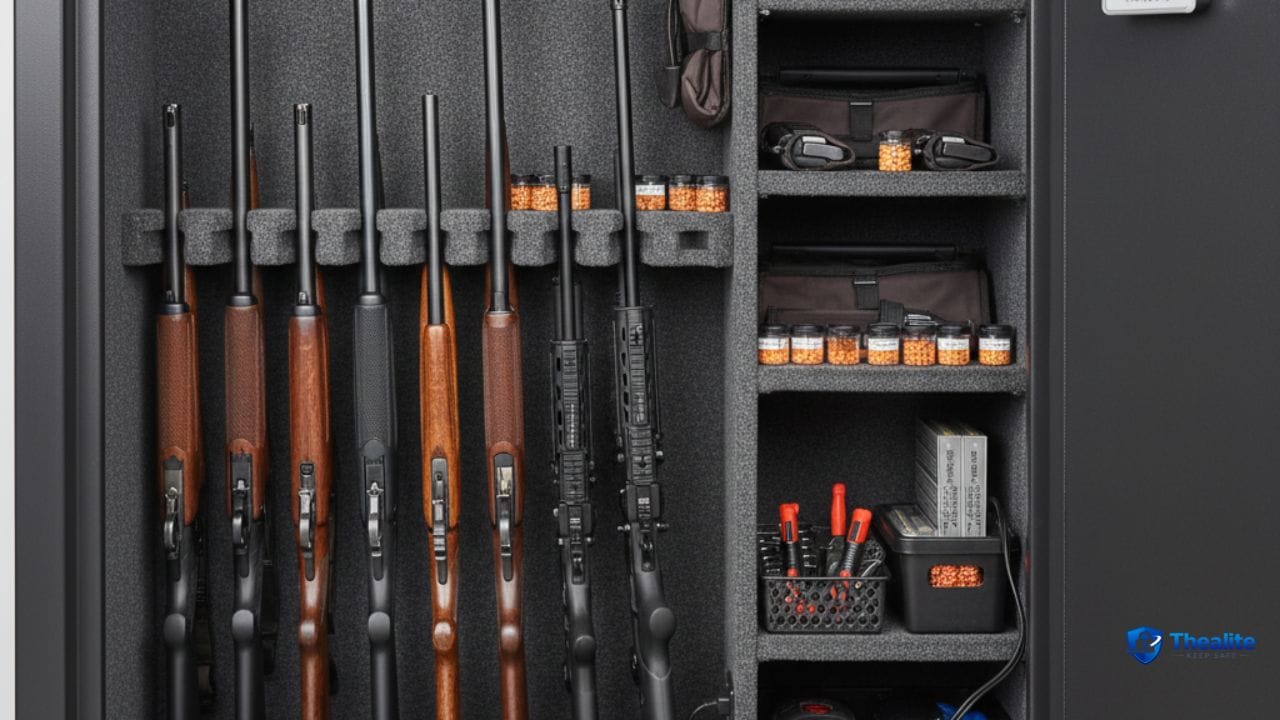
To keep moisture out of a gun safe, control humidity consistently. The most reliable setup is a safe dehumidifier rod (to prevent condensation) plus a rechargeable desiccant (to absorb moisture). Place the safe in a dry room, add a small hygrometer to monitor humidity, and avoid storing guns in foam cases that trap moisture.
Why Gun Safes Get Moisture
Most gun safes are not airtight. Humid air can move in and out through small gaps. When temperature changes, moisture can condense on cool metal, leading to rust.
Moisture problems are worse in basements, garages, and rooms with big temperature swings.
Target Humidity (What to Aim For)
Many gun owners aim to keep relative humidity in the safe around the low-to-mid range (often roughly under 50%). The key is consistency—big swings cause condensation.
A small hygrometer helps you know what’s happening instead of guessing.
Step 1: Choose the Right Moisture Control (Best Options)
Option A: Dehumidifier rod (safe heater)
A dehumidifier rod gently warms the air inside the safe. This prevents condensation from forming on metal surfaces.
- Install it low in the safe (warm air rises).
- Don’t block airflow around it.
- Use a safe location with a power outlet.
Option B: Desiccant (silica gel / rechargeable canister)
Desiccants absorb water vapor. They’re simple and effective.
- Use enough for your safe size (bigger safe = more desiccant).
- Place in multiple areas (lower shelf + corner).
- Recharge/replace on schedule—desiccant stops working when saturated.
Option C: Room dehumidifier (if your room is damp)
If the safe is in a basement or humid space, drying the room can make everything easier. A room dehumidifier reduces how much moisture the safe has to fight.
Best Combo for Most People
In humid climates, combining a dehumidifier rod + rechargeable desiccant is a strong, low-maintenance solution.
Step 2: Put the Safe in a Better Spot
Safe placement makes a huge difference.
- Avoid basements if they’re damp (or use a room dehumidifier).
- Keep the safe off bare concrete (use a barrier or platform).
- Avoid exterior walls where temperature swings are bigger.
- Keep the room temperature stable if possible.
Step 3: Avoid Moisture Traps Inside the Safe
Some storage habits trap humidity next to metal.
- Avoid long-term storage in foam cases or soft cases.
- Don’t store wet items (damp cloth, sweaty gear) inside the safe.
- Leave space between firearms for airflow.
- Use racks that don’t press metal tightly against fabric.
Step 4: Add Rust Prevention as Backup Protection
Humidity control is the main fix. But a light protective wipe helps, especially after handling.
- Wipe exterior metal with a light rust-preventive oil/protectant.
- Pay attention to fingerprint areas.
- Avoid over-oiling (it attracts dust).
Step 5: Monitor With a Hygrometer (So You Don’t Guess)
A small safe hygrometer shows you whether your setup is working. Check it weekly at first, then monthly once stable.
Common Mistakes That Cause Moisture in Gun Safes
- Assuming the safe is airtight
- Using desiccant but never recharging it
- Storing guns in foam cases inside the safe
- Placing the safe in a humid basement without a room dehumidifier
- Letting humidity swing wildly (warm day/cool night)
If You Already Have Rust
Small surface rust may be fixable with careful cleaning and protection, but deep rust or pitting may need a gunsmith. The important part is stopping moisture first, or rust will return.
FAQs
What’s the best way to keep moisture out of a gun safe?
A dehumidifier rod plus rechargeable desiccant is one of the most reliable setups for preventing condensation and absorbing moisture.
Do I need both a rod and desiccant?
Not always. In mild climates, one method may work. In humid areas, using both gives more stable results.
Is it okay to store a gun safe in the garage?
You can, but garages have big temperature swings and often higher humidity. If you do, moisture control and monitoring become more important.
How often should I recharge desiccant?
It depends on humidity and safe size. Check the indicator and set a routine—many people recharge monthly or as soon as the color indicator shows it’s saturated.
More “Keep Safe” Guides
Read more at Thealite Keep Safe. Also see how to keep guns from rusting in safe.

As a digital marketer, she has received multiple international awards, including Campaign of the Year at the 2023 European Content Awards and Best Use of Content Marketing at the 2022 Global Search Awards. Nicai holds an MSc in Marketing (First Class Honours) from the UCD Smurfit Graduate Business School and she has also completed the Artificial Intelligence Programme at Oxford University’s Saïd Business School. She is also a contributing writer for publications such as Entrepreneur and Esquire.