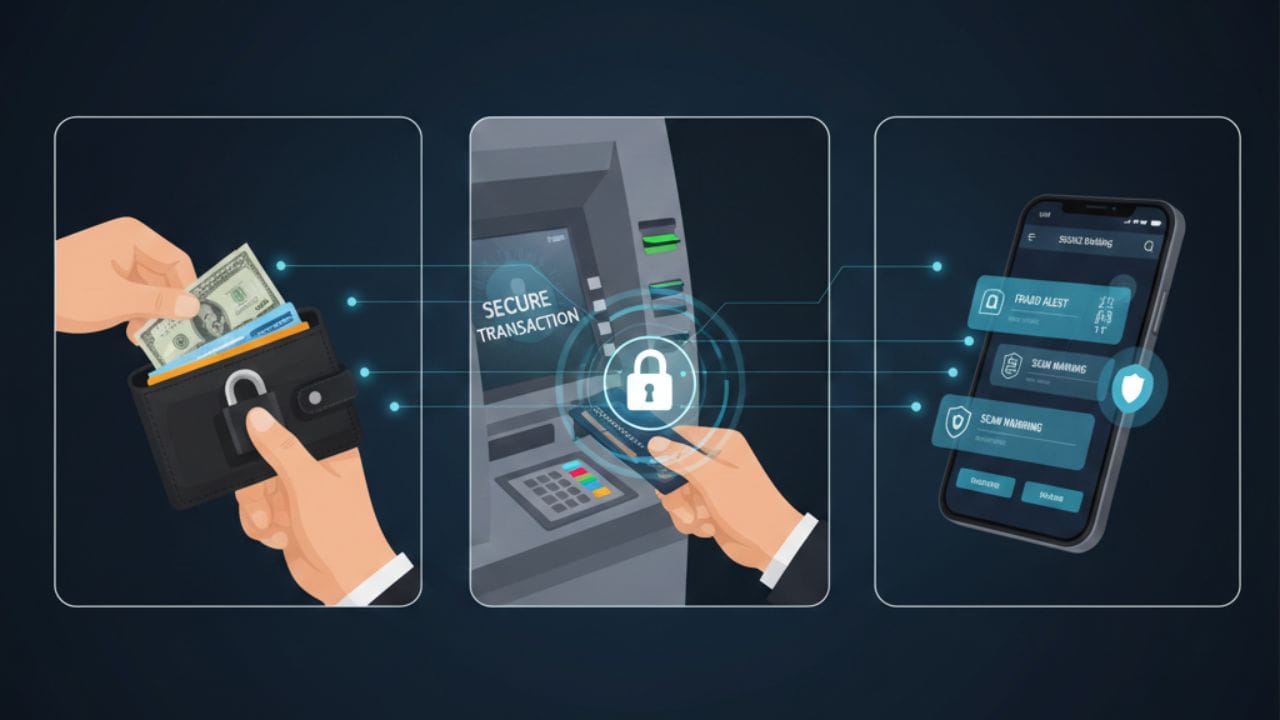
To keep your money safe, focus on three areas: physical money (cash and cards), digital money (banking apps and passwords), and scam prevention (because scams steal money without stealing your wallet). The best “basic setup” is: strong account passwords + MFA, real-time bank alerts, safe ATM habits, and a plan for storing cash at home.
1) Protect Your Bank Accounts (The Modern “Wallet”)
Most money loss today happens through account fraud, not someone grabbing cash.
Do these first:
- Turn on transaction alerts for every bank and card (texts/push notifications).
- Use a strong, unique password for your bank login.
- Enable multi‑factor authentication (MFA) if your bank supports it.
- Review your account weekly for small “test” charges (fraudsters often test first).
2) Secure Your Email (Because It Resets Accounts)
If someone hacks your email, they can reset your bank password.
- Use a unique password for email.
- Turn on MFA for email.
- Remove old recovery phone numbers and emails.
- Turn on login alerts.
3) Keep Cards Safe (And Reduce Damage If Stolen)
Cards are replaceable, but stolen cards waste time and create stress.
Smart habits:
- Carry only the cards you need today.
- Keep a backup card stored separately at home (or locked away when traveling).
- Use tap‑to‑pay when possible (often safer than swiping).
- Don’t let your card disappear out of sight in restaurants (ask for the terminal).
- Use your bank app to freeze/lock a card instantly if something feels off.
4) Use Safer ATMs (Avoid Skimmers)
ATM scams still exist. Location is the biggest clue.
- Use ATMs inside banks when possible.
- Avoid isolated, poorly lit ATMs.
- Cover the keypad when entering your PIN.
- Wiggle the card slot lightly—if it’s loose, walk away.
- Take your cash first, then your card.
5) Protect Cash at Home (Without Being Obvious)
Keeping some emergency cash is smart. Storing it poorly is not.
Better options:
- A small home safe that’s bolted down
- A lockbox in a discreet location
- Split cash into two hidden locations (not all in one envelope)
Avoid obvious places like: sock drawer, under mattress, kitchen jar, top desk drawer.
6) Watch for the Most Common Money Scams
Scams steal money by pushing urgency and emotion.
- Fake bank fraud calls: “We need your code to secure your account.”
- Gift card scams: “Pay with gift cards.”
- Zelle/Cash App/Venmo tricks: “I sent too much, refund me.”
- Fake job/remote work scams asking for upfront fees.
- Fake delivery or “package problem” texts with links.
- Romance scams: slow trust-building, then money requests.
Rule: real banks don’t ask for your one-time codes or password.
7) Use Simple Identity Theft Protection Habits
Identity theft can drain accounts or open new accounts in your name.
- Shred sensitive mail (bank offers, statements).
- Don’t share SSN unless required.
- Use privacy settings on social media (hide birthday and contact info).
- Check your credit report regularly (US).
8) Make Online Shopping Safer
Online shopping is convenient, but scams and fake stores are everywhere.
- Use credit cards (often better fraud protection than debit).
- Avoid buying from random ads with no reviews.
- Don’t save card info on sketchy sites.
- Use virtual card numbers if your bank offers them.
9) Protect Your Phone (Because It’s Your Bank Now)
A stolen phone can become a stolen bank login.
- Use a strong passcode.
- Turn on Find My / remote wipe.
- Turn off sensitive lock-screen notifications for banking apps.
- Avoid public Wi‑Fi for banking when possible.
10) If You Think Your Money Is at Risk: Do This Immediately
Fast action limits damage.
- Freeze/lock your card in the bank app.
- Change your banking password (and email password if needed).
- Contact your bank using the official number (not a number from a text).
- Review recent transactions and dispute fraud.
- Set stronger alerts and consider changing account numbers if fraud persists.
Quick “Money Safe” Checklist
- Bank alerts ON
- Unique passwords + MFA for email and banking
- Cards limited + backup stored separately
- ATM use inside banks
- Emergency cash stored discreetly
- Scam awareness: never share verification codes
- Phone protected with passcode + Find My
FAQs
What’s the safest place to keep money?
For most people, a reputable bank account is safest for larger amounts. For emergency cash at home, use a bolted safe or secure lockbox in a discreet spot.
Is cash safer than a bank?
Cash avoids online fraud but is easier to steal or lose and usually isn’t recoverable. A bank is safer for most savings, especially with alerts and strong account security.
How do I avoid money scams?
Slow down. Don’t act on urgency. Verify using official channels. Never share one‑time codes or passwords.
Should I use debit or credit for purchases?
Credit cards often have stronger fraud protections. Debit links directly to your bank balance, so be extra careful with debit.
More “Keep Safe” Guides
Explore more safety topics at Thealite Keep Safe. For site details, see Privacy Policy, Terms, and Disclaimer.

As a digital marketer, she has received multiple international awards, including Campaign of the Year at the 2023 European Content Awards and Best Use of Content Marketing at the 2022 Global Search Awards. Nicai holds an MSc in Marketing (First Class Honours) from the UCD Smurfit Graduate Business School and she has also completed the Artificial Intelligence Programme at Oxford University’s Saïd Business School. She is also a contributing writer for publications such as Entrepreneur and Esquire.