Heading off to college and living in a dorm is a major milestone, offering newfound independence and a thriving social life. However, sharing tight quarters with a roommate and living on a floor full of strangers also introduces unique security challenges. Between open-door policies, constant study groups, and weekend visitors, your personal space sees a lot of foot traffic. Protecting your laptop, cash, and personal information requires a blend of smart hardware and consistent daily habits. By setting boundaries early on, you can focus on your studies and social life without constantly worrying about your belongings.
Why Dorm Rooms Are Easy Targets for Theft
Dorms are bustling environments where people constantly come and go, making it easy for an unfamiliar face to blend in. The biggest vulnerability in any residence hall is the false sense of security; students frequently leave their doors wide open or unlocked while visiting friends down the hall. Most campus thefts are crimes of opportunity. A thief simply walks down a hallway checking doorknobs until they find an unlocked room, grabbing whatever is visible on a desk—like a smartphone or a wallet—and walking out within seconds.
How to Keep Valuables Safe in a Dorm Room with Better Daily Habits
If you want to know how to keep valuables safe in a dorm room, the most effective strategy is mastering your lock routine. Always lock your door, even if you are just stepping out for a two-minute bathroom break or going to the communal kitchen. Never prop your door open with a trash can when you aren’t inside the room. Furthermore, establish a strict “no lending keys” policy. Once you hand your room key or student ID card to a friend, you lose control over who has access to your private space.
What to Lock Up: Laptop, Tablet, Cash, Passport, Jewelry, and Important Papers
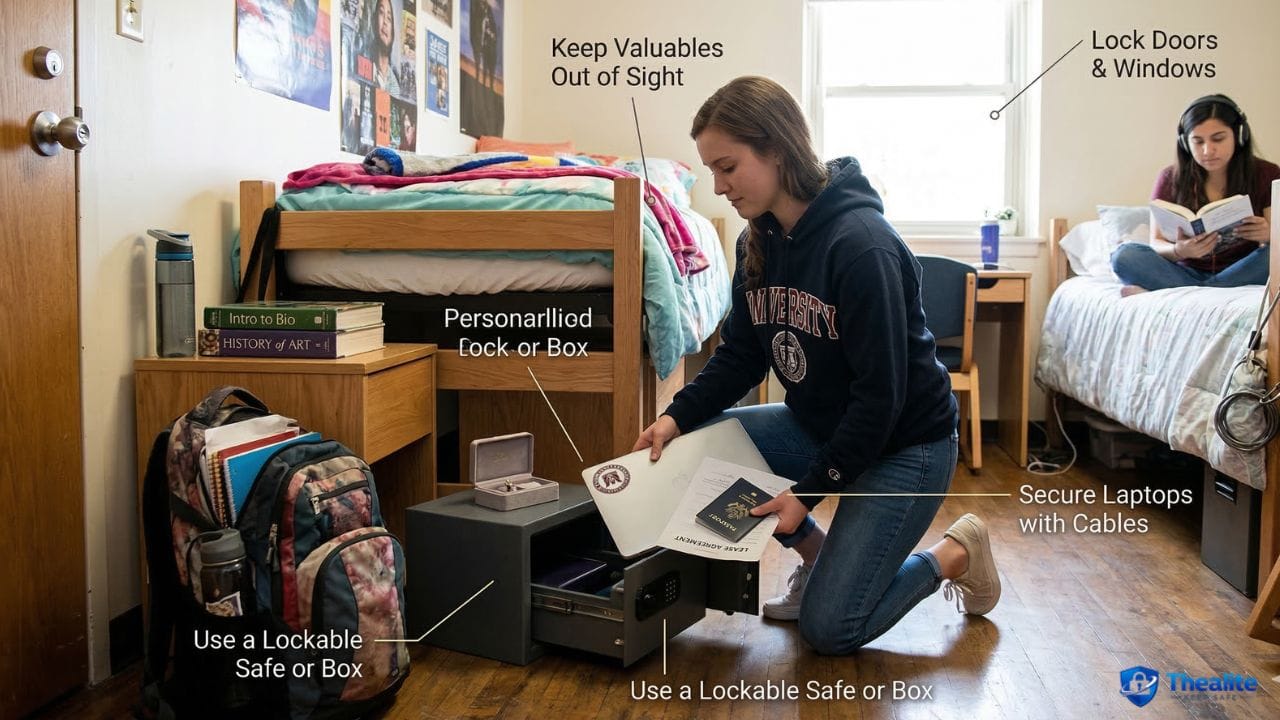
Your dorm desk and closet are not secure hiding spots. High-value electronics, physical cash, and sensitive identification should always be locked away. If you bring a Social Security card, birth certificate, or passport to campus for a job application, you must secure them immediately. Just as families prioritize how to keep important documents safe at home, students must be equally vigilant. Similarly, learning how to keep cash safe at home applies perfectly to dorm life—never leave emergency funds loose in a drawer.
Roommates, Guests, Cleaners, and Maintenance Access
Living with a roommate means compromising, but security should never be up for debate. Sit down with your roommate during the first week and agree to always lock the door when leaving. Discuss a guest policy so you know who is coming into the room and when. Keep in mind that university maintenance staff and cleaners may occasionally have access to your room during breaks or for repairs. Whenever outsiders are expected, make sure to keep valuables safe at home or securely locked in a personal safe inside your dorm.
Dorm Safes, Lock Boxes, Desk Drawers, and Cable Locks
Investing in a small, heavy-duty dorm safe or a lock box is one of the smartest collegiate purchases you can make. A lockbox can be tethered to a heavy piece of furniture, like a bed frame, to prevent someone from simply walking away with it. If you purchase a small safe, understanding how to keep moisture out of a safe with silica gel packets will ensure your electronics and documents aren’t damaged by humidity. For your laptop, a Kensington-style cable lock that anchors the computer directly to your heavy desk provides an excellent layer of visible theft deterrence.
What Not to Leave Visible in a Dorm Room
Never advertise your valuables. When you leave for class, do not leave your expensive laptop open on the desk or your tablet sitting on your bed. Put your backpack inside your closet rather than by the door where it can be easily snagged. Car keys, wallets, and designer items should be tucked out of sight in a drawer or a locked trunk. The less a passerby can see from the hallway, the less tempting your room becomes.
How to Protect Accounts, Devices, and Digital Valuables
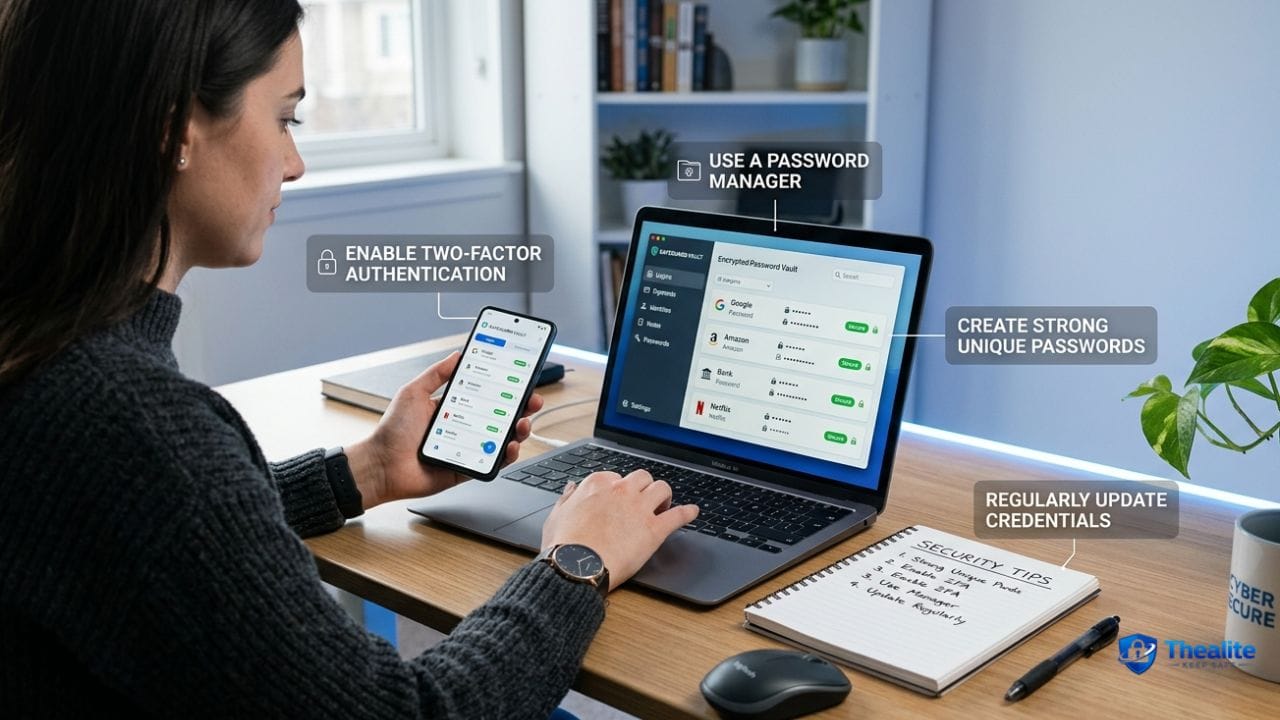
Physical theft isn’t the only risk; leaving a laptop unlocked and unattended in a dorm or library puts your digital life in jeopardy. Always use strong passwords and enable two-factor authentication on your student and personal accounts. If you step away from your computer, lock the screen. Understanding how to keep your identity safe online is critical, as a stolen laptop can easily lead to compromised bank accounts or identity theft.
What to Do If Something Is Stolen from Your Dorm
If you discover that an item is missing, do not panic, but act quickly:
- Search thoroughly: Ensure the item hasn’t just been misplaced under a bed or mixed up with your roommate’s belongings.
- Report it immediately: Notify your Resident Assistant (RA) and file a report with the campus police or security office.
- Lock your devices: Use “Find My Device” features to track, lock, or wipe stolen electronics remotely.
- Check insurance: See if the stolen items are covered under your parents’ homeowner’s insurance policy or your own renter’s insurance.
Common Dorm Security Mistakes to Avoid
One of the biggest mistakes freshmen make is trusting the “honor system” of the dorm floor and leaving doors unlocked because they “know everyone.” Another error is hiding a spare room key under a welcome mat or above the door frame—thieves check these spots first. Finally, casually broadcasting on social media that your entire floor is heading out to a game leaves your building vulnerable, letting potential thieves know the halls are empty.
A Simple Dorm Valuables Checklist
- Lock the door every time you leave, no exceptions.
- Use a cable lock to secure your laptop to your desk.
- Store cash, passports, and jewelry in a hidden, tethered lockbox.
- Never leave keys or wallets visible from the hallway.
- Agree on strict door-locking and guest rules with your roommate.
Frequently Asked Questions (FAQ)
How to keep valuables safe in a dorm room?
You can keep valuables safe in a dorm room by always locking your door, communicating security rules with your roommate, using a laptop cable lock, and storing smaller items like cash and passports in a tethered lockbox or safe.
What valuables should be locked up in a dorm room?
You should lock up physical cash, credit cards, your passport, Social Security card, expensive jewelry, prescription medications, and high-value electronics like tablets and laptops when they are not in use.
Is a dorm room safe enough for cash and jewelry?
A standard dorm room is not inherently safe for loose cash and jewelry because of the high number of visitors. If you must bring these items, they must be secured inside a personal safe that is tethered to heavy furniture.
Should you keep important documents in your dorm?
You should only keep essential documents with you on campus. Leave your original birth certificate and Social Security card with your parents if possible. If you must have them, store them securely in a locked safe.
How do you protect a laptop in a dorm room?
Protect your laptop by using a Kensington cable lock to anchor it to your desk, setting up a strong password, enabling remote-wiping software, and never leaving it unattended in common study areas.
What should you do if a roommate has guests over?
If your roommate has guests, simply put your high-value items out of sight in a drawer or closet, and ensure your lockbox is secured. Establish ground rules early on about visitors being left alone in the room.
Are small dorm safes worth it?
Yes, small dorm safes are highly worth it. They provide an excellent deterrent against crimes of opportunity, provided the safe is tethered to a heavy object so a thief cannot easily carry the entire box out.
What should you do after theft in a dorm room?
After a theft, immediately report the incident to your RA and campus security. Lock your stolen digital devices remotely, cancel any stolen credit cards, and check if your renter’s insurance or parents’ homeowner’s policy covers the loss.

As a digital marketer, she has received multiple international awards, including Campaign of the Year at the 2023 European Content Awards and Best Use of Content Marketing at the 2022 Global Search Awards. Nicai holds an MSc in Marketing (First Class Honours) from the UCD Smurfit Graduate Business School and she has also completed the Artificial Intelligence Programme at Oxford University’s Saïd Business School. She is also a contributing writer for publications such as Entrepreneur and Esquire.