Keeping schools safe isn’t about one magic solution—it’s about **layers**. A safe school is built through daily habits, smart building design, trained staff, student support systems, and clear emergency procedures. When those layers work together, they prevent many problems and reduce harm when something unexpected happens.
This guide is written for a U.S. audience and is meant to be practical. It covers what families can do, what educators can do, and what school leaders can put in place—without relying on fear or unrealistic “perfect security” thinking.
Related reading on your site: How Will These Rules Keep You Safe? • How to Keep Kids Safe Online • How to Keep Children Safe Online • How to Keep Your Home Safe • How Do Handrails on Stairs Help Keep You Safe (OSHA)
Quick Answer (The School Safety System)
- Use layered prevention: secure entry + supervision + student support + emergency readiness.
- Control access: locked doors, visitor sign-in, and clear perimeter boundaries.
- Create a positive culture: bullying prevention, trusted reporting, and mental health supports.
- Train staff and practice drills in a calm, age-appropriate way.
- Improve online safety: account security, privacy education, and threat reporting pathways.
- Keep facilities safe: lighting, stair safety, maintenance, and clear communication.
What ‘School Safety’ Actually Means
When people say “safe schools,” they often think only about extreme events. But day-to-day safety matters too. A complete school safety plan usually includes:
• **Physical safety** (buildings, entry, supervision)
• **Medical safety** (nurse access, allergies, medications)
• **Emotional safety** (bullying, harassment, mental health)
• **Digital safety** (cyberbullying, scams, privacy)
• **Emergency preparedness** (weather, fire, lockdowns, evacuations)
Layer 1: A Strong School Culture (The Most Overlooked Safety Tool)
Schools are safest when students feel connected, supported, and comfortable reporting concerns early. Many serious issues show warning signs long before an incident—if the environment makes it safe to speak up.
What strong safety culture looks like
- Clear anti-bullying expectations and consistent enforcement.
- Trusted reporting options (anonymous tip line + in-person trusted adults).
- Students know who to talk to if something feels “off.”
- Adults respond seriously to threats, harassment, and concerning behavior.
- Families are included and informed—without panic messaging.
Bullying prevention essentials
- Teach what bullying is (and what it isn’t) using clear examples.
- Increase adult supervision in hot spots (hallways, bathrooms, cafeterias, buses).
- Use restorative practices when appropriate, and consequences when needed.
- Track patterns: repeated incidents, locations, times, and online spillover.
Layer 2: Student Support and Mental Health
Counselors, social workers, and trained staff are part of safety. Early support reduces escalation—whether it’s self-harm risk, violence risk, or chronic bullying/trauma. The goal is early identification and help.
Practical supports schools can build
- Clear referral pathway for students in distress (teachers know what to do).
- Crisis response plan and partnerships with community services.
- Age-appropriate SEL (social-emotional learning) and conflict resolution.
- Family engagement for students showing warning signs.
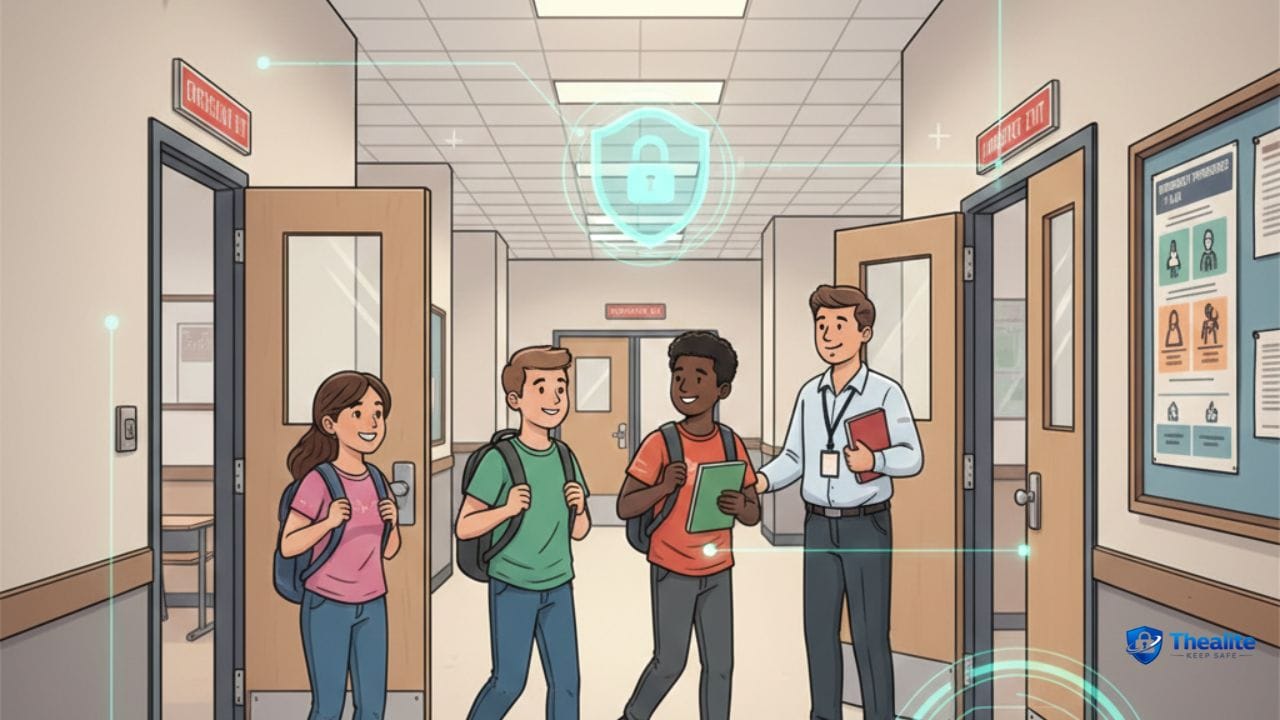
Layer 3: Secure Entry and Visitor Management
Access control is one of the highest-impact physical security layers. The goal is not to turn schools into prisons—it’s to prevent unauthorized entry and reduce opportunities for harm.
High-impact entry controls
- One main public entrance during school hours (others locked/alarmed).
- Visitor sign-in with ID check and visible visitor badges.
- Door hardware that prevents propping (and policies that discourage it).
- Clear procedures for deliveries and after-hours activities.
- Perimeter awareness: fencing where appropriate, lighting, and camera coverage in key areas (where policy allows).
Common mistakes to avoid
- Propped doors for convenience.
- Unclear visitor policy or inconsistent enforcement.
- Sharing door codes widely or leaving doors unlocked for after-school events.
Layer 4: Supervision and ‘Hot Spot’ Planning
A lot of incidents happen in predictable places: hallways, stairwells, bathrooms, locker rooms, and outdoor pickup areas. Schools get safer when they map these hot spots and increase adult presence during key times.
Hot-spot safety tactics
- Staggered hall monitoring during passing periods.
- Clear bathroom supervision strategy (without violating privacy).
- Bus loading/unloading supervision with defined zones.
- Clear pickup/drop-off traffic patterns to reduce vehicle/pedestrian conflicts.
Layer 5: Facility Safety (The Boring Stuff That Prevents Injuries)
Many school injuries are preventable with basic building safety: good lighting, maintained stairs, and clear walkways. These improvements also help in emergencies.
Facility safety checklist
- Stairs have sturdy handrails and good lighting; steps are in good repair.
- Wet-floor protocols and signage for spills.
- Clear hallways and exits (no storage blocking egress).
- Playground equipment is inspected and surfaces are maintained.
- Exterior lighting works and is checked routinely.
Related: How Do Handrails on Stairs Help Keep You Safe (OSHA) (helpful for thinking about stair safety).
Layer 6: Emergency Preparedness (Drills That Actually Help)
Preparedness is about clarity: people should know what to do without panic. Drills should be age-appropriate, consistent, and reviewed afterward.
Common emergency categories
- Fire and evacuation
- Severe weather (tornado, hurricane, extreme heat/cold)
- Medical emergencies (allergies, asthma, injuries)
- Lockdown or shelter-in-place (depending on threat type)
- Reunification after an incident (how families pick up students safely)
What makes drills effective
- Clear, simple language students understand.
- Practice at different times/conditions (not always ‘perfect’).
- After-action review: what worked, what didn’t, what to improve.
- Staff knows roles: who leads, who checks rooms, who accounts for students.
- Communication plan: how parents are informed and how rumors are managed.
Layer 7: Online Safety and Cybersecurity
School safety now includes digital life: social media conflicts, cyberbullying, scams, and account takeovers. A strong plan mixes education + settings + reporting.
For students: online safety basics
- Privacy settings: keep accounts private and limit DMs to friends.
- Never share passwords or verification codes.
- Report threats, harassment, or strange messages immediately.
- Avoid clicking unknown links (phishing is common).
For families and schools: practical controls
- Use strong passwords and MFA for school accounts where available.
- Keep student devices updated and use approved apps only.
- Have a clear cyberbullying response plan: save evidence, report, support the student.
- Teach students how to get help without fear of punishment.
Helpful resources: How to Keep Kids Safe Online • How to Keep Phone Safe From Hackers • How to Keep Your Identity Safe Online.
Layer 8: What Parents Can Do
Parents can strengthen school safety without spreading fear. The goal is partnership and early communication.
High-impact parent actions
- Talk with kids about reporting: ‘If something feels wrong, tell an adult.’
- Monitor online behavior and take cyberbullying seriously.
- Keep emergency contact info updated with the school.
- Support healthy routines: sleep, stress management, and safe social media use.
- Attend school safety meetings and ask practical questions about entry procedures and reunification plans.
Layer 9: What Teachers and Staff Can Do
- Maintain predictable classroom routines and clear expectations.
- Take all threats seriously and follow reporting procedures.
- Watch for changes in student behavior (withdrawal, anger, isolation).
- Use hallway supervision strategically during hot-spot times.
- Practice emergency procedures calmly and consistently.
A Practical School Safety Checklist (Copy/Paste)
- Secure entry: single main entrance + visitor sign-in + locked side doors
- Culture: anti-bullying plan + trusted reporting options
- Support: mental health referral pathway + crisis response plan
- Supervision: hot-spot mapping + adult presence at key times
- Facilities: good lighting, maintained stairs/handrails, clear exits
- Preparedness: drills + reunification plan + communication plan
- Digital: online safety education + cyberbullying response plan + strong account security
FAQs
What’s the most effective way to keep schools safe?
A layered approach: secure entry, strong school culture, student support, and clear emergency readiness. No single tool replaces daily prevention and reporting systems.
How can schools reduce bullying and fights?
Increase supervision in hot spots, teach clear expectations, respond consistently, track patterns, and make it easy for students to report problems early.
How do schools handle online threats or cyberbullying?
They need a clear process: save evidence, investigate, support the student, involve families, and escalate when there are threats. Education and privacy settings prevent many issues.
What should parents do if they’re worried about school safety?
Ask about the school’s entry/visitor policy, reporting pathways, and reunification plan. Talk to your child about reporting and online safety, and keep contact information updated.
Do security measures matter without student support?
Physical security helps, but schools are safest when prevention and student support systems work alongside security measures.
Conclusion
Schools become safer when safety is treated like a system: culture + support + smart security + preparedness. Secure entry and facility maintenance reduce opportunities for harm, but the strongest layer is a school community where students feel connected and comfortable reporting concerns early. With practical checklists, calm drills, online safety education, and consistent supervision, schools can reduce everyday risks and be better prepared for emergencies.

As a digital marketer, she has received multiple international awards, including Campaign of the Year at the 2023 European Content Awards and Best Use of Content Marketing at the 2022 Global Search Awards. Nicai holds an MSc in Marketing (First Class Honours) from the UCD Smurfit Graduate Business School and she has also completed the Artificial Intelligence Programme at Oxford University’s Saïd Business School. She is also a contributing writer for publications such as Entrepreneur and Esquire.