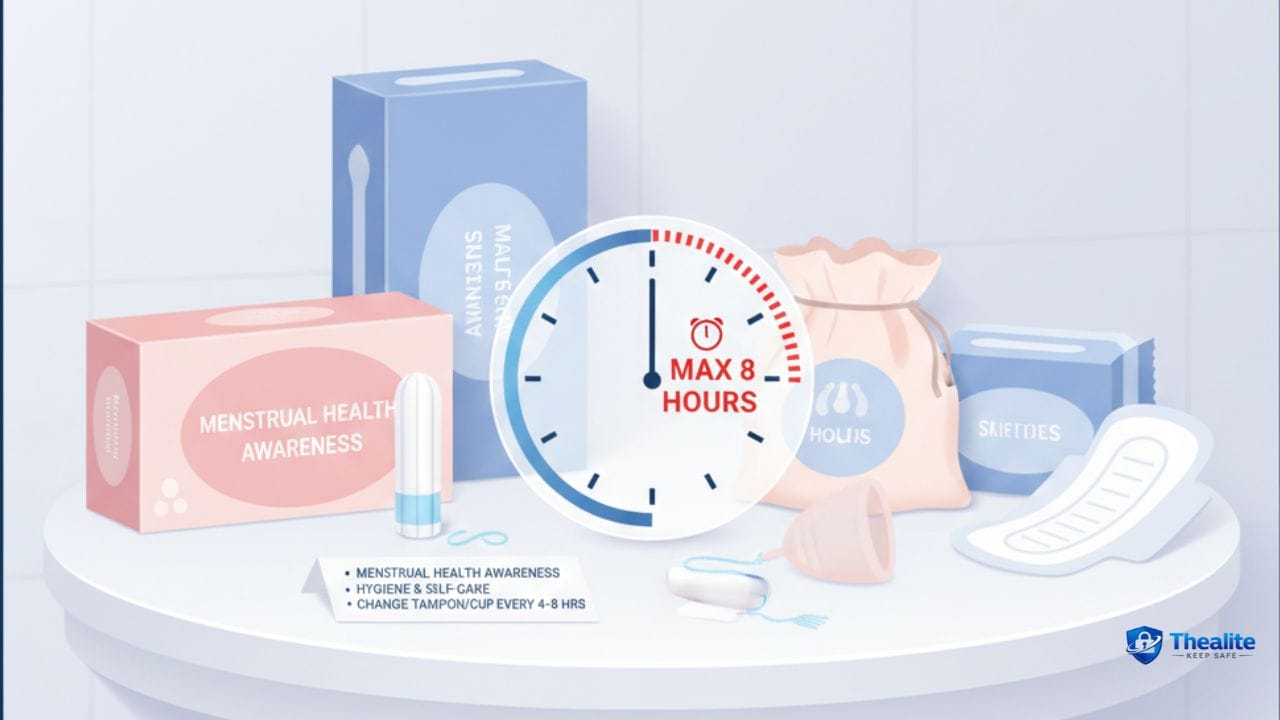
For most people, the safe window is changing a tampon every 4 to 8 hours. Do not keep the same tampon in for more than 8 hours. If you think you forgot one, remove it as soon as you can and pay attention to symptoms like fever or feeling very unwell.
Why Timing Matters
A tampon is designed for temporary use. When it stays in too long, it can increase the chance of irritation, odor, and infection. A rare but serious risk is toxic shock syndrome (TSS), which needs urgent medical care.
The Safe Time Range: 4–8 Hours (Max 8)
A simple rule that works for most people:
• Change tampons every 4–8 hours depending on your flow.
• Never wear one longer than 8 hours.
What Changes How Often You Should Switch
You may need to change sooner when:
- Your flow is heavy (you’re soaking the tampon)
- You’re very active and sweating a lot
- You feel dryness, discomfort, or irritation
- You notice odor (a sign it’s time to switch)
You may be able to go longer (still within 8 hours) when:
- Your flow is light
- You’re using the lowest absorbency that still works for you
- You’re not leaking and you feel comfortable
Can You Sleep With a Tampon In?
You can sleep with a tampon in if you can change it within 8 hours. If you regularly sleep longer than 8 hours, consider a pad or period underwear overnight.
If you do use a tampon overnight: put in a fresh one right before bed and change it as soon as you wake up.
What If You Forgot a Tampon?
This happens. Don’t panic. Do this:
- Wash your hands and try to remove it gently.
- If you can’t find the string, try a relaxed squat position and bear down slightly (like a bowel movement).
- If you still can’t remove it, contact a healthcare professional the same day.
After removal, mild odor or discharge can happen for a short time. But if you develop strong symptoms (fever, rash, vomiting, dizziness), get urgent medical help.
Warning Signs: When to Get Urgent Help
Seek urgent medical care if you have any of these symptoms, especially if a tampon was left in too long:
- High fever or chills
- Vomiting or diarrhea
- Dizziness, fainting, or feeling weak
- A rash that looks like a sunburn
- Confusion or severe muscle aches
These can be signs of TSS or another serious infection.
How to Reduce Risk (Easy Habits)
- Use the lowest absorbency that works for your flow
- Wash hands before and after inserting or removing a tampon
- Set a phone reminder if you’re likely to forget
- Change tampons more often on heavy-flow days
- Alternate with pads sometimes if you prefer
Common Questions
Is it safe to keep a tampon in for 10 hours?
No. Most guidance says you should not wear a single tampon for more than 8 hours. If you accidentally did, remove it as soon as possible and watch for symptoms.
What happens if a tampon stays in too long?
It can cause irritation, odor, and higher infection risk. A rare but serious risk is toxic shock syndrome (TSS).
Should I change a tampon more often than 8 hours?
Yes, many people do. 4–6 hours is common on heavier days. The key is staying within the 8‑hour maximum.
Can a tampon get lost inside you?
It can be hard to reach, but it cannot travel beyond the vagina. If you can’t remove it, a healthcare professional can help safely.
More “Keep Safe” Guides
Explore more safety topics at Thealite Keep Safe.

As a digital marketer, she has received multiple international awards, including Campaign of the Year at the 2023 European Content Awards and Best Use of Content Marketing at the 2022 Global Search Awards. Nicai holds an MSc in Marketing (First Class Honours) from the UCD Smurfit Graduate Business School and she has also completed the Artificial Intelligence Programme at Oxford University’s Saïd Business School. She is also a contributing writer for publications such as Entrepreneur and Esquire.