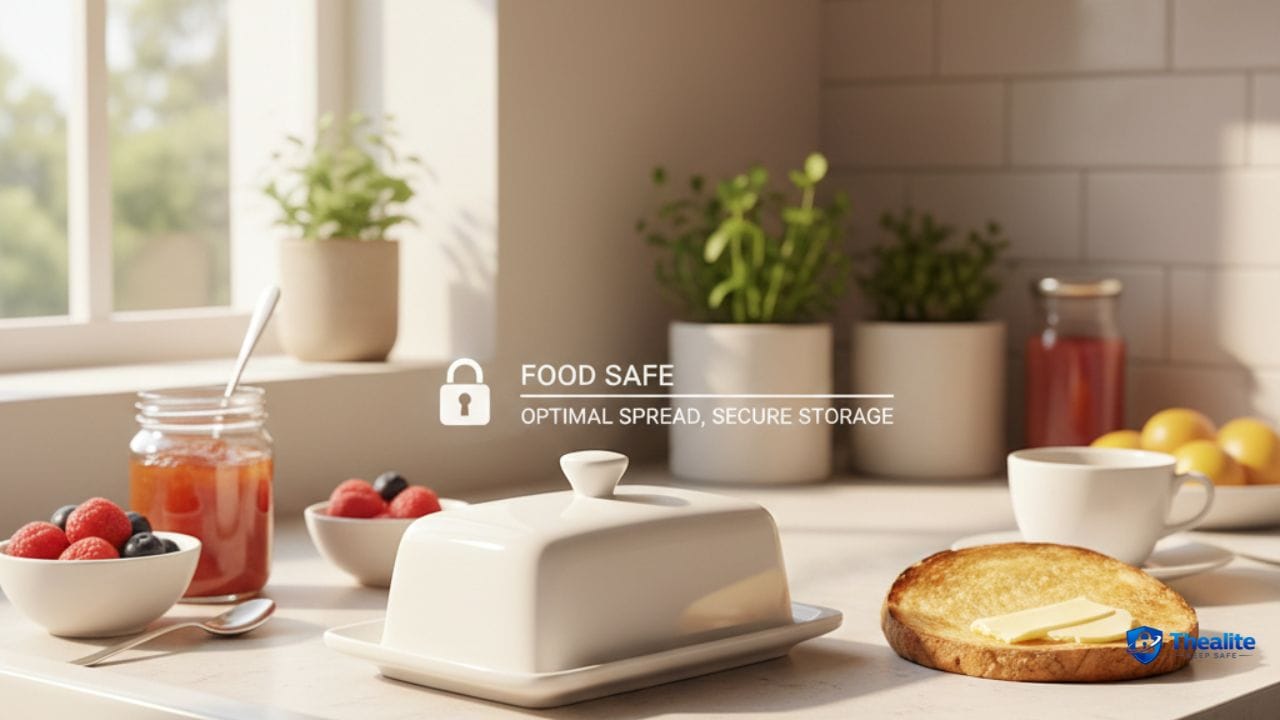
Many people keep butter on the counter because it spreads better and makes cooking easier. But it’s normal to wonder: is it actually safe to keep butter at room temperature—or are you risking foodborne illness?
In most U.S. homes, keeping a small amount of butter at room temperature can be safe when you do it correctly. The key is to understand what makes butter different from other dairy, how temperature and time change risk, and what storage habits prevent spoilage (and that unpleasant rancid taste).
Related internal reading on your site: Safe to Keep Butter on the Counter • Keep Temperature Control for Safety Food Safe • Practices That Keep Cold Food Safe
Quick Answer (What Most People Want to Know)
Yes—keeping butter at room temperature can be safe for many households if:
• you keep only a small amount out (what you’ll use in a few days),
• you store it covered in a clean container,
• your kitchen stays reasonably cool,
• and you avoid contaminating it with crumbs or other foods.
If your home is very warm, you don’t use butter quickly, or someone in your household is higher‑risk (older adult, pregnant, immunocompromised), refrigeration is the safer default.
Why Butter Can Be Safer Than Milk at Room Temperature
Butter is mostly fat with very little water compared to milk or cream. Most bacteria need water to grow well, so butter tends to spoil more slowly. Also, salted butter has extra protection because salt can reduce microbial growth.
That said, ‘safer’ doesn’t mean ‘invincible.’ Butter can still go bad, and the biggest issues are usually:
• rancidity (off flavors/odors from fat oxidation)
• mold growth (especially if contaminated)
• spoilage from warm temps over time
Salted vs Unsalted Butter: Does It Matter?
Yes. Salted butter generally holds up better at room temperature because salt slows some microbial activity. Unsalted butter can still be kept out briefly, but it’s more likely to develop off flavors sooner.
If you keep butter on the counter, salted butter is usually the better choice.
How Long Can Butter Sit Out Safely?
There isn’t one perfect number for every kitchen because temperature, humidity, and hygiene matter. Instead of relying on a single universal rule, use this practical guideline:
A realistic home guideline
- Keep only what you’ll use within a few days (roughly 1–3 days is a common target for many households).
- If your kitchen is warm (especially in summer), shorten the time and keep less butter out.
- If you notice butter getting oily/very soft or starting to separate, your room may be too warm for counter storage.
If you want butter spreadable but your home runs hot, consider keeping most butter refrigerated and leaving only a small portion out—or use a butter bell/covered crock designed to help maintain cooler butter.
Best Ways to Store Butter at Room Temperature
Counter butter safety is mostly about three things: temperature control, contamination control, and limiting time.
1) Use a covered container (always)
- Use a butter dish with a lid or a butter crock/bell.
- Avoid leaving butter exposed—open air increases oxidation and contamination.
- Keep it away from raw food prep areas to reduce cross-contamination.
2) Keep it in the coolest, darkest spot you have
- Avoid direct sunlight (windowsills).
- Keep away from the stove/oven, toaster, or other heat sources.
- Don’t store near the dishwasher vent or warm appliances.
3) Practice ‘clean knife’ habits
The fastest way to ruin counter butter is contamination. If you spread butter on toast and then dip the crumb-covered knife back into the dish, you’re introducing moisture and food particles that can grow mold.
- Use a clean knife every time.
- If you must double-dip, wipe the knife clean first.
- Avoid mixing butter with jam/peanut butter crumbs in the dish.
4) Keep smaller portions out
Instead of keeping an entire pound on the counter, keep a smaller stick/portion out and refill from the fridge as needed. This reduces time-at-room-temp and limits waste if it spoils.
When You Should NOT Keep Butter at Room Temperature
Counter storage isn’t ideal in these situations:
- Your kitchen regularly stays warm (hot summers, no AC, or near cooking heat).
- You don’t use butter often (it will sit too long).
- You see condensation or high humidity issues in your kitchen.
- Your household includes people at higher risk of foodborne illness (extra-cautious approach).
- You can’t keep it covered/clean (frequent contamination).
What About Food Safety Temperature Rules?
You may have heard about the food safety “danger zone” (temperatures where bacteria grow faster). Those rules are important—especially for high‑moisture foods. Butter is lower moisture, but temperature still matters because heat speeds up both microbial activity and rancidity.
For more on food temperature practices, see keep temperature control for safety food safe and practices that keep cold food safe.
How to Tell If Butter Has Gone Bad
Butter usually gives you clear signals when it’s no longer good. Trust your senses.
Signs of spoilage or quality loss
- Rancid smell (sour, stale, ‘paint-like,’ or unpleasantly sharp).
- Off taste (bitter or sour flavors).
- Visible mold (discard the entire stick/portion).
- Unusual discoloration (gray-ish or dark spots) or a slimy surface.
- Strong ‘old fridge’ smell can happen if butter wasn’t protected—keep it covered.
If you see mold, don’t just scrape it off. Discard it.
Does Butter Need to Be Refrigerated?
Refrigeration is the safest all-purpose choice for long-term storage. Many people do a hybrid routine:
• Keep most butter refrigerated.
• Keep a small portion on the counter for daily use.
This gives you spreadable butter without letting a large amount sit out too long.
What About Leaving Butter Out Overnight?
If you accidentally left butter out overnight, don’t panic. In many normal kitchen conditions, a single overnight period in a covered dish isn’t automatically a disaster. Think about how warm your kitchen was and whether the butter was covered and clean. If it was hot, or the butter was uncovered/contaminated, discarding is the safer choice.
Butter Bell vs Butter Dish: Which Is Better?
A standard butter dish works well if your kitchen is cool and you use butter quickly. A butter bell/crock can help protect butter from air and may help maintain a more stable environment—but it still requires clean handling and regular maintenance.
Butter bell tips
- Keep it clean to prevent odor or mold issues.
- Use small batches and refill as needed.
- Follow your specific crock design instructions (some use water; change it regularly).
Extra Caution for Higher-Risk Households
If your household includes someone who is pregnant, elderly, very young, or immunocompromised, the safest approach is to refrigerate butter and only soften small portions as needed.
Room Temperature Butter Best Practices (Copy/Paste Checklist)
- Keep only a small portion out (use within a few days).
- Store in a covered dish or crock (never uncovered).
- Keep away from heat and sunlight.
- Use a clean knife every time (avoid crumbs and moisture).
- Refrigerate most butter in warm weather; keep only a small amount out.
- Discard if it smells rancid or shows mold.
FAQs
Is it safe to keep butter at room temperature all the time?
It can be for many households if the butter is covered, handled cleanly, and used quickly in a cool kitchen. If your kitchen is warm or you don’t use butter often, refrigeration is safer.
How long can butter sit out on the counter?
It depends on temperature and hygiene. A practical approach is to keep only what you’ll use within a few days and refrigerate the rest—especially in warm weather.
Is salted butter safer to leave out than unsalted?
Generally, yes. Salted butter tends to resist spoilage better and often stays fresh longer at room temperature.
Can butter make you sick if it’s left out?
Butter is lower moisture than many dairy foods, so rapid bacterial growth is less likely than with milk, but contamination and warm temperatures can still cause problems. Spoiled butter is also more likely to taste rancid or develop mold.
Should you throw away butter if it was left out overnight?
Not always. Consider how warm your kitchen was, whether it was covered, and whether it has any spoilage signs. If it was hot or the butter was uncovered/contaminated, discard to be safe.
Conclusion
Room-temperature butter can be safe in many U.S. kitchens when it’s stored the right way: covered, clean, in a cool spot, and in small amounts that get used quickly. If your kitchen runs warm or you want the most cautious approach, keep butter refrigerated and soften only what you need.

As a digital marketer, she has received multiple international awards, including Campaign of the Year at the 2023 European Content Awards and Best Use of Content Marketing at the 2022 Global Search Awards. Nicai holds an MSc in Marketing (First Class Honours) from the UCD Smurfit Graduate Business School and she has also completed the Artificial Intelligence Programme at Oxford University’s Saïd Business School. She is also a contributing writer for publications such as Entrepreneur and Esquire.