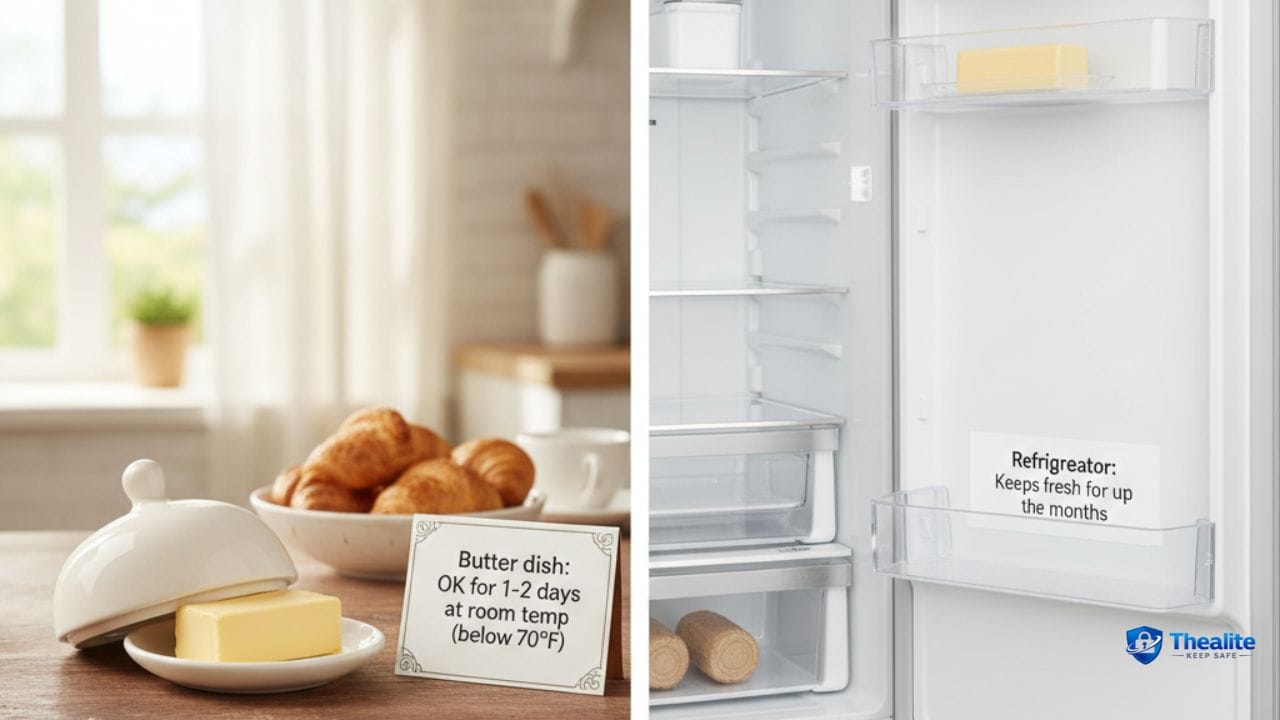
The safest answer is: keep butter refrigerated and only leave out what you’ll use soon. That said, many people keep a small amount of pasteurized salted butter on the counter for short periods because butter is high-fat and low-moisture. Risk increases fast in warm kitchens, with unsalted butter, or if the butter is uncovered and exposed to air, light, and food crumbs.
Why There’s Confusion About Counter Butter
You’ll see different advice online because people mix two different topics: safety and quality.
Safety is about germs. Quality is about taste, smell, and freshness (rancidity).
Butter often spoils in quality before it becomes a major safety issue, but the safest approach is still refrigeration—especially if your home runs warm.
What Makes Butter “Less Risky” Than Milk
Butter is mostly fat, and most bacteria need water to grow well.
Compared to milk, butter has much less water. Salted butter also has salt, which makes it even harder for many microbes to multiply quickly.
But “less risky” does not mean “risk-free.” Warm temperatures and contamination can still cause problems.
Salted vs. Unsalted: Does It Matter?
Salted butter
Salted butter is generally the better choice if you want to keep a small amount on the counter, because salt slows down microbial growth.
Unsalted butter
Unsalted butter is more likely to develop off flavors and spoil faster. If you bake or prefer unsalted, it’s smarter to refrigerate and soften as needed.
How Long Can Butter Sit Out on the Counter?
Here’s the practical, safer way to think about it:
- Best practice (most conservative): only leave butter out for a few hours, then refrigerate.
- Common household practice (cool kitchens): keep a small covered amount of salted butter out and use it within 1–2 days.
- Warm kitchens (above ~70°F / 21°C): refrigerate butter and only take out what you need.
If you’re in a heat wave, have no AC, or your butter dish sits near the stove, treat the counter as unsafe storage.
The 5 Rules That Make Counter Butter Safer
If you choose to keep butter out, do it in the safest way possible.
- Keep it covered: use a butter dish with a lid or a butter keeper.
- Keep it cool: choose a spot away from the oven, dishwasher steam, and sunlight.
- Keep it clean: crumbs and dirty knives introduce bacteria. Use a clean knife every time.
- Keep it small: leave out only what you’ll use quickly (don’t keep a big block out).
- Rotate regularly: refill the dish only after it’s empty (don’t mix old butter with fresh butter).
Counter Storage Options (What Works Best)
Covered butter dish
Simple and effective. Keeps air, light, and crumbs away.
Butter crock / butter bell
Can help keep butter soft and protected. Still, your kitchen temperature matters. Keep it clean and follow the product’s cleaning instructions.
Leaving butter in the wrapper
Not ideal on the counter. The wrapper doesn’t protect well from air and kitchen odors once opened.
When You Should NOT Keep Butter on the Counter
In these situations, skip the counter and use the fridge:
- Your kitchen is often warm (summer, no AC, sunny counters).
- You use unsalted, whipped, or specialty butter that spoils faster.
- Anyone in the home is elderly, pregnant, immunocompromised, or very young (extra caution).
- Your butter dish often gets crumbs or sits near raw-food prep.
- You forget about it for days at a time.
How to Soften Refrigerated Butter Fast (Without Leaving It Out All Day)
If you keep butter refrigerated (recommended), you can still get it spreadable quickly:
- Cut into small cubes and rest 10–20 minutes.
- Grate cold butter with a grater for fast softening.
- Use a butter softening dome or warm bowl trick (no direct heat).
- Microwave carefully using very short bursts (but watch for melting).
How to Tell If Butter Has Gone Bad
Trust your senses. Butter that’s unsafe or low-quality usually shows clear signs.
- Smell: sour, cheesy, or paint-like smell (rancid).
- Taste: bitter or “stale oil” flavor.
- Color: darker yellow patches or unusual discoloration.
- Texture: very greasy, slimy, or looks separated in a strange way.
- Visible mold: discard immediately.
Rancid butter is mostly a quality issue, but if you’re unsure, it’s safer to throw it out.
Fridge and Freezer Storage Tips (Best for Most Homes)
For longer storage and best freshness:
- Keep butter in its original wrapper or an airtight container to block odors.
- Store it in a consistent cold part of the fridge (not the warmest spot).
- Freeze extra butter if you buy in bulk; wrap tightly to prevent freezer odors.
FAQs
Is it safe to keep butter on the counter overnight?
If your kitchen is cool and the butter is covered, many people do this with salted butter. For the safest approach, refrigerate and only leave out what you’ll use soon.
Is salted butter safer on the counter than unsalted?
Yes. Salt helps slow microbial growth and salted butter tends to hold up better at room temperature.
Can I keep butter out for a week?
Quality usually declines, and safety risk increases—especially if the butter is exposed to heat, air, and crumbs. A safer approach is to keep only a small amount out and use it within a short window.
What’s the safest way to have soft butter for toast?
Keep butter refrigerated and soften small portions when needed, or keep a small covered amount out and replace it often.
More “Keep Safe” Guides
Explore more safety topics at Thealite Keep Safe. For site details, see Privacy Policy, Terms, and Disclaimer.

As a digital marketer, she has received multiple international awards, including Campaign of the Year at the 2023 European Content Awards and Best Use of Content Marketing at the 2022 Global Search Awards. Nicai holds an MSc in Marketing (First Class Honours) from the UCD Smurfit Graduate Business School and she has also completed the Artificial Intelligence Programme at Oxford University’s Saïd Business School. She is also a contributing writer for publications such as Entrepreneur and Esquire.