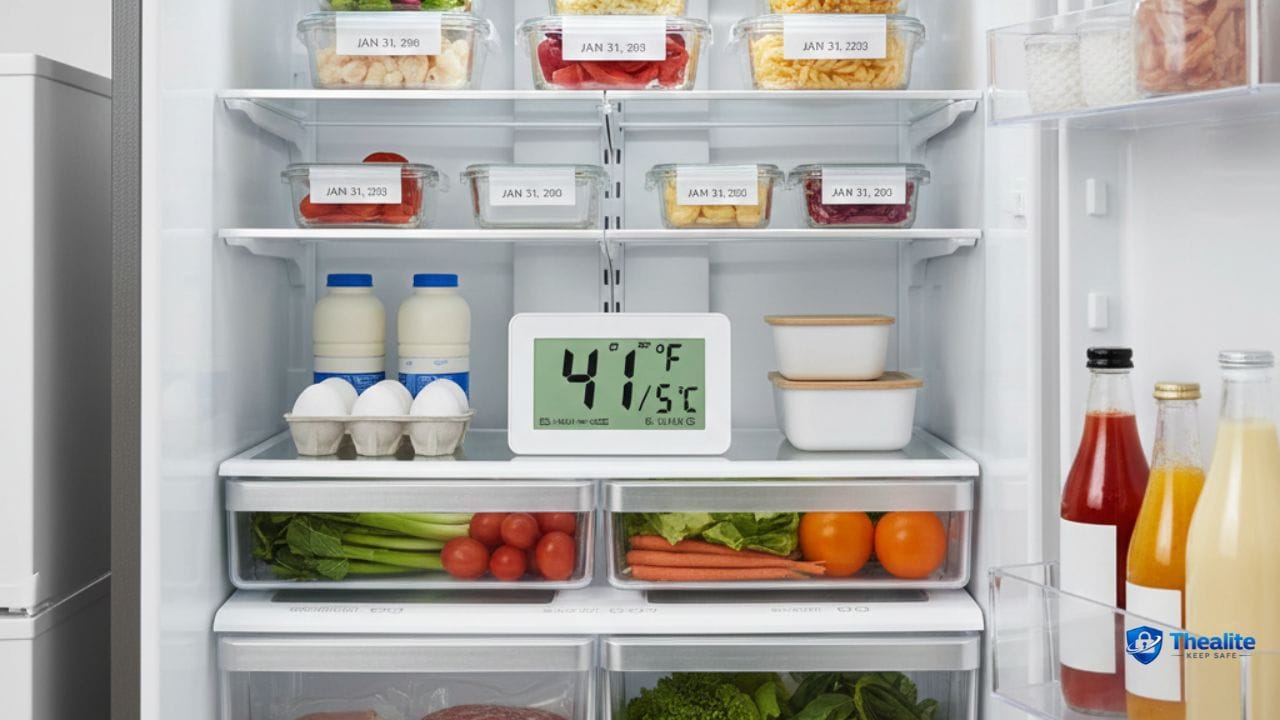
If you’re looking for the one best practice that keeps cold food safe, it’s this: keep cold foods cold—at 41°F (5°C) or below—and limit the time they spend in the “danger zone.” Everything else (coolers, ice, fridge habits) supports that one goal.
Why Cold Food Safety Matters
Cold foods can become unsafe when they warm up. Bacteria grow faster in the temperature range known as the “danger zone.” That’s why cold holding rules focus on two things: temperature and time.
So when a quiz asks “which practice helps keep cold food safe,” the safest answer is usually the one that keeps food cold and reduces time at warmer temperatures.
The Practices That Keep Cold Food Safe (Real Life + Test Answers)
Use these as your go-to checklist at home, picnics, and food service.
1) Keep Cold Foods at 41°F (5°C) or Lower
This is the biggest rule. Use a fridge thermometer and check the coldest/warmer spots. If a refrigerator runs warm, food safety drops fast.
Quick tips:
- Set the fridge to 40°F (4°C) or colder to give yourself a buffer.
- Don’t rely on the fridge dial—use a thermometer.
- Keep the fridge door closed as much as possible.
2) Follow the 2-Hour Rule (1 Hour in High Heat)
Cold food shouldn’t sit out on a counter or table for long. A simple safety rule many people use is: refrigerate within 2 hours. If it’s very hot outside (around 90°F/32°C or higher), aim for 1 hour.
3) Chill Food Fast and Store It the Right Way
How you store food affects how quickly it cools. Big, deep containers cool slowly.
Better practices:
- Use shallow containers so food cools quickly.
- Leave space for air to circulate in the fridge.
- Don’t stack hot containers tightly together.
4) Keep Raw Foods Separate From Ready-to-Eat Foods
Cold food safety is also about preventing cross-contamination. Raw meat juices can contaminate foods that won’t be cooked.
Simple separation rules:
- Store raw meat/seafood on the lowest shelf (so it can’t drip).
- Keep ready-to-eat foods above raw items.
- Use sealed containers or leak-proof packaging.
5) Don’t Overfill the Refrigerator
A packed fridge can’t circulate cold air well. That means uneven temperatures and warm spots.
If you see food near the back freezing but food near the door is warm, airflow is usually the reason.
6) Use the Right Cooler Method for Travel and Picnics
Coolers work when you treat them like a portable fridge. The goal is to keep food surrounded by cold sources.
Best cooler practices:
- Pre-chill the cooler (or at least add ice early).
- Use plenty of ice or frozen gel packs (more is better).
- Keep the cooler in shade, not in direct sun.
- Open the lid as little as possible.
- Separate drinks from food (drinks cooler gets opened more).
7) Use a Food Thermometer (Don’t Guess)
Thermometers remove guessing. A quick check tells you if food stayed cold enough.
Easy routine: check the cooler temp mid-day and add ice if it’s warming.
8) Label and Rotate (First In, First Out)
Cold food can become unsafe simply because it’s too old. Dating leftovers helps you avoid risky “mystery containers.”
Simple practice: write the date on containers and eat older items first.
Most Common “Wrong Answers” (Mistakes That Make Cold Food Unsafe)
These are the habits that cause problems:
- Leaving cold foods on the counter “just for a little while”
- Storing food in the fridge door (it’s the warmest area)
- Putting hot food directly into the fridge in a deep container
- Not separating raw meat from ready-to-eat foods
- Using a cooler with too little ice or opening it constantly
Cold Food Safety Examples (Quick Scenarios)
Scenario: Deli sandwich at a picnic
Safe practice: keep it in a cooler with ice packs and return it to the cooler right after eating. Unsafe practice: leaving it on a picnic table for hours.
Scenario: Leftover pasta salad
Safe practice: refrigerate within 2 hours in a shallow container. Unsafe practice: leaving the bowl out to “cool down” for half the afternoon.
Scenario: Raw chicken in the fridge
Safe practice: store it on the bottom shelf in a sealed container. Unsafe practice: placing it above ready-to-eat foods where it could drip.
Food Worker Note (If This Is for a Class/Test)
If this question is coming from food safety training, the test usually expects you to choose practices like maintaining cold holding temperature, using thermometers, and preventing cross-contamination.
Related training-style guides on Thealite: wearing gloves can keep food safe by and what are food workers required to keep soup safe.
Quick Checklist: Keep Cold Food Safe
- Keep cold foods at 41°F (5°C) or below
- Refrigerate within 2 hours (1 hour in high heat)
- Use shallow containers for fast cooling
- Separate raw and ready-to-eat foods
- Use a thermometer (fridge + cooler)
- Use plenty of ice/gel packs and keep coolers shaded
- Label leftovers and rotate older food first
FAQs
Which practice best keeps cold food safe?
Keeping cold food at 41°F (5°C) or below and limiting time out of refrigeration is the most reliable practice.
Is it okay to put hot food directly into the refrigerator?
It’s better to cool it quickly in shallow containers so it doesn’t warm the fridge or stay hot in the center for too long.
Why is the fridge door a bad place for milk or meat?
The door warms up every time it opens. That creates temperature swings that can shorten freshness and increase safety risk.
How do I keep food cold at an outdoor event?
Use a dedicated cooler for food, pack plenty of ice/gel packs, keep it shaded, and open it as little as possible.
More “Keep Safe” Guides
Explore more safety topics at Thealite Keep Safe.

As a digital marketer, she has received multiple international awards, including Campaign of the Year at the 2023 European Content Awards and Best Use of Content Marketing at the 2022 Global Search Awards. Nicai holds an MSc in Marketing (First Class Honours) from the UCD Smurfit Graduate Business School and she has also completed the Artificial Intelligence Programme at Oxford University’s Saïd Business School. She is also a contributing writer for publications such as Entrepreneur and Esquire.