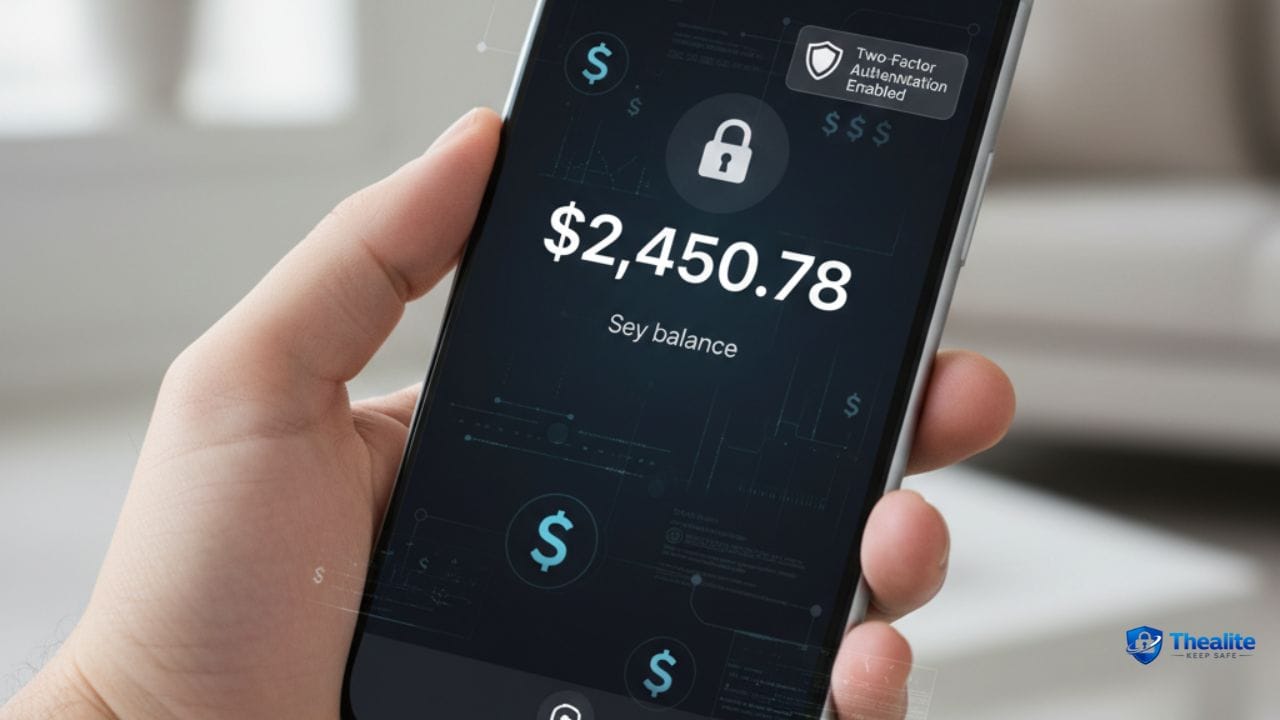
Cash App can be fine for everyday spending and short-term balances, but it’s not the best place to store long-term savings. The biggest risks are scams and account takeover (someone getting into your account). If you keep money there, use every security setting available, turn on alerts, and move larger amounts to a bank account you control.
Why People Ask This Question
Cash App feels like a wallet. It’s easy to receive payments and keep a balance. But many people later realize that payment apps work differently than traditional banks.
So the real question isn’t only “is it safe?” It’s “what level of risk is acceptable for the amount of money I’m keeping there?”
What’s Usually Safe About Keeping a Small Balance
For most people, keeping a small balance for day-to-day spending is reasonable. It’s convenient for splitting bills, sending money, and making small purchases.
A simple rule: treat it like cash in your wallet, not like a savings account.
What’s Risky About Keeping Large Amounts
The main risk isn’t someone hacking the entire company. The usual problems are personal: people get tricked (scams), or accounts get taken over (weak passwords, reused passwords, SIM swaps, stolen phones).
Common Risks (Real-World)
These are the issues that cause most losses:
- Scams: fake support, fake giveaways, “send money to verify” tricks
- Account takeover: password reuse, stolen devices, compromised email
- Wrong-person payments: sending money to the wrong $Cashtag
- Social engineering: someone convinces you to send money “urgently”
- Phone number problems: changing numbers or SIM-swap attempts
How to Make Cash App Safer (Do These First)
If you keep money in Cash App, your goal is to reduce takeover risk.
Use this checklist:
- Use a unique, strong password (never reuse).
- Turn on any available security features (PIN/passcode, biometrics).
- Lock your phone with a strong passcode and keep it updated.
- Turn on alerts/notifications so you notice suspicious activity fast.
- Protect the email linked to your account (strong password + 2FA).
- Be careful with links—never log in from random emails or DMs.
Related: how to keep passwords safe and how to keep your bank account safe online.
Best Practice: Move Bigger Money to a Bank
If you’re holding a larger amount, it’s usually safer to move it to a bank account. Banks are designed for storage, and you have clearer account protections and statements.
If you’re comparing options, see: is it safe to keep money in checking account.
Scam Red Flags to Teach Yourself
If you remember nothing else, remember this: real support will not ask for your codes or money.
- Anyone asking you to send money to “unlock” or “verify” something
- Anyone asking for login codes or a one-time password
- “Accidental payment” messages pressuring you to refund quickly
- Links that look slightly wrong or shortened URLs
- Pressure + urgency + secrecy (classic scam combo)
If Your Cash App Account Gets Compromised
Act fast. The sooner you respond, the better your chances.
- Change your Cash App password and secure your email password.
- Turn on/refresh security settings (PIN/biometric).
- Check linked bank accounts and cards for unauthorized activity.
- Contact Cash App support through the official app/website only.
- File a report with your bank/card issuer if a linked payment method was used.
Quick Checklist: Is It Safe to Keep Money in Cash App?
- Small balance for spending: usually okay
- Large savings: better moved to a bank
- Use unique password + phone lock
- Enable passcode/biometric and alerts
- Never share codes or send money to “verify”
- Secure the email tied to your account
FAQs
Is Cash App safe for storing savings?
For long-term savings, many people prefer a bank account. Cash App can be fine for short-term spending balances, but scams and account takeover risk make it less ideal for large amounts.
What’s the biggest risk with Cash App?
Scams and account takeover are the most common risks. Attackers often trick users into sending money or giving access.
How do I protect my Cash App balance?
Use a unique password, enable passcodes/biometrics, keep your phone and email secure, and turn on alerts.
What should I do if I sent money to the wrong person?
Try to request a refund immediately and contact support through official channels. Always double-check the recipient before sending.
More “Keep Safe” Guides
Explore more money safety guides at Thealite Keep Safe. Also read how to keep your money safe.

As a digital marketer, she has received multiple international awards, including Campaign of the Year at the 2023 European Content Awards and Best Use of Content Marketing at the 2022 Global Search Awards. Nicai holds an MSc in Marketing (First Class Honours) from the UCD Smurfit Graduate Business School and she has also completed the Artificial Intelligence Programme at Oxford University’s Saïd Business School. She is also a contributing writer for publications such as Entrepreneur and Esquire.