Important documents—birth certificates, passports, Social Security cards, titles, wills, and insurance paperwork—are hard to replace and easy to damage. In the U.S., most document losses happen for predictable reasons: fire, water leaks/flooding, theft, and simple misplacement.
The best way to keep documents safe is to use a layered system: store originals securely, protect against fire and water, keep digital backups, and use travel routines that prevent loss on the road.
Quick Answer (The Document Safety System)
- Keep originals in one secure place (home safe or safe deposit box depending on access needs).
- Protect against fire and water (fire-resistant + water-resistant storage).
- Store documents elevated and away from common water sources (basements and under-sink cabinets are risky).
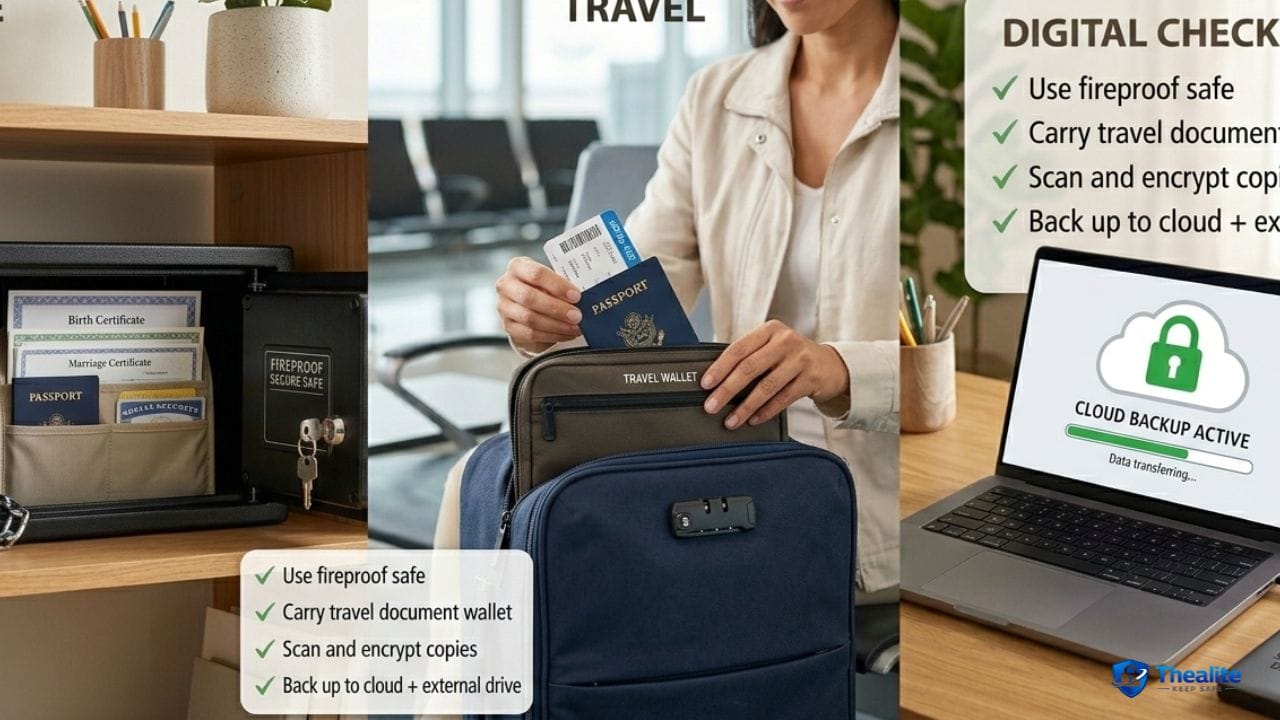
- Create digital backups: scan and store securely (encrypted cloud + offline copy).
- Limit who can access originals and avoid carrying documents “just in case.”
- When traveling: carry only what you need daily, keep backups separately, and use anti-loss routines.
- If documents are lost: act fast—report and protect your identity.
Step 1: Know Which Documents Need Extra Protection
Start by sorting documents into three levels so you don’t over-carry or under-protect.
Tier 1: Hard-to-replace identity and legal documents
- Birth certificate, Social Security card (or equivalent)
- Passport, immigration documents
- Marriage/divorce records, adoption documents
- Wills, trusts, power of attorney
- Property deeds, vehicle titles
Tier 2: Financial and insurance records
- Home/renters insurance policies, auto insurance
- Tax returns and key receipts
- Banking/loan paperwork you must keep
- Medical records you may need quickly
Tier 3: Everyday documents
- Utility bills, school papers, general mail
- Warranty manuals and routine receipts
Rule: protect Tier 1 originals most, and keep Tier 2 organized with backups.
Step 2: The Best Place to Keep Documents at Home
At home, documents are threatened mostly by fire and water. Theft can also be a risk in break-ins. The safest approach is a dedicated storage system, not random drawers.
Option A: Fire-resistant / water-resistant document box
- Good for: quick access to critical papers.
- Pros: portable, simple, affordable.
- Cons: smaller and easier to steal if not secured; quality varies.
Option B: Home safe (best when bolted down)
- Good for: layered protection against theft plus some fire resistance (depending on safe).
- Best practice: bolt it down and keep it in a less-obvious location.
- Add moisture control if you store paper long-term.
Related: What to Keep in a Safe Deposit Box • What to Keep in a Safe.
Where NOT to store documents
- Basement floors (flooding and humidity)
- Under sinks or near plumbing (leaks happen)
- In a garage (temperature swings, humidity, theft risk)
- In a desk drawer or obvious filing cabinet (easy theft target)
Step 3: Fire and Water Protection (The Two Big Killers)
Paper doesn’t need much to be ruined. A small house fire can smoke-damage papers, and a small leak can destroy them. Your goal is to give documents time to survive until you can recover them.
Fire protection habits
- Use fire-resistant storage for Tier 1 documents.
- Keep documents away from common ignition zones (kitchen, heater closets).
- Test smoke alarms and replace batteries regularly (early warning saves property).
Water protection habits
- Keep documents elevated (off the floor).
- Use water-resistant pouches or sealed bags inside a document box.
- Avoid damp rooms; consider a dehumidifier if your home is humid.
Moisture mindset: How to Keep Moisture Out of a Safe • What to Put in a Safe to Keep Moisture Out.
Step 4: Organize Documents So You Can Find Them Fast
Security is also organization. If you can’t find documents quickly during an emergency, the system failed.
Simple organization method
- Use labeled folders: Identity, Property, Insurance, Taxes, Medical, Travel.
- Keep a one-page index of what you store and where (store the index securely).
- Review once or twice a year (update expired passports, old insurance policies, etc.).
Step 5: Digital Backups (Scan + Store Securely)
Digital copies won’t replace every original, but they make replacement much easier. They also protect you if originals are destroyed.
What to scan
- Passports/ID (front/back), birth certificates (if allowed), insurance cards/policies
- Vehicle titles/registrations (as needed), property deeds, medical documents
- Important contact lists (insurance agent, bank, emergency contacts)
How to store scans safely
- Use a secure cloud account protected by strong password + MFA.
- Keep an offline backup (encrypted USB or external drive stored securely).
- Avoid emailing scans to yourself as the main storage method (email can be compromised).
Online document security: Keep Important Documents Safe Online • How to Keep Confidential Information Safe • How to Keep Your Passwords Safe.
Step 6: Travel Document Safety (Don’t Carry Everything)
Travel is where documents get lost: airport stress, crowded transit, hotel rooms, and moving between locations. A simple rule reduces risk: carry only what you need daily and keep backups separate.
Travel rules that work
- Keep passport/ID on your body (secure pocket or pouch), not in an outer backpack pocket.
- Keep backup cards/cash separate from your primary wallet.
- Use a hotel safe wisely for backups, but keep essentials with you.
- Keep a photocopy or digital copy stored separately (not in the same bag).
Travel guides: How to Keep Documents Safe While Traveling • How to Keep Your Passport Safe While Traveling.
Step 7: Safe Deposit Box vs Home Storage (Which Is Better?)
Some documents are better stored off-site. A safe deposit box can reduce home fire/theft risk, but it has access limits (bank hours). Many families use a hybrid system: daily-need documents at home, rarely-needed originals in a safe deposit box.
Good candidates for safe deposit box storage
- Original birth certificates and vital records (depending on your access needs)
- Original deeds, titles, and legal papers you rarely need
- Backup passports or legacy documents (if applicable)
More: What to Keep in a Safe Deposit Box.
Step 8: If Documents Are Lost or Stolen (Action Plan)
If key documents go missing, act quickly. Your priorities are: (1) stop identity fraud, (2) report loss, (3) replace documents.
Fast steps
- If theft occurred, file a police report (needed for some replacements/claims).
- If IDs or sensitive info were stolen, monitor accounts and consider protective steps (credit monitoring/freeze, depending on your situation).
- Replace the most urgent documents first (passport/ID for upcoming travel, etc.).
- Update your document inventory and storage system so it’s easier next time.
Identity protection: How to Keep Your Identity Safe Online.
Copy/Paste Checklist: How to Keep Documents Safe
- Sort documents (Tier 1 identity/legal; Tier 2 finance/insurance; Tier 3 everyday)
- Keep Tier 1 originals in secure storage (home safe or safe deposit box)
- Use fire + water-resistant protection; store elevated and away from plumbing
- Avoid basements/garages/drawers for critical documents
- Organize with labeled folders and a one-page index
- Scan important documents and store securely (cloud + encrypted offline backup)
- Travel: carry only what you need daily; keep backups separate; use hotel safe wisely
- If lost/stolen: report → protect identity → replace → update your system
FAQs
What is the safest way to store important documents at home?
A fire-resistant, water-resistant document box or a bolted-down home safe in a climate-stable area is a strong option for many households, especially when paired with digital backups.
Should I keep original documents in a safe deposit box?
A safe deposit box can reduce home fire/theft risk for documents you don’t need often, but access is limited to bank hours. Many people use a hybrid approach.
How can I keep documents safe from water damage?
Store them elevated, away from plumbing, in water-resistant pouches or containers. Avoid basements and keep documents off concrete floors.
Is it safe to store documents digitally?
Digital copies are very helpful. Store them in a secure cloud account protected by strong passwords and MFA, and keep an encrypted offline backup.
What should I do if my passport or ID is stolen?
Report the theft, protect yourself from identity fraud, and begin replacement immediately—especially if you have upcoming travel.
Conclusion
To keep documents safe, use layers: secure storage for originals, fire and water protection, good organization, and digital backups. When traveling, carry only what you need and keep backups separate. With a simple system, you’ll reduce theft and disaster risk—and make replacements much easier if anything ever goes wrong.

As a digital marketer, she has received multiple international awards, including Campaign of the Year at the 2023 European Content Awards and Best Use of Content Marketing at the 2022 Global Search Awards. Nicai holds an MSc in Marketing (First Class Honours) from the UCD Smurfit Graduate Business School and she has also completed the Artificial Intelligence Programme at Oxford University’s Saïd Business School. She is also a contributing writer for publications such as Entrepreneur and Esquire.