A home safe can protect the things you can’t easily replace—important documents, valuables, and backups—especially from burglary, fire, and water damage. But a safe isn’t a magic shield. The best results come from storing the right items, using the right safe type (fire-rated vs burglary-rated), and preventing common problems like moisture.
This U.S.-focused guide gives you a practical checklist of what to keep in a safe, what NOT to store, and how to set up your safe so your valuables stay protected for years.
Related reading on your site: How to Keep Important Documents Safe at Home • Keep Important Documents Safe Online • How to Keep Cash Safe at Home • How to Keep Jewelry Safe at Home • How to Keep Moisture Out of a Safe • What to Put in Safe to Keep Moisture Out
Quick Answer
The best things to keep in a safe are items that are high-value, hard to replace, and vulnerable to theft or disaster—like passports and birth certificates, property records, backup cash, jewelry, sensitive digital backups, and small heirlooms. Don’t store items that need frequent access, can be damaged by moisture, or are safer elsewhere (like large sums of cash, flammables, or your only set of recovery information).
Step 1: Know What Your Safe Is Built to Protect
Before deciding what to store, understand your safe’s strengths. Most home safes fall into three categories:
- Burglary-resistant safes (heavier, stronger steel, better locking; protect against theft).
- Fire-rated safes (designed to keep internal temperature lower during a fire; great for documents).
- Small lock boxes (better than nothing, but often easy to carry away unless anchored).
Many safes are a mix, but not all are equally strong at both theft and fire protection. Your safe’s rating helps you decide what belongs inside.
What to Keep in a Safe: The Best Categories
Use these categories as your master checklist.
1) Core identity and travel documents
- Passports (and passport cards, if you have them)
- Birth certificates and adoption papers
- Social Security cards (many people store these rather than carry them)
- Marriage/divorce records, name-change documents
- Naturalization or immigration documents
Related: Keep Passport Safe While Traveling • How to Keep Important Documents Safe at Home.
2) Home, vehicle, and property paperwork
- Deed, title, mortgage paperwork (or critical summaries)
- Vehicle titles and lien documentation
- Insurance policies (home, auto, life) and claim contact numbers
- Wills, trusts, and power-of-attorney documents
- Inventory list of valuables (photos + serial numbers)
3) Backup cash and emergency essentials
A small amount of emergency cash can help during outages, storms, or card system problems. The key is to keep it realistic and secure.
- A modest amount of cash for emergencies (whatever fits your comfort level)
- A spare house key (optional—only if you can secure who has access to the safe)
- A written list of key emergency contacts (if phones are dead)
If you keep cash at home, see How to Keep Cash Safe at Home and How to Keep Money Safe at Home.
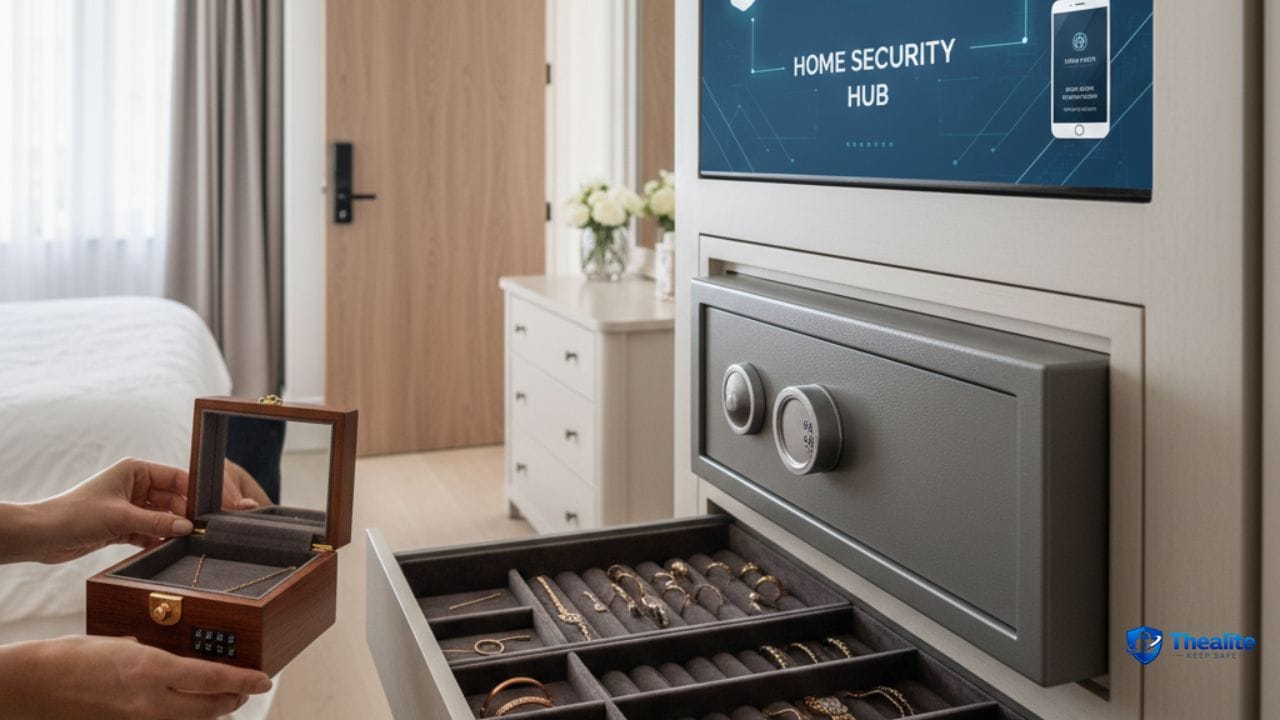
4) Jewelry, precious metals, and small heirlooms
A safe is a common place for jewelry and small valuables—especially items you don’t wear daily.
- Jewelry you don’t wear daily (rings, watches, family pieces)
- Small heirlooms and collectibles
- Gold jewelry and small precious metal items (if you store them)
Related: How to Keep Jewelry Safe at Home • How to Keep Gold Jewelry Safe at Home • How to Keep Engagement Ring Safe.
5) Digital backups and recovery information
Digital backups can be life-saving after a disaster—but only if you store them safely. Consider:
- An encrypted USB drive or external SSD with critical scans (IDs, insurance, tax docs)
- Backup copies of family photos (encrypted if possible)
- Printed recovery codes for important accounts (stored securely)
- A sealed list of key account contact numbers (banks, insurance, employers)
More: Keep Important Documents Safe Online • How to Keep Information Safe.
6) Medication and medical information (with caution)
Some people store spare prescriptions or critical medical documents in a safe. That can work, but consider access and temperature. Medications often have storage requirements—so a safe might not always be the right place.
- Copies of prescriptions and medical summaries
- Insurance cards (or copies)
- Small emergency medical documents (allergy lists)
If you’re storing meds, see Five Safe Places to Keep Medicines and Is It Safe to Keep Medicines in a Pill Box.
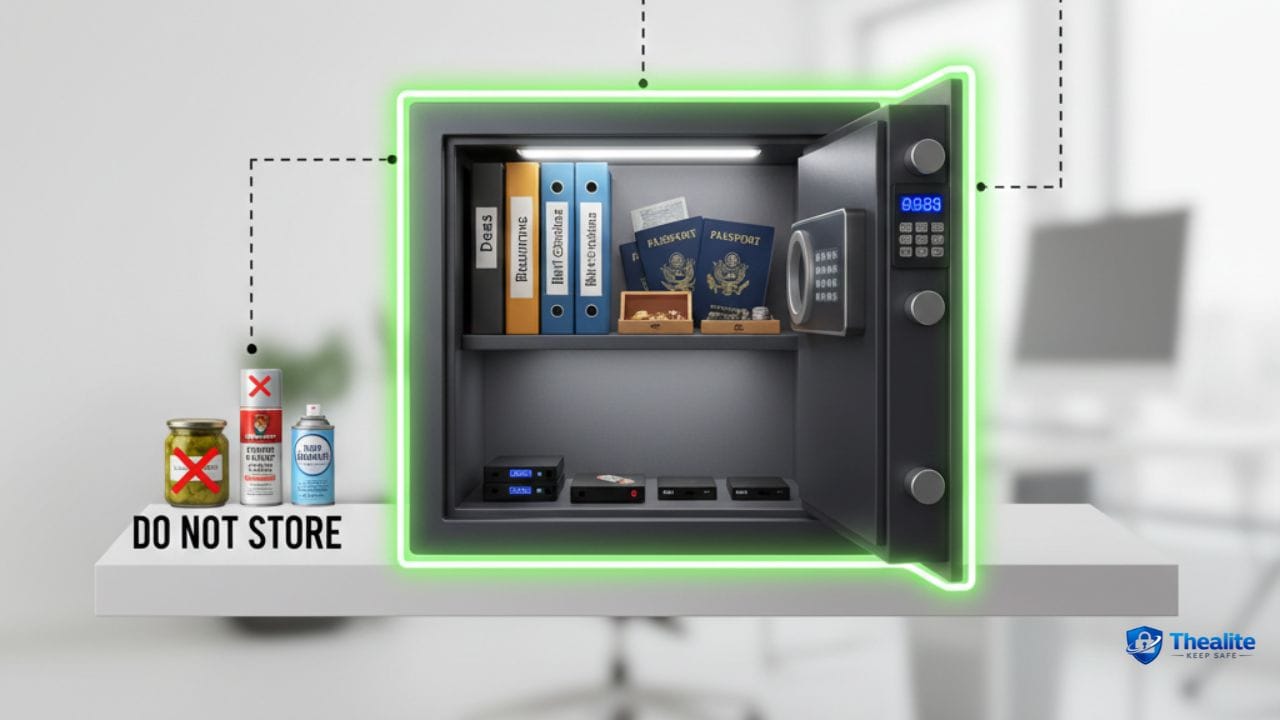
What NOT to Keep in a Safe
Some items create more risk than protection when stored in a home safe.
- Large amounts of cash (risk of total loss and limited recovery if stolen).
- Flammables or hazardous materials (a safe is not a chemical locker).
- Perishables or temperature-sensitive items (safes don’t regulate temperature like a fridge).
- Your only copy of critical recovery info stored with the device it unlocks (separate backups).
- Items you need frequently (constant opening increases visibility and wear).
For large cash storage alternatives, see Can You Keep Cash in a Safe Deposit Box and Which Bank Is Safe to Keep Money.
The Moisture Problem: Protect What’s Inside Your Safe
One of the biggest surprises for new safe owners is moisture. Safes can trap humid air. Over time, that can damage papers, photos, electronics, and anything metal or leather. The fix is simple: moisture control + monitoring.
Moisture control basics
- Use desiccant packs or rechargeable silica canisters.
- Add a dehumidifier rod if your safe supports it.
- Place a small hygrometer inside so you can monitor humidity.
- Avoid storing items loose against the safe walls where condensation can occur.
Deep dives: How to Keep Moisture Out of a Safe • What to Put in Safe to Keep Moisture Out.
Use Inner Protection: Bags, Sleeves, and Fire Pouches
Even with a good safe, extra layers protect your items from water, smoke, and humidity.
- Fire-rated document pouch for passports, certificates, and papers.
- Plastic sleeves or zip pouches for paper documents (avoid trapping moisture long-term).
- Soft pouches or small cases for jewelry to prevent scratches.
- Hard case for digital drives to reduce impact damage.
Safe Setup Tips That Make Everything Safer
- Anchor the safe if possible (small safes are often stolen by being carried away).
- Keep the safe out of obvious sight (visibility increases theft motivation).
- Limit who knows about the safe and who has access.
- Keep an inventory list and photos stored separately (and/or encrypted online).
- Do a quick check-in every few months: verify contents, refresh desiccant, update documents.
Home Safe vs Safe Deposit Box: When to Use Which
A home safe is convenient for quick access. A safe deposit box can add another layer for long-term storage—especially for high-value items you rarely need.
Home safe is best for:
- Documents you may need quickly (insurance, IDs, emergency cash)
- Valuables you want accessible but protected
- Encrypted digital backups you may update periodically
Safe deposit box is best for:
- Very high-value items you rarely need
- Long-term storage of heirlooms (depending on access needs)
- Situations where you want valuables off-site
Related: Can You Keep Cash in a Safe Deposit Box.
Copy/Paste Checklist: What to Keep in a Safe
- Passports, birth certificates, Social Security cards (not carried daily)
- Property and vehicle titles, insurance policies, will/POA documents
- Small emergency cash stash (not a life savings amount)
- Jewelry and small valuables you don’t wear daily
- Encrypted USB/SSD with scanned documents and critical backups
- Printed recovery codes and key contact list (stored securely)
- Medical summaries/prescription copies (if appropriate)
- Moisture control supplies (desiccant, hygrometer; dehumidifier rod if supported)
FAQs
Should I keep my Social Security card in a safe?
Many people do, because it’s sensitive and not needed daily. Keeping it in a safe reduces loss and identity theft risk.
Is it smart to keep cash in a home safe?
A small emergency amount can be useful. For larger savings, bank options are usually safer and easier to recover if something goes wrong.
Can I store electronics or hard drives in a safe?
Yes, but protect them from moisture and heat. Use desiccant and consider an inner case. If fire protection matters, use a fire-rated safe and an extra protective pouch.
How do I prevent mold or moisture damage in my safe?
Use desiccant or a dehumidifier rod and monitor with a hygrometer. Refresh moisture control items regularly.
What’s the biggest mistake people make with safes?
Not anchoring small safes, storing everything in one place without backups, and ignoring moisture until damage appears.
Conclusion
The best things to keep in a safe are the items that would be hardest to replace and most damaging to lose: core documents, small valuables, and secure backups. Avoid storing large cash piles or anything that needs temperature control, and don’t forget moisture protection—because humidity can ruin valuables quietly. With a smart checklist and a few maintenance habits, your safe becomes a true long-term protection system.

As a digital marketer, she has received multiple international awards, including Campaign of the Year at the 2023 European Content Awards and Best Use of Content Marketing at the 2022 Global Search Awards. Nicai holds an MSc in Marketing (First Class Honours) from the UCD Smurfit Graduate Business School and she has also completed the Artificial Intelligence Programme at Oxford University’s Saïd Business School. She is also a contributing writer for publications such as Entrepreneur and Esquire.