Building a reliable collection of tools is a significant financial investment that takes years to complete. Whether you are a weekend DIY enthusiast or a professional contractor, your drills, saws, and wrenches are the lifeblood of your projects. Unfortunately, tools are highly susceptible to damage from the elements and are prime targets for garage thieves. Leaving a high-end power drill on a workbench overnight might seem harmless, but a single roof leak or an unlocked side door can ruin your hard-earned collection. Protecting your equipment requires a dedicated strategy focused on climate control, organization, and physical security.
Why Tool Safety and Storage Matter
Proper storage is about more than just keeping your workbench tidy; it directly impacts the lifespan of your equipment. When tools are tossed carelessly into a bin, sharp blades become dull, power cords get crimped, and delicate calibration settings on measuring devices are thrown off. Furthermore, disorganized workspaces lead to physical injuries. Stepping on a loose rake or tripping over an extension cord can cause serious harm. By organizing your gear, you save time, prevent accidents, and ensure your equipment is always ready for the next job.
How to Keep Tools Safe in a Garage, Shed, Workshop, or Truck
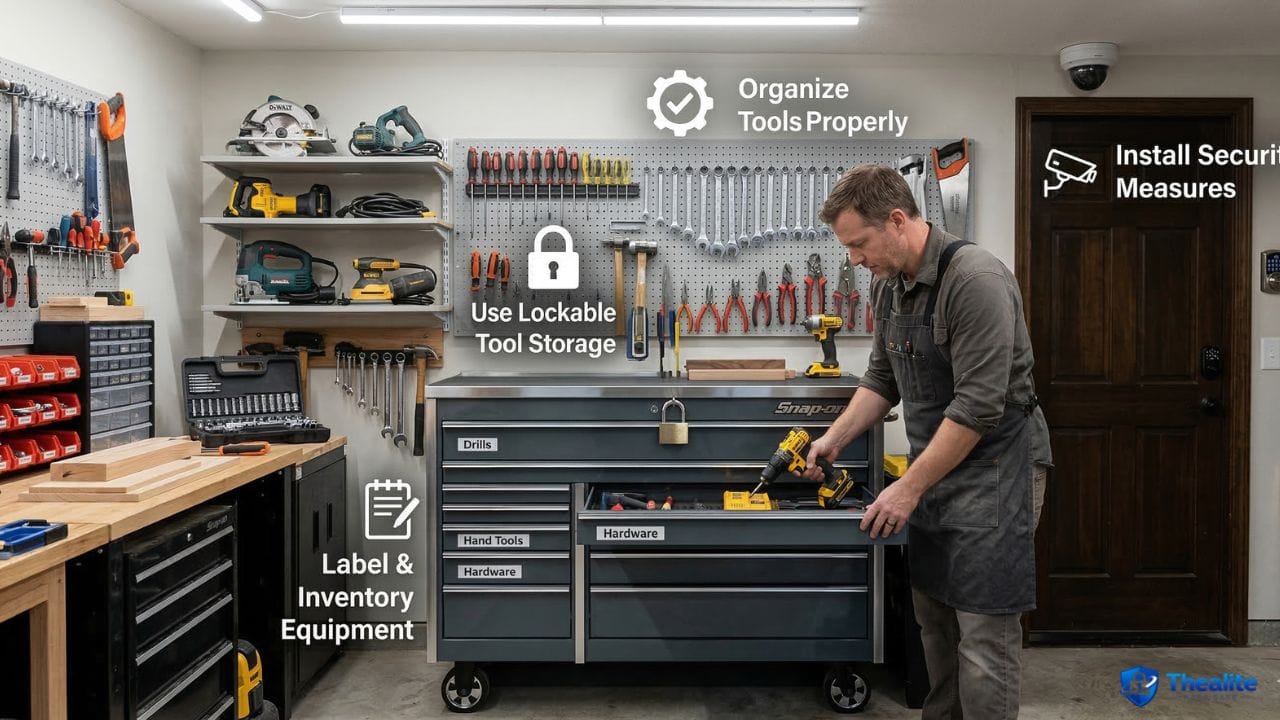
If you are wondering exactly how to keep tools safe across different environments, you must tailor your storage method to the location. In a garage, heavy-duty rolling tool chests and wall-mounted pegboards keep items off the damp concrete floor. If you use a backyard shed, weatherproofing is your top priority; ensure the roof is sealed and the doors have high-quality padlocks. For those who work out of a vehicle, truck bed lockboxes bolted directly to the frame are absolutely essential to prevent smash-and-grab thefts at job sites.
How to Prevent Rust, Corrosion, and Moisture Damage
Moisture is the silent killer of metal hand tools. A humid garage will coat your wrenches and screwdrivers in surface rust in a matter of weeks. To fight this, store your hand tools in closed drawers with anti-rust liners. Adding desiccant packs to your toolboxes is a highly effective, low-cost trick. In fact, the exact same methods used to figure out how to keep moisture out of a safe—like using silica gel packets or installing a small dehumidifier—work perfectly for enclosed tool cabinets.
Cleaning, Drying, and Oiling Habits
Never put a dirty tool away. After finishing a project, wipe off dirt, sawdust, and grease with a clean rag. If a tool gets wet, dry it thoroughly immediately. For hand tools made of bare metal, lightly applying a coat of multi-purpose machine oil or WD-40 before placing them back in the drawer creates a protective barrier against ambient humidity, extending their lifespan by decades.
Locking Up Expensive Tools and Reducing Theft Risk
Power tools are highly liquid assets on the black market, making them incredibly attractive to burglars. You wouldn’t leave a stack of hundred-dollar bills sitting on your driveway, so you must learn to keep your money safe by treating your expensive power tools with the same level of security. Always lock your garage or workshop doors, cover windows so thieves cannot peek inside, and consider engraving your initials or driver’s license number onto the plastic casing of your power tools to make them harder to pawn.
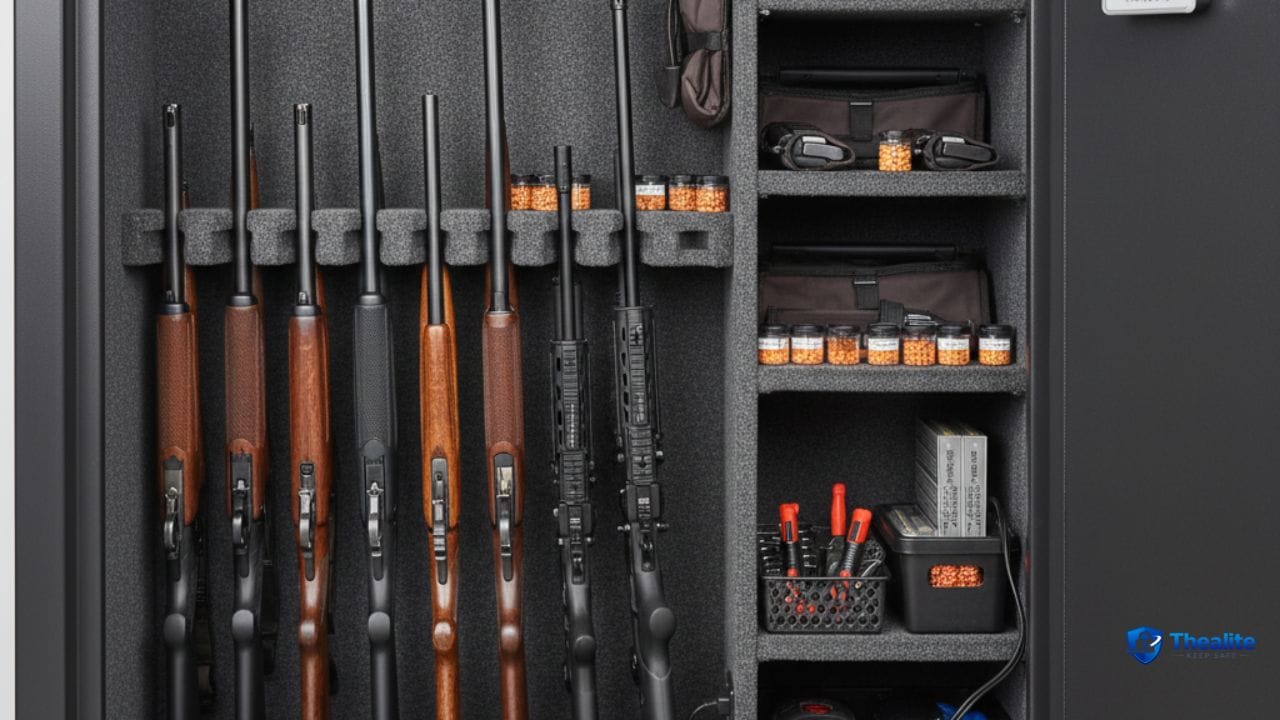
Just as you would plan to keep valuables safe at home using heavy-duty security measures, your high-ticket equipment deserves a dedicated lockable steel cabinet, especially if you store them in an easily accessible carport or outbuilding.
How to Store Power Tools, Hand Tools, Batteries, Blades, and Accessories
Every type of equipment requires a specific storage approach to prevent damage:
- Power Tools: Store them in their original hard plastic cases or dedicated canvas bags to protect the motors from dust.
- Hand Tools: Pegboards are perfect for hammers and wrenches, keeping them visible and organized.
- Blades and Bits: Keep circular saw blades and drill bits in protective sleeves or magnetic strips so their cutting edges don’t chip against each other.
- Batteries: Cordless tool batteries require strict temperature control. If your garage freezes in the winter or bakes in the summer, knowing how to keep lithium batteries safe by bringing them inside the house will prevent them from degrading prematurely or becoming a fire hazard.
Labeling, Inventory Lists, and Charging Stations
Create a dedicated, fire-safe charging station for your batteries, and never leave them charging unattended overnight. It is also highly recommended to create a master inventory list of all your tools, including serial numbers and purchase receipts. Keep a physical copy of this list in your house; understanding how to keep important documents safe at home ensures you can quickly file a police report and an insurance claim if your workshop is ever broken into.
What Not to Do When Storing Tools
Never store tools directly on a concrete floor, as concrete wicks moisture and promotes rapid rusting. Do not store heavy items on high, flimsy shelves where they could fall and cause a head injury. Additionally, avoid storing caustic chemicals, pool chlorine, or fertilizers in the same enclosed cabinet as your metal tools, as the chemical off-gassing will cause severe corrosion.
Common Tool Storage Mistakes to Avoid
A frequent mistake is leaving lithium-ion batteries sitting on the charger long after they have reached 100%, which can degrade the battery cells over time. Another common error is ignoring minor roof leaks in a garden shed, allowing a slow drip to ruin thousands of dollars worth of equipment. Finally, failing to lock the door connecting an attached garage to the main house is a major security flaw that puts both your tools and your family at risk.
A Simple Tool Safety Checklist
- Wipe down and dry all tools after every use.
- Apply a light coat of protective oil to metal hand tools.
- Store lithium batteries in a temperature-controlled environment.
- Keep high-value power tools in a locked steel cabinet or job box.
- Use silica gel packets in closed drawers to absorb moisture.
- Lock the workshop and close the garage door every night.
Frequently Asked Questions (FAQ)
How to keep tools safe?
You can keep tools safe by cleaning and oiling them after use to prevent rust, storing them in lockable, climate-controlled cabinets, and organizing them on pegboards or in tool chests to prevent physical damage to their blades and motors.
What is the best way to store tools in a garage?
The best way is to use a combination of heavy-duty, lockable rolling tool chests for expensive items, and wall-mounted pegboards for everyday hand tools. Keep everything elevated off the bare concrete floor to avoid moisture transfer.
How do you stop tools from rusting?
Stop tools from rusting by wiping them completely dry after use, applying a very light coat of machine oil or WD-40, and tossing moisture-absorbing silica gel packets into your closed tool drawers.
Should power tool batteries be stored separately?
Yes, lithium-ion power tool batteries should be removed from the tools when not in use. They should be stored in a cool, dry place indoors, as extreme summer heat or freezing winter temperatures in a garage will permanently damage the cells.
How do you protect expensive tools from theft?
Protect expensive tools by keeping them out of sight from windows, storing them in heavy, lockable job boxes or steel cabinets, engraving your name on the casings, and installing motion-sensor lighting and cameras outside your garage or shed.
Is it okay to store tools in a shed?
Yes, but only if the shed is highly weather-resistant and secure. The shed must not leak, should have good ventilation to prevent humidity buildup, and must be secured with a heavy-duty padlock and reinforced door hinges.
How often should tools be cleaned and checked?
Tools should receive a quick wipe-down immediately after every use. A more thorough inspection—checking for frayed power cords, dull blades, or early signs of rust—should be conducted at least twice a year.
What should not be stored with tools?
Never store metal tools in the same cabinet as corrosive chemicals, pool chlorine, fertilizers, or strong acids. The fumes from these substances can cause rapid, severe rust and pitting on metal surfaces.