Managing personal finances today means navigating a complex mix of traditional banking institutions and modern digital wallets. With just a few taps on a smartphone, you can deposit a paycheck, split a dinner bill with a friend, or pay for an online purchase. However, the convenience of digital finance often brings up serious questions regarding security. Deciding where to park your hard-earned funds is a major decision, and understanding the distinct safety differences between a federally insured institution and an online payment platform is crucial for protecting your livelihood.
Why People Ask Where Money Is Safest
The rise of cybercrime, phishing scams, and sudden account freezes has made consumers hyper-aware of where their money lives. People want to know that their paycheck won’t vanish overnight due to a hacked app or a sudden policy change by a tech company. While spreading funds across different platforms can be convenient for everyday spending, not all storage methods offer the same legal protections, fraud resolution processes, or government backing.
Is It Safe to Keep Money in Bank for Everyday Savings and Bills?
When evaluating traditional financial institutions, many people ask: is it safe to keep money in bank? The short answer is yes. For everyday savings, emergency funds, and bill-paying accounts, a traditional bank or credit union is generally the safest place for your money. Banks are highly regulated entities subject to strict federal oversight. If you are ever wondering which bank is safe to keep money, look for institutions that prominently display their FDIC (Federal Deposit Insurance Corporation) or NCUA (National Credit Union Administration) membership.
Deposit Insurance, Account Security, and Fraud Protection Basics
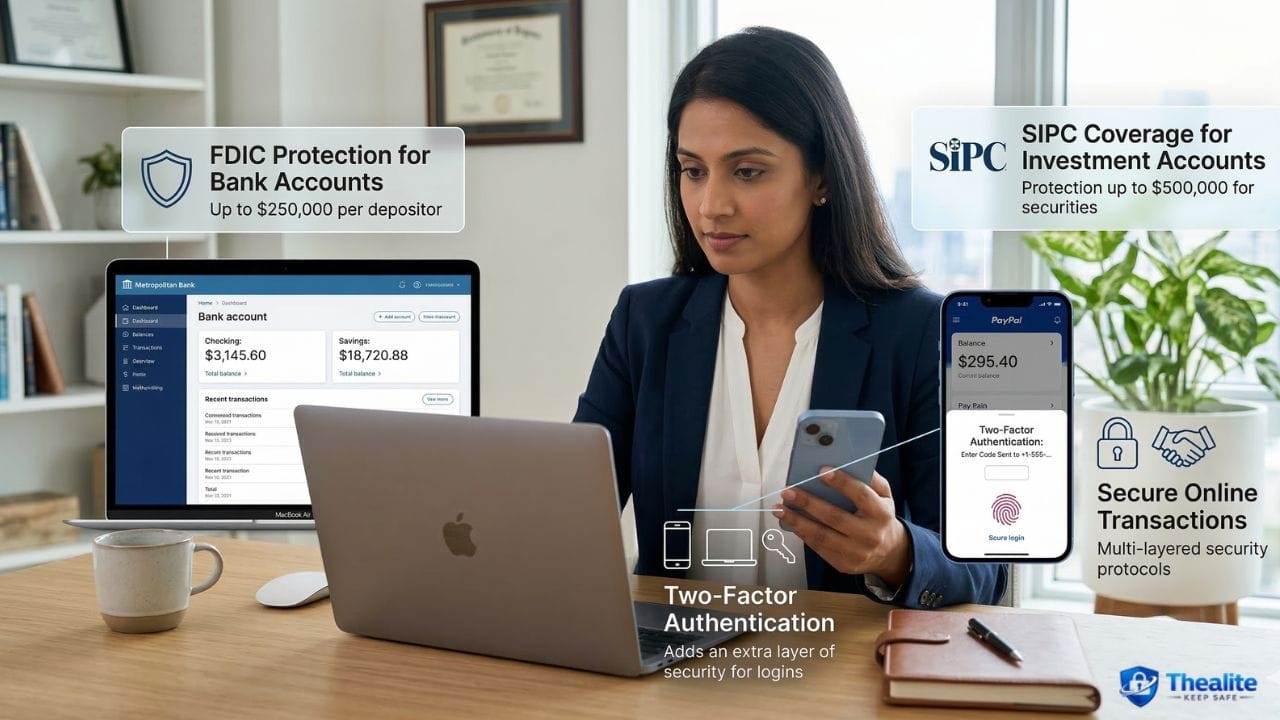
The primary reason banks are secure is deposit insurance. In the USA, the FDIC protects your deposits up to $250,000 per depositor, per insured bank, in the rare event that the bank fails. Banks also employ massive fraud detection departments that monitor accounts for unusual activity 24/7. Some individuals still wonder if can you keep cash in a safe deposit box instead of an account; while you technically can, cash inside a physical box is not insured by the FDIC, making an actual bank account much safer from fire, theft, or loss.
Is It Safe to Keep Money in PayPal for Payments and Short-Term Holding?
As digital wallets dominate e-commerce, millions of users leave a lingering balance in their apps and ask: is it safe to keep money in paypal? PayPal is highly secure for processing payments and offers excellent buyer protection when shopping online. However, it is not a bank. Keeping large amounts of money sitting in a standard PayPal balance for extended periods carries risks that traditional banking does not.
Differences Between Bank Accounts and Digital Wallet Balances
The biggest difference lies in regulation and insurance. Standard PayPal balances are not automatically FDIC-insured unless you use their specific pass-through products (like the PayPal Cash Plus account linked to a debit card). Furthermore, tech companies like PayPal reserve the right to freeze or limit your account if their automated algorithms flag a transaction as suspicious. Resolving a frozen digital wallet can sometimes take weeks of back-and-forth emails, whereas a frozen bank account can often be sorted out by visiting a local branch with your ID.
When a Bank May Be Safer Than PayPal
A traditional bank is always safer for long-term wealth building, receiving direct deposits from your employer, and storing your emergency fund. Knowing exactly how to keep your money safe means separating your core savings from your daily digital spending. If you frequently wonder is it safe to keep money in checking account, the answer is yes, because even your standard checking account benefits from robust federal protections and zero-liability fraud guarantees provided by your debit card issuer.
When PayPal Can Still Be Useful
PayPal shines as a transactional middleman. It is incredibly useful for online shopping because it allows you to pay a merchant without ever exposing your actual credit card or bank account numbers to the seller. If a merchant website is breached, the hackers will not get your banking details. It is best to treat PayPal as a secure bridge to move money, rather than a vault to store it.
How to Reduce Risk with Alerts, Strong Passwords, MFA, and Scam Awareness
Regardless of where you store your funds, your personal habits dictate your ultimate security level. You should:
- Enable Multi-Factor Authentication (MFA): Require a text code or an authenticator app approval before anyone can log into your bank or digital wallet.
- Set Up Push Notifications: Configure your apps to alert you the moment a transaction over $1 occurs.
- Use Strong, Unique Passwords: Never use the same password for your bank that you use for your social media.
A huge part of financial security is understanding how to keep your identity safe online. Phishing emails mimicking your bank or PayPal are the most common way thieves gain access to your funds.
Common Mistakes People Make with Digital Money Storage
A frequent mistake is treating digital payment apps like high-yield savings accounts, leaving thousands of dollars sitting uninvested and uninsured. Another error is logging into financial apps while connected to public, unsecured Wi-Fi at coffee shops or airports. Finally, ignoring routine app updates leaves your digital wallets vulnerable to known security exploits that hackers actively target.
What to Do If an Account Is Frozen, Hacked, or Used Without Permission
If you notice an unauthorized charge or find yourself locked out of your account, act immediately. First, call your bank’s or the platform’s official fraud department directly—do not click links in unsolicited text messages warning you about a freeze. Request an immediate freeze on your debit cards and change your online passwords. Under federal law, if you report unauthorized transactions on a bank account quickly, your liability is strictly limited.
Frequently Asked Questions (FAQ)
Is it safe to keep money in bank?
Yes, it is highly safe to keep money in a traditional bank or credit union in the USA, provided the institution is FDIC or NCUA insured. This insurance protects your deposits up to $250,000 against bank failure, and banks offer robust fraud protection.
Is it safe to keep money in PayPal?
While PayPal is highly secure for conducting online transactions, standard PayPal balances are not typically FDIC-insured. It is safe for short-term holding and shopping, but it is not recommended for storing large amounts of long-term savings.
Is a bank safer than PayPal?
Yes, a bank is safer for storing money. Banks are heavily regulated, offer federal deposit insurance, and have established, legally binding fraud resolution processes that provide consumers with stronger protections than standard digital wallets.
Should you keep large amounts of money in PayPal?
No, you should avoid keeping large amounts of money in a standard PayPal balance. Since digital wallets can freeze accounts due to automated security flags, large sums should be transferred to an insured traditional bank account for safekeeping.
How much money is safe to keep in a bank account?
Any amount up to $250,000 per depositor, per ownership category, per insured institution is completely safe and backed by the FDIC. If you have more than $250,000 in cash, you should spread it across multiple insured institutions.
What happens if your PayPal account is limited?
If your PayPal account is limited or frozen, you will temporarily lose the ability to send, withdraw, or receive money. You must complete their required security steps—like verifying your identity or providing invoices—before the funds are released.
Are checking accounts safe for savings?
Checking accounts are physically secure and FDIC-insured, but they are generally linked to debit cards, making them more vulnerable to daily skimming or card theft. It is safer to keep the bulk of your cash in a separate, unlinked savings account.
How do you protect your money from scams and account fraud?
Protect your money by enabling two-factor authentication on all financial accounts, setting up real-time transaction alerts, never sharing login codes over the phone, and ignoring unsolicited emails or texts asking for payment information.