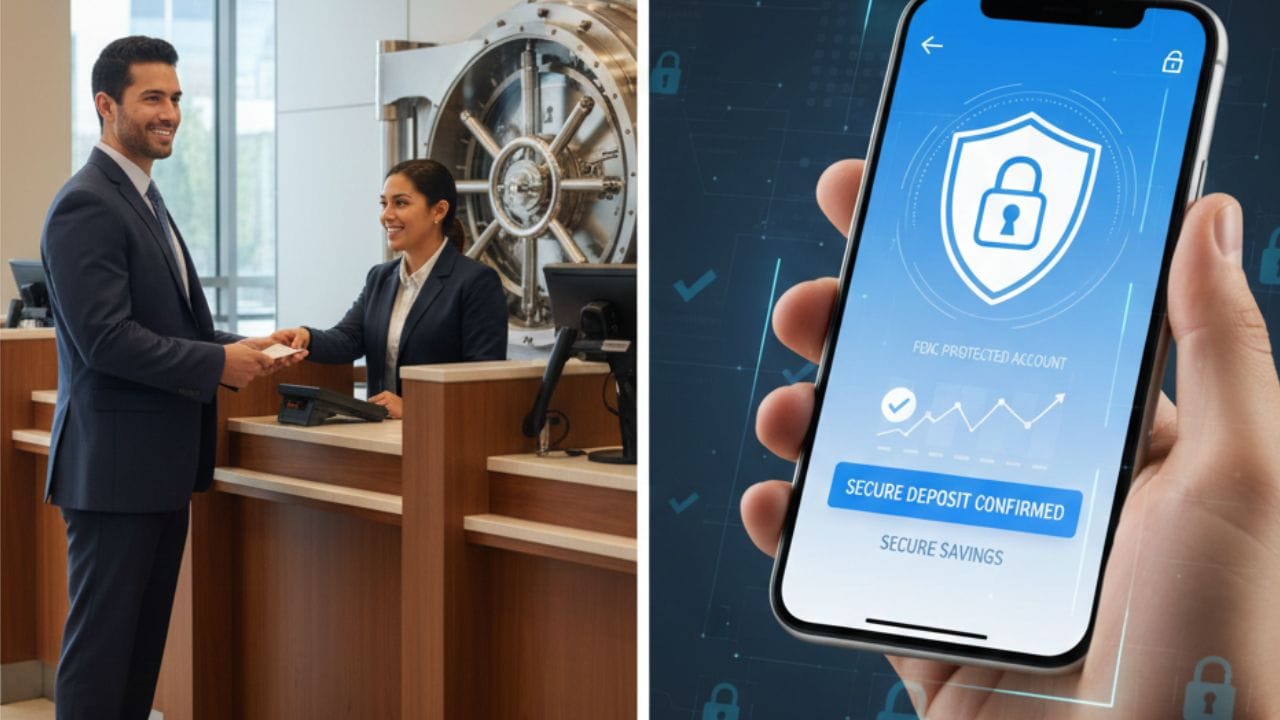
If you’re asking “Which bank is safe to keep money?”, you’re already thinking like a smart saver. In the U.S., most mainstream banks and credit unions are safe for everyday deposits—especially when your accounts are federally insured. The real key isn’t picking a single magic “safest bank.” It’s knowing what safety actually means and how to verify it in minutes.
This guide will walk you through the most important safety protections (FDIC and NCUA insurance), how to confirm your institution is covered, how to evaluate online banks and fintech apps, and the best ways to structure your accounts so your money stays protected.
If you’re deciding where to keep money right now, you may also want to read is it safe to keep money in a checking account and how to keep your money safe.
What “Safe” Means for a Bank Account
When people worry about bank safety, they’re usually talking about two different risks:
• Bank failure risk (the institution goes under)
• Fraud and theft risk (someone steals your money or account access)
Federal deposit insurance addresses bank failure risk. Good security practices address fraud risk. A truly safe place to keep money covers both.
Step 1: Only Use Federally Insured Institutions
In the U.S., the strongest basic safety signal is federal deposit insurance:
• FDIC insurance for banks
• NCUA insurance for credit unions
If your bank is FDIC-insured, eligible deposit accounts are protected up to the insurance limit (commonly described as $250,000 per depositor, per insured bank, per ownership category). Credit unions have similar protection through the NCUA for member accounts.
What’s typically covered (and what’s not)
Deposit insurance generally covers standard deposit accounts like checking, savings, and CDs at insured institutions. It does not cover losses from identity theft or scams, and it doesn’t apply to investments like stocks, bonds, or crypto held outside deposit accounts.
Step 2: Verify Insurance (Don’t Just Trust a Logo)
Most insured institutions display an FDIC or NCUA logo, but it’s smart to verify—especially for online banks and apps.
How to verify a bank is FDIC-insured
- Search the bank’s legal name in the FDIC’s BankFind tool.
- Confirm the bank’s FDIC certificate number (often listed in account disclosures).
- If you’re using an app, identify the partner bank that actually holds the deposits.
How to verify a credit union is NCUA-insured
- Look for NCUA ‘Federally insured by NCUA’ language in disclosures.
- Verify the credit union is insured through the NCUA (many state-chartered credit unions are still federally insured).
Important note about fintech apps
Some apps are not banks. They may partner with an FDIC-insured bank, but your protection depends on how your funds are held (and whether your name is properly associated with the deposit account at the partner bank). Always confirm the partner bank and read the app’s deposit disclosures.
Related: if you’re comparing apps vs banks, read is it safe to keep money in Cash App.
So… Which Banks Are ‘Safe’ in Practice?
For most people, the safest answer is: any FDIC-insured bank (or NCUA-insured credit union) that you can verify, with good account security and your balances kept within insured limits.
Instead of chasing headlines about which institution is ‘strongest,’ use a simple checklist to choose a safe place to keep money.
The Safe-Bank Checklist (Use This to Choose)
1) Insurance is clear and verifiable
- You can find the institution in an official FDIC/NCUA lookup tool.
- The bank’s legal name matches what’s in your account documents.
- For apps: the partner bank is clearly named in disclosures.
2) Your money is kept in the right account types
Safety depends on what you’re storing. For example:
• Emergency fund: high-yield savings or money market deposit account at an insured institution
• Bills/weekly spending: checking account with strong security features
• Longer-term cash: CDs or savings (still within insured limits)
If you store large balances, make sure you understand how insurance limits apply to your specific ownership category.
3) Strong security features are available
- Two-factor authentication (2FA) or multi-factor authentication for logins
- Instant transaction alerts (texts/push notifications)
- Ability to lock/freeze cards in the app
- Biometric login (Face ID/Touch ID) and strong passcode support
For account protection habits, see keep bank account safe online and how to keep your password safe.
4) Customer support is reachable when it matters
In a fraud situation, speed matters. A bank can be technically insured but still be a pain if you can’t reach support quickly. Look for 24/7 fraud lines, easy account freezes, and clear dispute processes.
5) You can separate your money into ‘buckets’
A simple safety strategy is to separate money by purpose:
• One account for bills
• One account for savings/emergency fund
• A small spending buffer
This limits the impact if your debit card or checking account is compromised.
What About Online Banks—Are They Safe?
Online banks can be just as safe as traditional banks if they’re FDIC-insured (or NCUA-insured for credit unions). In fact, many online banks offer strong security features and competitive rates. The main differences are access and how you deposit cash.
Online bank safety tips
- Verify FDIC insurance using the bank’s legal name (not just the brand name).
- Use strong login security (unique password + 2FA).
- Enable transaction alerts for withdrawals and transfers.
- If you rely on cash deposits, confirm how cash deposits work before switching.
Be careful with ‘banking apps’ that aren’t banks
Some popular apps provide ‘banking-like’ features, but the app itself may not be a bank. That doesn’t automatically mean it’s unsafe—it just means you must confirm where the money is actually held and whether it’s protected as an insured deposit.
How Much Money Should You Keep in One Bank?
For everyday use, many people keep their emergency fund and monthly cash in a single insured institution. If you have balances approaching insurance limits, it’s wise to spread funds across multiple insured banks or use different ownership categories where appropriate.
Also remember: keeping money safe isn’t only about bank failure. It’s also about reducing fraud exposure. Keeping only what you need for spending in checking and debit-linked accounts is a smart habit.
Checking vs Savings: Which Is Safer?
Both can be insured at the same institution, but checking accounts usually have higher day-to-day exposure because they’re linked to debit cards and bill pay.
- Keep a smaller buffer in checking (for bills and weekly spending).
- Keep most savings in a separate savings account (still insured) to reduce exposure.
- Use alerts and account security settings to detect fraud fast.
Related: how to keep debit card safe (debit-linked checking risk management).
Fraud Protection: How to Make Any Bank ‘Safer’
Even the safest bank can’t protect you from every scam if your login gets stolen or you authorize a fraudulent transfer. These steps help across almost every institution:
High-impact steps
- Use a unique password for your email and bank (never reuse).
- Turn on 2FA everywhere it’s offered (especially email).
- Enable transaction alerts for withdrawals, transfers, and new payees.
- Avoid logging in through links in texts/emails—type the bank URL yourself.
- Keep your phone secured (screen lock + updates).
Helpful internal reading: how to keep your identity safe online • keep personal information safe online • how to keep data safe and secure
What If You Don’t Trust Banks at All?
If you’re worried about bank safety, storing large amounts of cash at home usually increases risk (theft, fire, loss). A better approach is to use insured accounts and improve your personal security habits. If you do keep some cash at home, keep it limited and stored securely.
Related: how to keep money safe at home and how to keep cash safe at home.
Quick Decision Guide (Pick the Best ‘Safe’ Option for You)
Use this simple match-up based on your needs:
If you want maximum everyday convenience
- Choose a verified FDIC-insured bank with strong mobile security and easy ATM access.
- Keep most savings separate from checking to reduce exposure.
If you want strong local service and community feel
- Choose an NCUA-insured credit union with good online banking features.
- Confirm shared branch/ATM access if that matters to you.
If you want higher savings rates and don’t need branches
- Choose an FDIC-insured online bank with clear insurance and strong security features.
- Keep a small local account for cash deposits if needed.
If you’re using a fintech app for spending
- Treat it like a spending wallet—not a long-term storage vault.
- Confirm the partner bank and FDIC coverage details.
- Keep larger balances at a verified insured bank/credit union.
Quick Checklist (Copy/Paste)
- Verify FDIC/NCUA insurance using official lookup tools
- Keep balances within insured limits (and spread funds if needed)
- Use unique passwords + 2FA (especially for email and bank logins)
- Turn on instant transaction alerts
- Keep limited money in checking; store most savings separately
- Be cautious with fintech apps—confirm the partner bank and coverage
FAQs
Which bank is the safest to keep money in?
In practice, the safest choice is a federally insured institution you can verify (FDIC for banks, NCUA for credit unions), combined with strong account security and keeping balances within insurance limits.
Are online banks safe for keeping large amounts of money?
They can be—if the online bank is FDIC-insured and you verify it. Use strong login security and alerts, and confirm how insurance applies to your accounts.
Is it safer to keep money in a credit union or a bank?
Both can be very safe when federally insured. Banks typically use FDIC insurance; credit unions typically use NCUA insurance. The best choice often comes down to features, service, and convenience.
Is it safe to keep all my money in one bank?
It can be safe if you stay within insured limits and use strong security practices. If you have large balances, spreading funds across multiple insured banks can reduce risk.
Is Cash App a safe place to keep money long-term?
Many people use it safely for spending, but it’s wise to keep long-term savings in a verified insured bank or credit union. Always review how your funds are held and what protections apply.
Conclusion
The safest bank for your money isn’t about a brand name—it’s about protection and verification. Choose a federally insured institution, confirm coverage, use strong security and alerts, and structure your money so your checking account doesn’t hold more than it needs. With those steps, your money is protected from both bank failure risk and most common fraud risks.

As a digital marketer, she has received multiple international awards, including Campaign of the Year at the 2023 European Content Awards and Best Use of Content Marketing at the 2022 Global Search Awards. Nicai holds an MSc in Marketing (First Class Honours) from the UCD Smurfit Graduate Business School and she has also completed the Artificial Intelligence Programme at Oxford University’s Saïd Business School. She is also a contributing writer for publications such as Entrepreneur and Esquire.