A safe deposit box sounds like the perfect place to store cash: it’s in a bank vault, behind locks, and away from your home. So it’s a natural question— can you keep cash in a safe deposit box?
In the United States, keeping cash in a safe deposit box is usually not automatically illegal, but it often isn’t the smartest choice. The biggest issues aren’t “police will arrest you for putting cash in a box.” The real issues are practical: bank rules, access limits, lack of insurance, and what happens if the bank is closed when you need the money.
Related reading on your site: Illegal to Keep Cash in Safe Deposit Box • How to Keep Cash Safe at Home • How to Keep Money Safe at Home • How to Keep Important Documents Safe at Home
Quick Answer
Yes, you *can* keep cash in a safe deposit box in many cases, but it’s often not recommended because:
• Cash in a safe deposit box is usually not insured by FDIC/NCUA.
• You may not have access during weekends, holidays, emergencies, or bank closures.
• Bank policies can restrict what’s allowed (and you may violate the rental agreement).
• If there’s a dispute, death, unpaid box rent, or a legal order, access can be delayed.
For most people, it’s safer to keep large sums in an FDIC-insured bank account and keep only a small emergency amount accessible.
What a Safe Deposit Box Is (and What It Isn’t)
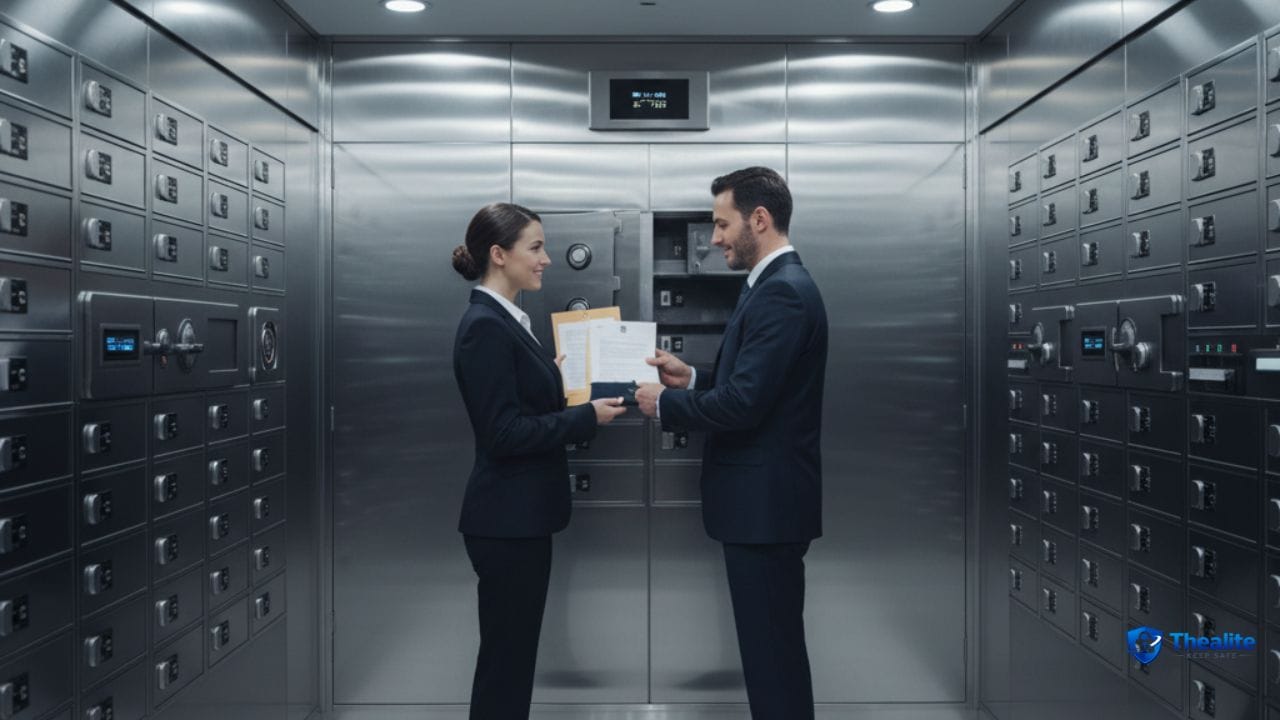
A safe deposit box is a small, locked container inside a bank’s vault that you rent. It’s designed to protect valuables from theft and many types of disasters. But it’s not the same as a bank account. Money deposited in a checking or savings account can be insured (up to certain limits). Items inside a safe deposit box generally are not automatically insured.
Is It Legal to Store Cash in a Safe Deposit Box?
In general, storing cash in a safe deposit box is not inherently illegal in the U.S. The legal risk is usually indirect: if cash is connected to illegal activity, it can create legal problems no matter where it’s stored. But for law-abiding people, the bigger concern is bank policy—what your specific bank’s safe deposit agreement allows.
Important nuance
Some banks discourage cash because it’s hard to verify, easy to dispute, and can create problems when boxes are drilled or inventoried. If you want to store cash, read your box agreement carefully.
Can the Bank See What’s Inside Your Box?
Banks typically do not routinely inspect your safe deposit box contents. The box is private, and banks generally don’t know what you store. However, there are situations where contents can be accessed or inventoried, such as:
• court orders or legal processes
• unpaid rental fees leading to box drilling
• certain procedures after the death of the box renter
• bank errors or access disputes
That’s why many people avoid storing large amounts of cash there—if something goes wrong, proving what was inside can be difficult.
Is Cash in a Safe Deposit Box Insured?
This is the part that surprises people: FDIC insurance applies to deposits in bank accounts, not to contents in a safe deposit box. If cash is stolen, destroyed, or lost from a box, you may not be covered unless you have separate insurance that applies.
What to do if you insist on storing cash
- Ask the bank what coverage (if any) applies to safe deposit boxes.
- Check your homeowners/renters insurance to see if it covers cash in a safe deposit box (many policies have limits).
- Consider documenting what you store (but store that documentation securely).
The Hidden Risks of Keeping Cash in a Safe Deposit Box
Cash in a box has some real-world downsides. Here are the big ones:
1) Access risk (you can’t get it anytime)
You can usually only access a safe deposit box during bank branch hours. If you need cash urgently at night, during holidays, or during a regional emergency, your money may be effectively locked away.
2) Record-keeping and proof problems
If there’s ever a dispute, it can be hard to prove how much cash was in the box. A bank’s drill-and-inventory process may document items found, but cash amounts can still be contentious.
3) Legal or administrative delays
If the renter passes away, if there’s a probate issue, or if co-owners disagree, the box can be sealed temporarily. Even when everything is legitimate, access can be delayed.
4) Opportunity cost
Cash sitting in a box earns no interest and loses purchasing power over time due to inflation. Keeping too much cash outside an account may cost you long-term.
What Should You Keep in a Safe Deposit Box Instead?
Safe deposit boxes can be excellent for items that you don’t need every day but want protected from theft and disasters.
- Original important documents (birth certificate, marriage certificate, property records)
- Backup copies of estate documents (will, trust)
- Small valuables like heirloom jewelry (if insured appropriately)
- Irreplaceable items that aren’t needed urgently
Related: How to Keep Important Documents Safe at Home and Keep Important Documents Safe Online.
Better Alternatives to Storing Cash in a Safe Deposit Box
If your goal is safety, you usually have better options than putting a large stack of cash in a box.
Option 1: Keep cash in an FDIC-insured account (best for most people)
For long-term safety, a checking or savings account at an FDIC-insured bank (or NCUA-insured credit union) is usually better than a box. It’s insured up to standard limits per depositor, per institution, and per account category (check current limits and your situation).
Related: Is It Safe to Keep Money in Checking Account • Which Bank Is Safe to Keep Money.
Option 2: Keep a small emergency stash at home (not your whole savings)
If you want cash for emergencies (power outages, ATM issues, storms), keeping a small amount at home can make sense. The key is to store it safely, discreetly, and in a fire-resistant container.
See: How to Keep Cash Safe at Home and How to Keep Your Money Safe.
Option 3: A properly anchored home safe (when done right)
A home safe can be a good solution for some families—especially when it’s bolted down and fire-rated. But hiding a safe poorly or buying a low-quality safe can create a false sense of security.
Related: How to Keep Money Safe at Home • How to Keep Moisture Out of a Safe.
So… Should You Keep Cash in a Safe Deposit Box?
Here’s a simple decision framework:
It might make sense if:
- You’re storing a *limited* amount and you don’t need quick access.
- You’ve read the bank agreement and you’re comfortable with the policy.
- You have documentation/insurance plans (if relevant).
It’s usually a bad idea if:
- You need the cash for emergencies or fast access.
- You’re storing a large amount that would be financially painful to lose.
- You’re using the box as a replacement for a bank account.
- You don’t have strong account security and estate planning (access issues can happen).
If You Decide to Keep Cash in a Safe Deposit Box: Safety Tips
If you still plan to store cash in a safe deposit box, reduce risk with these steps:
- Keep only a limited amount—don’t store your life savings in cash.
- Avoid putting all emergency cash in the box; keep some accessible at home.
- Ensure box access is set up correctly (co-renter or authorized signer, if appropriate).
- Review your bank’s safe deposit agreement for restricted items and access rules.
- Consider how your heirs would access it if something happens to you.
FAQs
Is it illegal to keep cash in a safe deposit box?
Usually no, but bank policies vary and there can be legal issues if cash is tied to illegal activity. The biggest practical concerns are access, proof, and lack of insurance.
Is cash in a safe deposit box FDIC insured?
FDIC insurance generally applies to deposits in bank accounts—not to items stored in a safe deposit box. You may need separate insurance coverage.
What happens to a safe deposit box when someone dies?
Access can be delayed depending on state rules, bank policies, and how the box is titled. Estate/probate processes can temporarily restrict access.
Is a home safe better than a safe deposit box for cash?
A home safe can offer fast access, but it must be high quality, bolted down, and fire-rated. For large sums, an insured bank account is often safer than either option.
What’s the best place to keep a lot of money?
For most people, an FDIC-insured checking/savings account (or NCUA-insured credit union) is safer than storing large amounts of cash. Diversify and follow standard financial safety practices.
Conclusion
You *can* keep cash in a safe deposit box, but it’s usually not the best way to protect your money. Cash in a box can be hard to access when you need it, often isn’t insured the way bank deposits are, and can create proof and estate-access headaches. For most U.S. households, the smartest approach is: keep most funds in an insured bank account, keep a small emergency cash stash accessible at home, and use a safe deposit box for documents and valuables you rarely need.

As a digital marketer, she has received multiple international awards, including Campaign of the Year at the 2023 European Content Awards and Best Use of Content Marketing at the 2022 Global Search Awards. Nicai holds an MSc in Marketing (First Class Honours) from the UCD Smurfit Graduate Business School and she has also completed the Artificial Intelligence Programme at Oxford University’s Saïd Business School. She is also a contributing writer for publications such as Entrepreneur and Esquire.