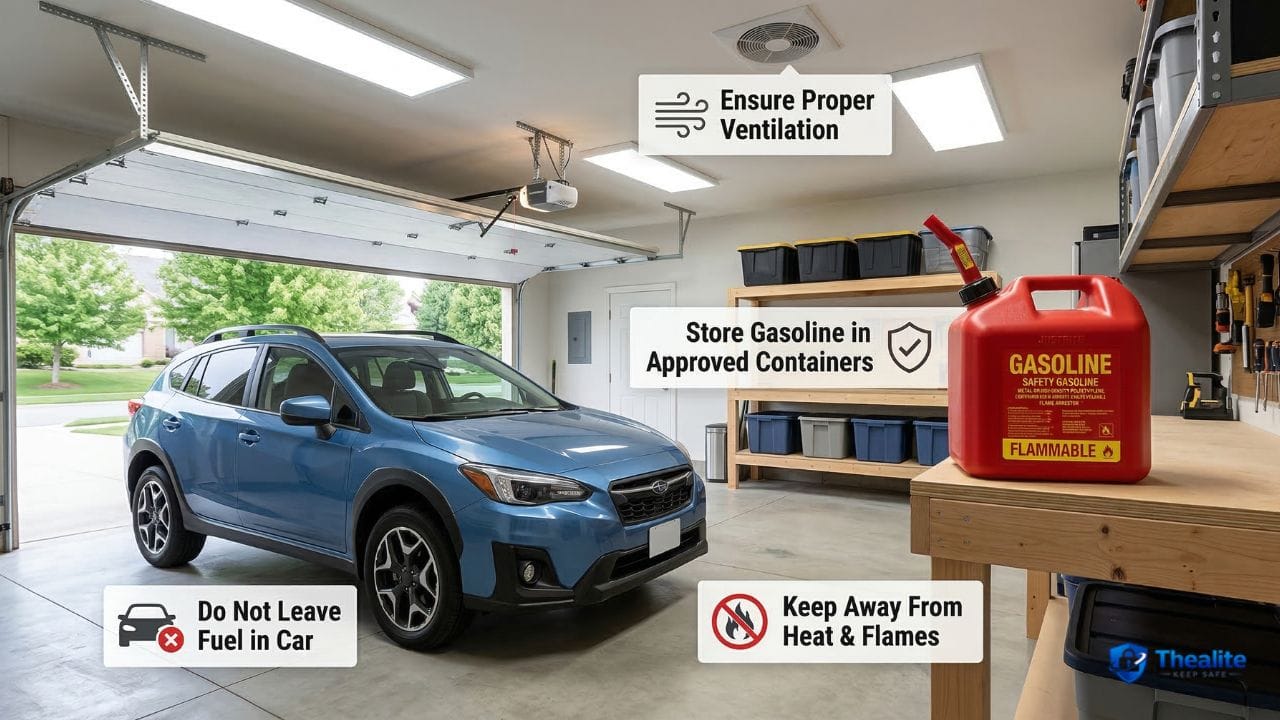
Keeping spare fuel on hand is a common necessity for many households. Whether you are filling up the lawnmower, preparing a portable generator for storm season, or making sure you have backup fuel for rural driving, having gasoline nearby is incredibly convenient. However, gasoline is one of the most volatile and dangerous substances found in the average American home. A single spark, extreme heat, or a poorly sealed container can quickly turn a routine chore into a devastating fire or health hazard. Understanding the strict rules of fuel storage is vital for protecting your property and your family from preventable accidents.
Why Gasoline Storage Is Risky
Gasoline is highly flammable, but the liquid itself is not the most dangerous part—the invisible vapors are. Gasoline vapors are heavier than air, meaning they sink and pool along the floor. These fumes can easily travel across a room and be ignited by a distant spark, such as a water heater pilot light or a sparking electrical outlet. Additionally, fuel expands when exposed to heat, which can cause unvented or weak containers to swell, leak, or burst open.
Is It Safe to Keep Gasoline in the Garage?
Homeowners frequently ask: is it safe to keep gasoline in the garage? The answer is yes, but only if you follow strict safety protocols. A detached garage or a dedicated outdoor storage shed is always the best option. If you must use an attached garage, the fuel must be stored in an approved, tightly sealed container. It should be kept on the floor—never on a shelf where it could fall—and placed as far away as possible from any ignition sources, such as furnaces, water heaters, or direct sunlight. Just as you research how to keep lithium batteries safe by avoiding extreme temperature fluctuations in your workshop, you must treat gasoline with the same environmental awareness.
Is It Safe to Keep Gas Can in Car?
When planning a long road trip, many drivers wonder, is it safe to keep gas can in car just in case? The definitive answer is no. Keeping a full or even “empty” gas can inside the passenger cabin or trunk of a vehicle is incredibly dangerous. Cars act like greenhouses, and on a warm day, the internal temperature can cause the fuel to expand rapidly, forcing toxic, highly flammable fumes into the cabin. Furthermore, in the event of a rear-end collision, a gas can in the trunk can easily rupture and cause a catastrophic fire.
Safer Storage Habits for Households and Travelers
If you are traveling through remote areas, it is much wiser to plan your gas station stops carefully or carry an emergency roadside kit rather than hauling raw fuel. If you fear breaking down, it is smarter to focus on how to keep your money safe while traveling so you always have emergency funds to call a tow truck. Additionally, leaving a highly visible, red gas can in your backseat is a magnet for break-ins. Learning how to keep your car safe from theft means keeping the interior completely clear of interesting items, including fuel containers.
Where Not to Leave Fuel Containers
Never store gasoline inside your main living space, including basements. Basements are particularly dangerous because they often house furnaces and lack adequate ventilation, allowing heavy fumes to pool dangerously. You should also never store gas cans on elevated wooden shelves or near the garage door where they might be backed into by a vehicle.
How Temperature, Sunlight, and Poor Ventilation Increase Risk
Direct sunlight and extreme summer heat cause the liquid to vaporize and expand, creating immense pressure inside the plastic container. If the room lacks ventilation, the escaping fumes will quickly reach a combustible concentration. Managing the climate around hazardous materials is a core principle of household safety. Much like knowing how to keep moisture out of a safe requires environmental control, keeping heat and sunlight away from a gas can is mandatory for preventing pressure buildup.
Common Mistakes People Make With Fuel Containers
One of the most dangerous mistakes people make is using unapproved containers, such as old milk jugs or glass jars, to transport or store gasoline. Gasoline will quickly eat through standard plastics and glass can easily shatter. Always use a red, EPA- and CARB-approved fuel canister. Another common error is filling the container to the very top. You should only fill a gas can to 95% capacity to leave room for the liquid to safely expand as temperatures fluctuate.
Warning Signs That a Fuel Container Should Not Be Kept
Fuel containers do not last forever. You should immediately transfer the fuel to a new, approved container and dispose of the old one if you notice:
- Severe bulging or warping of the plastic walls.
- Brittle, cracked, or sun-bleached plastic.
- Rusting on metal jerrycans.
- Missing caps, broken flame arrestors, or compromised rubber seals.
What to Do After Noticing Fumes, Leakage, or Container Damage
If you walk into your garage and are overwhelmed by the smell of gasoline, do not turn on the lights or open an automatic garage door—the electrical spark could trigger an explosion. Open doors and windows manually to ventilate the space. If you find a spill, never hose it down a drain. Soak it up with kitty litter or sand, sweep it into a disposable bag, and contact your local hazardous waste disposal facility. Being prepared for emergencies is vital; ensure you know how to keep important documents safe at home in a fireproof lockbox just in case a major household accident occurs.
A Simple Home Fuel-Safety Checklist
- Only use approved, red, well-sealed gasoline containers.
- Store containers on the ground in a well-ventilated, detached garage or shed.
- Keep fuel at least 50 feet away from pilot lights, heaters, and electrical tools.
- Never fill a container past 95% to allow for heat expansion.
- Never store or transport a gas can in the passenger cabin or trunk of a car.
Frequently Asked Questions (FAQ)
Is it safe to keep gasoline in the garage?
Yes, it can be safe to keep gasoline in the garage, provided it is stored in an approved container, placed on the floor, and kept far away from direct sunlight, water heaters, furnaces, and any other potential sources of ignition.
Is it safe to keep gas can in car?
No, it is never safe to keep a gas can in a car or trunk. The heat inside a parked car can cause the fuel to expand, releasing highly flammable and toxic fumes into the enclosed cabin, and it poses a massive fire risk in a collision.
Can heat make gasoline storage more dangerous?
Yes, heat causes gasoline to expand and vaporize rapidly. This builds pressure inside the container, increasing the risk of leaks, ruptures, and the release of combustible fumes into the surrounding air.
Should you leave a gas can in a parked car?
Absolutely not. A parked car acts like an oven, and leaving a gas can inside can quickly lead to pressure buildup, spilled fuel, and a highly explosive environment inside the vehicle.
Is a garage always a safe place for gasoline?
No, a garage is not safe if it lacks proper ventilation, gets excessively hot, or houses appliances with pilot lights (like a water heater). A detached, well-ventilated storage shed is the absolute safest location.
What makes a fuel container unsafe?
A fuel container is unsafe if it is not legally approved for gasoline (like a milk jug), if the plastic is bulging, cracking, or sun-faded, if metal parts are rusting, or if the spout and vapor seal are broken.
What should you do if you smell gas fumes?
If you smell strong gas fumes in an enclosed space, do not turn on any electrical switches, including lights or garage doors. Manually open doors and windows to air out the space, and locate the source of the leak.
How often should fuel containers be checked?
You should visually inspect your fuel containers every time you use them, and do a general check of your storage area at least once a month to ensure there are no signs of bulging, leaks, or strong odors.

As a digital marketer, she has received multiple international awards, including Campaign of the Year at the 2023 European Content Awards and Best Use of Content Marketing at the 2022 Global Search Awards. Nicai holds an MSc in Marketing (First Class Honours) from the UCD Smurfit Graduate Business School and she has also completed the Artificial Intelligence Programme at Oxford University’s Saïd Business School. She is also a contributing writer for publications such as Entrepreneur and Esquire.