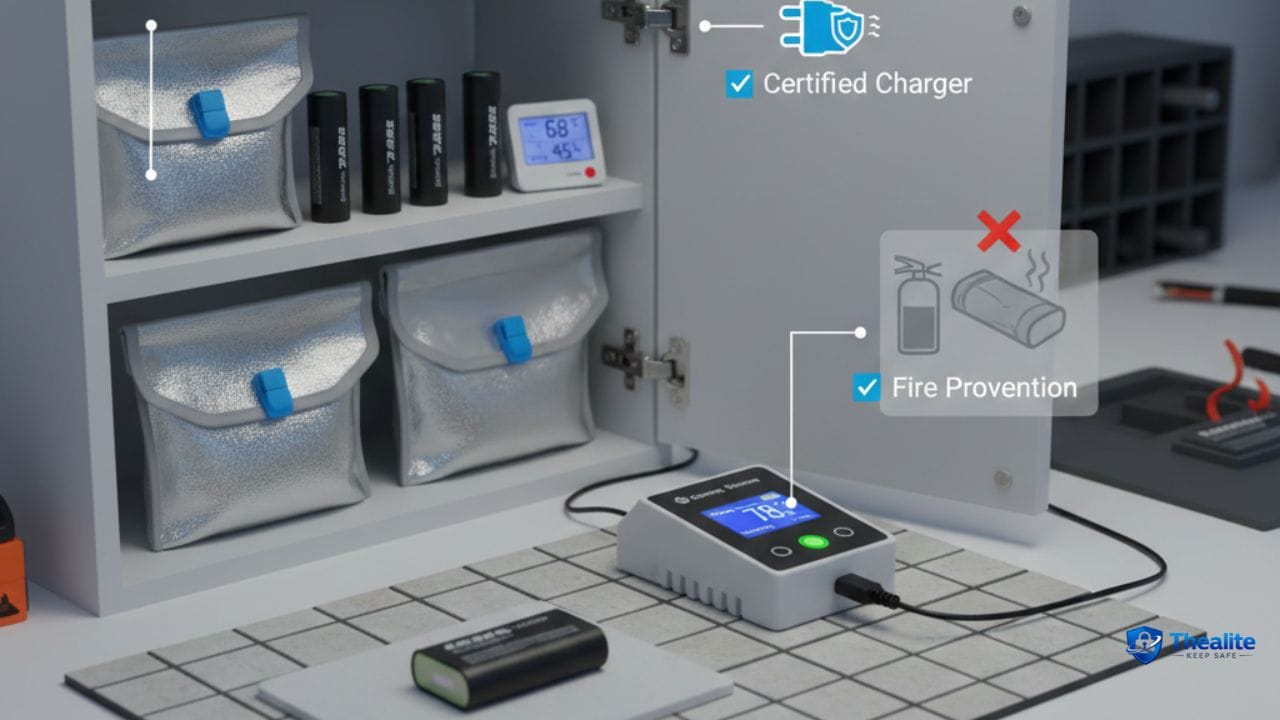
To keep lithium batteries safe, avoid heat, avoid damage, and avoid short circuits. Charge only with the right charger, don’t leave batteries charging unattended for long periods, store them in a cool dry place, and stop using any battery that is swollen, leaking, cracked, or gets unusually hot.
Why Lithium Batteries Need Special Safety Rules
Lithium-ion and lithium-polymer batteries pack a lot of energy into a small space. Most of the time they’re safe. Problems happen when a battery is damaged, overheated, charged incorrectly, or short-circuited. In rare cases, that can lead to a fast, intense fire.
1) Safe Charging Habits (Biggest Risk Reducer)
Most battery incidents start during charging or right after.
Do this:
- Use the original charger or a trusted compatible charger.
- Charge on a hard, non-flammable surface (not on a bed, couch, or pillow).
- Keep the device/battery uncovered so heat can escape.
- Unplug when fully charged if possible.
- If something feels hot or smells odd, stop charging immediately.
Avoid this:
- Cheap unknown chargers and damaged cables
- Charging near curtains, papers, or flammable clutter
- Charging overnight on soft surfaces
- Using a battery that is swollen or physically damaged
2) Store Batteries the Safe Way
Storage safety is mostly about temperature and preventing contact with metal.
Safe storage checklist:
- Store in a cool, dry place (away from direct sun).
- Keep away from heaters, stoves, and car dashboards.
- Use a protective case for spare batteries.
- Keep battery terminals from touching keys, coins, or tools (short-circuit risk).
Heat matters. Cars can get extremely hot in summer, which increases battery risk—just like other pressurized or fuel items.
Related: is it safe to keep a lighter in your car.
3) Know the Warning Signs (Stop Using the Battery)
If you see any of these signs, treat the battery as unsafe:
- Swelling (bulging phone back, puffy battery pack)
- Cracks, dents, or punctures
- Leaking fluid or crusty residue
- Burning smell or hissing sound
- Unusual heat during normal use
- Rapid loss of charge or random shutdowns
4) Keep Batteries Away From Extreme Heat and Cold
Extreme heat is the bigger safety risk. Extreme cold is usually less of a fire risk, but it can damage performance and increase internal stress.
Practical tips:
- Don’t leave devices/batteries in a hot parked car.
- If a battery got very hot, let it cool in a safe place before charging.
- In winter, bring batteries indoors rather than leaving them in a freezing garage.
Heat safety reminder:
How to keep pets safe in hot weather
5) Safe Use for Common Lithium Battery Items
Phones and tablets
Use quality chargers, keep vents clear, and don’t ignore swelling. If a phone battery is swelling, stop using it and get it serviced.
Related device safety: how to keep your phone safe from hackers.
Power banks
Avoid cheap, unbranded power banks. Don’t store them loose with metal objects. If a power bank gets hot, retire it.
E-bikes, scooters, and tool batteries
Charge in a clear area with good airflow. Follow manufacturer guidelines. If a battery has been dropped hard or punctured, don’t keep using it.
6) Travel Safety (Simple Rules)
When traveling, protect the battery from damage and accidental activation.
- Use a protective case for spare batteries.
- Keep terminals covered (especially with loose spares).
- Don’t pack damaged or swollen batteries—replace them before traveling.
7) What to Do If a Lithium Battery Overheats
If a battery is hot, smoking, or making noise:
- Move people and pets away immediately.
- If it’s safe, unplug the charger (don’t touch hot battery directly).
- Move the item to a non-flammable area (concrete/driveway) if you can do it safely.
- Call emergency services if there’s smoke, flames, or you feel unsure.
- Do not reuse that battery afterward—replace it.
8) Disposal: Don’t Throw Lithium Batteries in the Trash
Lithium batteries can start fires in trash trucks and recycling facilities. Use a proper battery recycling drop-off in your area.
Tip: tape over exposed terminals on loose batteries before transport.
Quick Checklist: How to Keep Lithium Batteries Safe
- Use the right charger and avoid cheap unknown chargers
- Charge on hard, non-flammable surfaces
- Don’t charge damaged or swollen batteries
- Store cool and dry; keep terminals protected
- Avoid hot cars and direct sunlight
- Recycle properly—don’t trash loose lithium batteries
FAQs
Are lithium batteries dangerous?
Most are safe when used correctly. Risk increases with damage, heat, wrong chargers, and short circuits.
Can a lithium battery catch fire while charging?
It’s rare, but charging is a higher-risk time. Use the correct charger, charge on a non-flammable surface, and stop if you notice heat, swelling, or smell.
Is it safe to store lithium batteries in a car?
Not recommended in hot weather. Cars can become extremely hot, which increases battery stress and risk.
What should I do if my phone battery is swelling?
Stop using it, don’t puncture it, and get it serviced or replaced. A swollen battery should not be charged.
More “Keep Safe” Guides
Explore more safety topics at Thealite Keep Safe.

As a digital marketer, she has received multiple international awards, including Campaign of the Year at the 2023 European Content Awards and Best Use of Content Marketing at the 2022 Global Search Awards. Nicai holds an MSc in Marketing (First Class Honours) from the UCD Smurfit Graduate Business School and she has also completed the Artificial Intelligence Programme at Oxford University’s Saïd Business School. She is also a contributing writer for publications such as Entrepreneur and Esquire.