An engagement ring is one of the most meaningful pieces of jewelry you’ll ever wear—and often one of the most expensive. That combination makes it emotionally stressful to lose. The good news is that most ring losses happen in predictable situations: during travel, at the beach, while washing hands, at the gym, during cleaning/yard work, or when the ring fit changes.
This guide (for U.S. readers) covers practical habits to prevent loss and damage, how to store your ring safely at home and on trips, and what to do immediately if it goes missing.
Related reading on your site: How to Keep Jewelry Safe at Home • How to Keep Gold Jewelry Safe at Home • How to Keep Valuables Safe at the Beach • How to Keep Money Safe When Traveling
Quick Answer (The 5 Rules That Prevent Most Ring Loss)
- Make sure your ring fits correctly (especially in summer/winter).
- Never set your ring on a sink ledge, counter, or towel—use a ring dish or secure pocket.
- Take it off before high-risk activities (gym, cleaning, beach, swimming, yard work).
- Store it the same safe way every time (one consistent “home” location).
- Consider insurance and keep documentation (photos, appraisal/receipt).
Why Engagement Rings Get Lost (Common Scenarios)
Most people don’t “lose” a ring because they’re careless. They lose it because a routine moment creates a perfect storm: slippery hands, distractions, and a ring temporarily placed somewhere unsafe.
Most common loss moments
- Washing hands or applying lotion (ring slips off).
- Showering, swimming, hot tubs, or the ocean (water + cold shrinks fingers).
- Gym workouts (gripping weights, swelling, sweat).
- House cleaning and dishwashing (soap makes fingers slippery).
- Putting the ring in a pocket or purse without a secure compartment.
- Travel: removing ring at airport security, hotel, or on the beach.
- Seasonal fit changes (cold weather tightness, heat swelling).
Step 1: Get the Fit Right (Your #1 Safety Factor)
If your ring is slightly too loose, it can slip off when your hands are wet, cold, or covered in soap. If it’s too tight, you may take it off more often—creating more opportunities to misplace it.
Fit tips
- Have the ring sized by a reputable jeweler (especially after engagement).
- Expect fit changes with temperature, pregnancy, and weight changes.
- If your ring spins or slides easily, ask about sizing beads or a small adjustment.
- Be extra careful in winter and at the beach—cold water can shrink fingers quickly.
Step 2: Create a ‘Ring Routine’ at Home
Rings disappear when they’re placed in random spots: on the sink, on a nightstand, on a kitchen counter. The safest strategy is a consistent routine: one safe place every time.
Simple home system that works
- Use a dedicated ring dish in 2–3 places: bedroom, kitchen, bathroom.
- If you remove the ring, it goes straight into the dish—never on a counter.
- Avoid leaving it on towels, tissues, or paper (it can get thrown away).
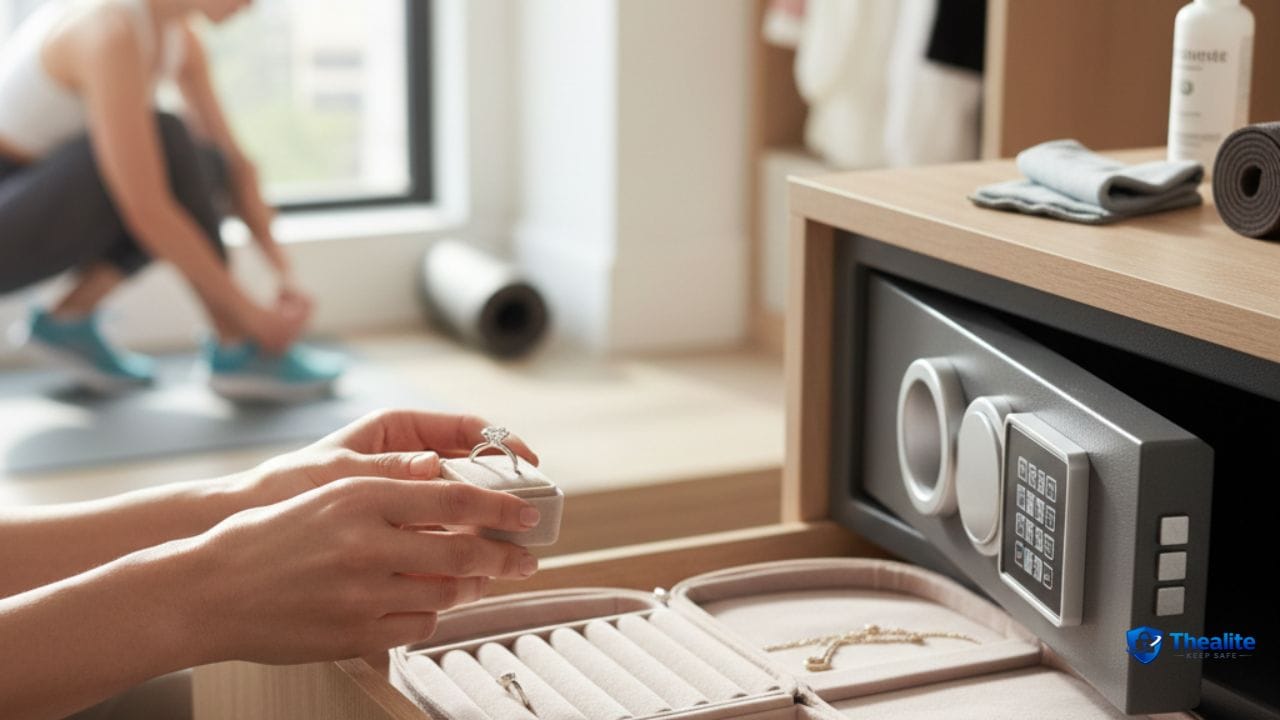
- If you have a safe, use it for long periods when you won’t wear the ring.
Related: How to Keep Jewelry Safe at Home and How to Keep Important Documents Safe at Home (good for receipts/appraisals).
Step 3: Know When to Take It Off (High-Risk Activities)
There’s a difference between ‘everyday wearing’ and high-risk situations where the ring is likely to slip, snag, or get damaged.
Take it off for:
- Swimming, hot tubs, lakes, and especially the ocean.
- Beach days (sand + sunscreen make rings slippery and hard to find).
- Gym workouts (weights, bars, machines, and swelling).
- Cleaning with chemicals, dishwashing, and heavy scrubbing.
- Gardening and yard work (gloves can pull rings off).
- Moving furniture or lifting heavy items (impact damage).
If you take it off, store it safely
If you’re removing the ring, don’t set it “somewhere for a second.” Use a secure method: ring dish, zip pocket, or a locked case.
Step 4: Travel and Vacation Ring Safety
Travel is a top time for ring loss because routines change. The good news is you can plan for it.
Travel safety rules
- Decide before the trip: wear it or leave it at home (no last-minute decisions).
- If you bring it, pack a small ring case and use it consistently.
- Don’t remove rings at airport security unless required—and if you do, place it immediately in a secure pocket, not in a tray loose.
- Use the hotel safe (if you trust it) or lock it in luggage when you won’t wear it.
- At the beach/pool, either keep it on securely or leave it locked away—don’t put it in a bag on the sand.
Related travel safety: How to Keep Valuables Safe at the Beach • Keep Passport Safe While Traveling • How to Keep Your Money Safe While Traveling.
Step 5: Maintenance and Checks (Prevent Stones From Falling Out)
Sometimes the ring isn’t ‘lost’—a stone is lost. Prongs can loosen over time from normal wear, knocks, and vibration.
Maintenance habits
- Get the ring inspected by a jeweler 1–2 times per year (or as recommended).
- Check prongs at home: if the stone wiggles or catches on fabric, stop wearing it until checked.
- Remove the ring for heavy work that could bend prongs or crack stones.
- Clean it safely—avoid harsh chemicals that can weaken settings.
Step 6: Insurance and Documentation (A Real Safety Net)
Insurance doesn’t prevent loss, but it reduces financial devastation. If the ring is valuable to you, insurance is worth considering.
What to document
- Clear photos of the ring (top view and side view).
- Receipt or proof of purchase.
- Appraisal paperwork (if available).
- Any identifying details (serial number, inscription).
Store these documents safely—either in a secure folder at home or a protected digital location.
Related: Keep Important Documents Safe Online and Keep Important Documents Safe at Home.
Step 7: What to Do If Your Engagement Ring Is Lost
If your ring is missing, quick action can make a huge difference. Many rings are found within the first few hours—especially at home.
Immediate steps (first hour)
- Stop moving around and retrace your steps calmly (don’t rush and create more clutter).
- Check the most common places: sinks, soap dishes, towels, pockets, laundry baskets, and bedding.
- Check the floor around where you removed it (use a flashlight at a low angle).
- If it may be in a drain, stop using that sink and consider a professional plumber/jeweler retrieval approach.
If you lost it outside
- Return to the location immediately and search carefully.
- Ask staff/security if anyone turned it in.
- If it’s in sand/grass, consider using a metal detector (many areas have hobbyists who help).
- File a report if theft is suspected (police report helps for insurance).
Common mistakes that make ring loss worse
- Setting the ring on a sink ledge or counter (easy to knock off).
- Wrapping it in a tissue or towel (gets thrown away).
- Putting it in an open pocket or loose purse pocket.
- Taking it off at the beach or pool and leaving it unattended.
- Ignoring loose prongs or fit changes.
Engagement Ring Safety Checklist (Copy/Paste)
- Confirm proper fit; resize if it slides/spins easily
- Use ring dishes at key spots (bathroom, kitchen, bedroom)
- Never place ring on sink ledge, counter, or towel
- Remove for high-risk activities (beach, swimming, gym, cleaning, yard work)
- Use a ring case when traveling; avoid airport tray mistakes
- Get prongs inspected 1–2 times per year
- Keep photos, receipt/appraisal, and consider insurance
FAQs
When is an engagement ring most likely to be lost?
During handwashing, showering/swimming, at the beach, at the gym, during cleaning/yard work, and while traveling—especially when routines change.
Is it safer to wear my ring or store it at the beach?
If your ring is loose or slippery from sunscreen, it’s safer to leave it locked away than to take it off and set it in a bag on the sand. Many people lose rings when they remove them at the beach.
Should I insure my engagement ring?
If replacing the ring would be financially painful, insurance can be a smart safety net. Keep photos and documentation either way.
How often should I get my ring checked by a jeweler?
Many jewelers recommend 1–2 inspections per year, especially for prongs and settings.
What should I do if I think my ring went down the drain?
Stop using the sink, avoid running water, and consider calling a plumber or professional who can safely retrieve it. The sooner you act, the better.
Conclusion
Keeping your engagement ring safe is mostly about reducing the predictable risks: loose fit, slippery hands, and ‘temporary’ storage spots that turn into permanent losses. Create a simple ring routine at home, take it off for high-risk activities, use a travel case when you’re away, and get regular inspections to prevent stone loss. With these habits—and good documentation/insurance as a safety net—you can wear your ring with much more peace of mind.

As a digital marketer, she has received multiple international awards, including Campaign of the Year at the 2023 European Content Awards and Best Use of Content Marketing at the 2022 Global Search Awards. Nicai holds an MSc in Marketing (First Class Honours) from the UCD Smurfit Graduate Business School and she has also completed the Artificial Intelligence Programme at Oxford University’s Saïd Business School. She is also a contributing writer for publications such as Entrepreneur and Esquire.