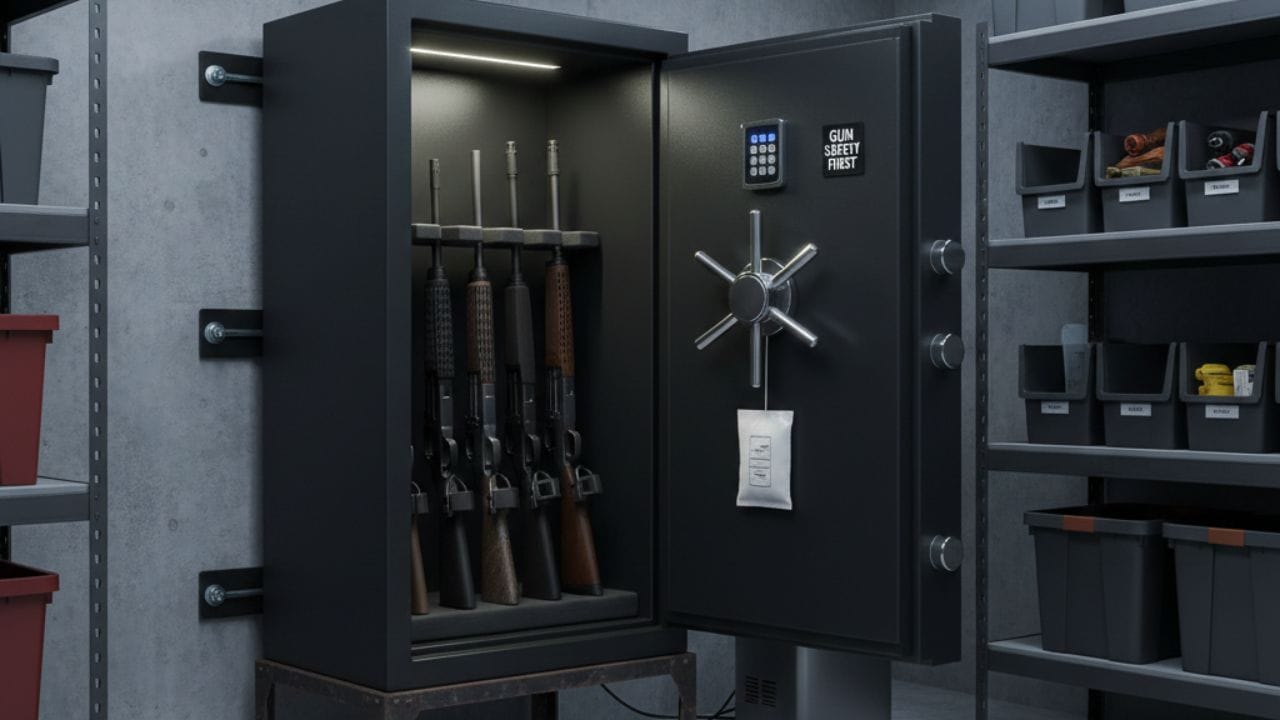
If you are short on indoor space, putting a gun safe in the garage can feel like the most practical option. It is usually ground level (easier delivery), has more open wall space, and keeps the safe out of your main living areas.
But garages are a tougher environment than an interior room. The biggest issues are moisture (rust risk), temperature swings (condensation risk), and security (garages are a common break-in entry point).
Yes, you can keep a gun safe in the garage – if you set it up correctly.
Note: This article is general information for US homeowners. Always follow your safe manufacturer’s guidance and safe-storage laws in your state and locality.
This guide breaks down the pros and cons and gives a realistic checklist you can follow in most US climates.
Quick Answer
Yes. A garage gun safe can work well when you:
- Control humidity inside the safe
- Reduce condensation from temperature swings
- Anchor and secure the safe against theft
- Avoid water intrusion and common garage fire hazards
If your garage is frequently damp, floods, or is shared/accessible to many people, an indoor location is usually a better long-term choice.
Why the Garage Can Make Sense
A garage location is often chosen for practical reasons:
- Space: easier to fit a full-size safe
- Moving: fewer stairs and doorways to navigate
- Concrete slab: usually better for anchoring than a second-floor room
- Discretion: not visible in daily household traffic (when placed well)
The Three Garage Problems You Must Plan For
1) Humidity and rust
Garages bring in humid air whenever the door opens. Wet vehicles and rain/snow increase moisture. If the air inside the safe stays too damp, you can get rust on firearms, magazines, and optics over time.
2) Condensation from temperature swings
Condensation happens when warm, humid air hits a cooler surface. In many areas, your safe can act like a cool metal box – especially in winter. Even if the garage “feels” dry, condensation can still happen during seasonal changes.
3) Security
Garages are often targeted first in break-ins. If someone can access the safe and move it, they may not need to open it right away. Your goal is to prevent removal and reduce the time a thief can work.
Moisture Control (Most Important)
If you do only one thing right, make it moisture control.
A practical target: many owners aim to keep the safe interior around 40% to 50% relative humidity (RH). Above roughly 55% RH, rust risk rises fast for long storage periods. A small hygrometer inside the safe makes this easy to monitor.
Signs your garage is high-risk
- Musty smell or visible mold
- Rust showing up on tools or shelves
- Concrete that “sweats” or stays damp
- Coastal, swampy, or very rainy climate
- You regularly park wet vehicles inside
A simple garage-safe moisture checklist
1) Choose a smart wall
If possible, use a wall shared with the house (more stable temperature). Avoid known leak areas and avoid direct sunlight on the safe all day.
2) Protect the bottom
Even without flooding, concrete can transmit moisture. Consider a safe stand or platform rated for the weight.
3) Dry the air inside the safe
Most owners use one or both:
- Electric dehumidifier rod (constant, low heat)
- Desiccant packs (silica gel / rechargeable)
4) Monitor it
Place a hygrometer inside and check it more during spring and fall (condensation season).
If you want more detail, link internally to these guides:
- How to Keep Moisture Out of a Gun Safe
- What to Put in a Safe to Keep Moisture Out
- Keep Guns From Rusting in a Safe
Temperature Swings: What to Know
Most firearms can handle hot/cold storage, but rapid swings can create problems:
- Condensation increases when temperatures change quickly
- Some lubricants thicken in cold and collect dust
- Optics/electronics/batteries do not love extreme heat
- Ammo is generally fine if kept dry, but heat + moisture over time can reduce reliability
Practical tips:
- Keep the safe away from direct sun and heat sources (water heater, furnace, etc.)
- Use moisture control to prevent internal condensation
- Store ammo in airtight containers with desiccant if your garage is humid
Security Checklist for a Garage Gun Safe
1) Reduce visibility
If the safe is visible when the garage door is open, it becomes a target. A corner placement, a screened storage area, or an alcove can help.
2) Strengthen garage habits
- Keep the door from garage to house locked
- Use motion lights or cameras if possible
- Do not leave garage remotes in unlocked vehicles
3) Anchor the safe
Anchoring is one of the biggest upgrades you can make. Use the manufacturer’s anchor points and hardware appropriate for your floor type, and consider professional installation if you are unsure.
Fire and Water Risks in Garages
Garages commonly store fuel, solvents, paint, and other flammables. Water damage is also common after fires, sprinkler discharge, or leaks.
Better practices:
- Keep the safe away from gasoline cans/propane/chemicals
- Avoid low spots where water collects
- Store documents in waterproof pouches inside the safe
- Consider elevating the safe if flooding is possible in your area
Best Placement Tips (Fast List)
Aim for:
- Interior/shared wall (more stable temperature)
- Low visibility from driveway/street
- Power access (if using an electric dehumidifier rod)
- Clearance for the safe door to open fully
Avoid:
- Right beside the main garage door
- Under windows
- Under plumbing/HVAC drains
- Any spot with a history of leaks
When the Garage Is the Wrong Location
Choose an indoor location instead if:
- You cannot control humidity (hygrometer stays high)
- The garage is frequently damp or moldy
- Flooding risk is real and elevation is not possible
- The garage is shared or accessed by many people
- You rent and cannot anchor the safe
Quick Maintenance Routine
- Weekly: check hygrometer; confirm power to dehumidifier rod (if used)
- Monthly: inspect firearms for early rust; recharge/replace desiccant as needed
- Seasonally: check for leaks, clean out dust, review who has access
Always follow safe-storage laws in your state and keep firearms secured from children and unauthorized users.
FAQs
Is it legal to keep a gun safe in the garage?
In most places there is no rule against the garage location, but safe-storage laws vary by state and can affect how firearms must be secured, especially around minors. Check your state and local requirements.
Will my guns rust if the safe is in the garage?
They can if humidity stays high or condensation forms. With a hygrometer plus moisture control (dehumidifier rod and/or desiccant) many owners store guns in garage safes successfully.
Should I bolt the safe down in the garage?
If possible, yes. It is one of the most effective steps to prevent removal. Use manufacturer guidance and appropriate anchors for your floor.
Can I store ammo in a garage safe?
Usually yes, if it stays dry and is not exposed to extreme heat for long periods. Airtight ammo cans with desiccant are a good option in humid areas.
What humidity should I aim for in the safe?
A common target is about 40% to 50% RH. Use a hygrometer to confirm.
Bottom Line
Yes – you can keep a gun safe in the garage. Just treat the garage as a higher-risk environment and plan for humidity control, smart placement, and strong security (especially anchoring). If your garage is damp, flood-prone, or easy for others to access, an indoor spot is typically safer.

As a digital marketer, she has received multiple international awards, including Campaign of the Year at the 2023 European Content Awards and Best Use of Content Marketing at the 2022 Global Search Awards. Nicai holds an MSc in Marketing (First Class Honours) from the UCD Smurfit Graduate Business School and she has also completed the Artificial Intelligence Programme at Oxford University’s Saïd Business School. She is also a contributing writer for publications such as Entrepreneur and Esquire.