If neighborhood cats keep visiting your yard—digging in mulch, spraying on furniture, bothering birds, or leaving mess—it’s normal to want them gone. But if you have a dog, you also need to make sure your solution is dog-safe. Many common cat-repellent ideas (strong chemicals, essential oils, pepper-based powders) can irritate or poison pets.
This U.S.-focused guide shows humane ways to keep cats out of your yard without harming dogs. You’ll learn what works best (motion sprinklers, yard changes, fencing tweaks), what to avoid, and a simple step-by-step plan.
Quick Answer (The Dog-Safe Cat Deterrent System)
- Use motion-activated sprinklers (one of the most effective humane options).
- Remove “cat attractions”: open trash, spilled birdseed, outdoor pet food, hiding spots.
- Block common entry routes with fence rollers/toppers or simple barrier strips.
- Make favorite digging spots uncomfortable using mulch/rock changes and physical covers.
- Use cat-safe, dog-safe repellents cautiously (avoid toxic essential oils and pepper products).
- Set consistent routines: clean mess quickly and re-apply deterrents after rain.
Why Cats Keep Coming Into Your Yard
Cat deterrence works best when you understand the behavior. Most cats are drawn by one of these:
- Easy travel routes (fence lines, low gates, trees).
- Shelter/hiding (thick bushes, under decks, open sheds).
- Food sources (bird feeders, pet bowls, compost, rodents).
- Soft digging areas (fresh mulch, garden beds, sandbox-like soil).
- Territory marking (spraying on furniture, doors, or shrubs).
Your goal is to remove rewards (food and shelter) and add gentle “surprises” (motion/water) so the yard stops feeling comfortable.
Start Here: Dog-Safe Things to Avoid
Some popular internet suggestions are risky around dogs. Avoid these unless a veterinarian specifically confirms safety.
- Pepper/cayenne powders (can irritate eyes, nose, and skin; dogs may lick it).
- Essential oils used as repellents (many are unsafe for pets; ingestion and skin exposure can be harmful).
- Mothballs (toxic to pets and wildlife).
- Homemade chemical sprays (bleach, ammonia mixes, harsh cleaners) in areas dogs can access.
- Glue traps or harmful traps (inhumane and can injure pets).
Instead, prioritize physical and motion-based deterrents that don’t rely on toxins.
Step 1: Remove Cat Attractions (This Makes Every Deterrent Work Better)
Before you add deterrents, remove what’s inviting cats to stay.
- Bring pet food and water bowls inside (especially at night).
- Secure trash cans with tight lids.
- Clean spilled birdseed and consider moving feeders away from dog areas.
- Eliminate rodent habitats (rodents attract cats): reduce clutter, store seed in sealed bins.
- Close open sheds and block access under decks where cats hide.
If other wildlife is a problem too, you may also like: Keep Skunks Out of Yard Safe for Dogs.
Step 2: Use Motion-Activated Sprinklers (Top Pick for Dog-Safe Deterrence)
Motion sprinklers are one of the most consistently effective and humane cat deterrents. They work because cats dislike sudden water spray and will often avoid the area after a few experiences.
How to use them effectively
- Aim them at entry points (fence gaps, side gates, corners where cats enter).
- Also aim at ‘problem zones’ (mulch beds, porch furniture, garden rows).
- Adjust sensitivity so it triggers for cats but doesn’t soak your dog constantly.
- Run it during high cat-activity times (often dusk, night, early morning).
Dog tip: If your dog uses the same area, place sprinklers where dogs don’t need to pass often, or set schedules (if your model supports it).
Step 3: Make Digging Areas Uncomfortable (Without Hurting Pets)
If cats are using your garden beds or mulch as a litter box, change the texture or add a physical barrier.
Dog-safe yard changes that work
- Use larger, rougher mulch (cats prefer soft, fine mulch).
- Use decorative rocks/gravel in problem corners (where appropriate).
- Cover beds with garden netting, lattice, or chicken wire *laid flat* under mulch (edges secured) so cats can’t dig easily.
- Use plant-based ‘barrier plants’ with texture (dense ground cover).
Keep it safe for dogs
- Avoid sharp spikes or plastic spike mats that could injure paws.
- Secure netting edges so dogs can’t catch a paw or chew it.
- If your dog chews, choose stronger barriers or keep dogs out of that zone.
Step 4: Block Entry Routes (Fence Tweaks That Still Work for Dogs)
Cats typically enter by climbing or squeezing through gaps. Small fence upgrades can make a big difference.
Fence strategies (humane and dog-safe)
- Repair gaps under gates and fences (cats use the same routes repeatedly).
- Add a smooth ‘cat-proof’ topper/roller system on fences (prevents climbing).
- Use angled fence extensions that tip inward (makes climbing harder).
- Trim trees or objects near fences that act as “launch points.”
Step 5: Reduce Spraying and Marking (Clean Correctly)
If cats spray your porch furniture, doors, or outdoor cushions, cleaning matters. If you leave the scent, cats return to re-mark.
Cleaning basics
- Use an enzyme cleaner designed for pet odors on hard surfaces and fabrics (follow label instructions).
- Rinse outdoor areas with water after cleaning, especially if your dog uses the area.
- After cleaning, add a motion deterrent or block access to break the habit loop.
Step 6: Use Repellents Carefully (Only Dog-Safe Options)
Many repellents are marketed as “pet safe,” but ‘pet’ can mean different things. If your dog can lick, roll, or eat it, be cautious.
Safer repellent approach
- Prefer physical/motion deterrents first (water, barriers, fencing).
- If you use a commercial repellent, choose one explicitly labeled as safe around dogs and follow directions exactly.
- Apply repellents to areas dogs don’t access (behind fences, side yard corners) when possible.
Avoid DIY essential oils
DIY essential oil sprays are a common suggestion online, but pet safety varies widely and ingestion is a risk—especially with curious dogs.
Step 7: Make a Simple ‘Zone Plan’ for Your Yard
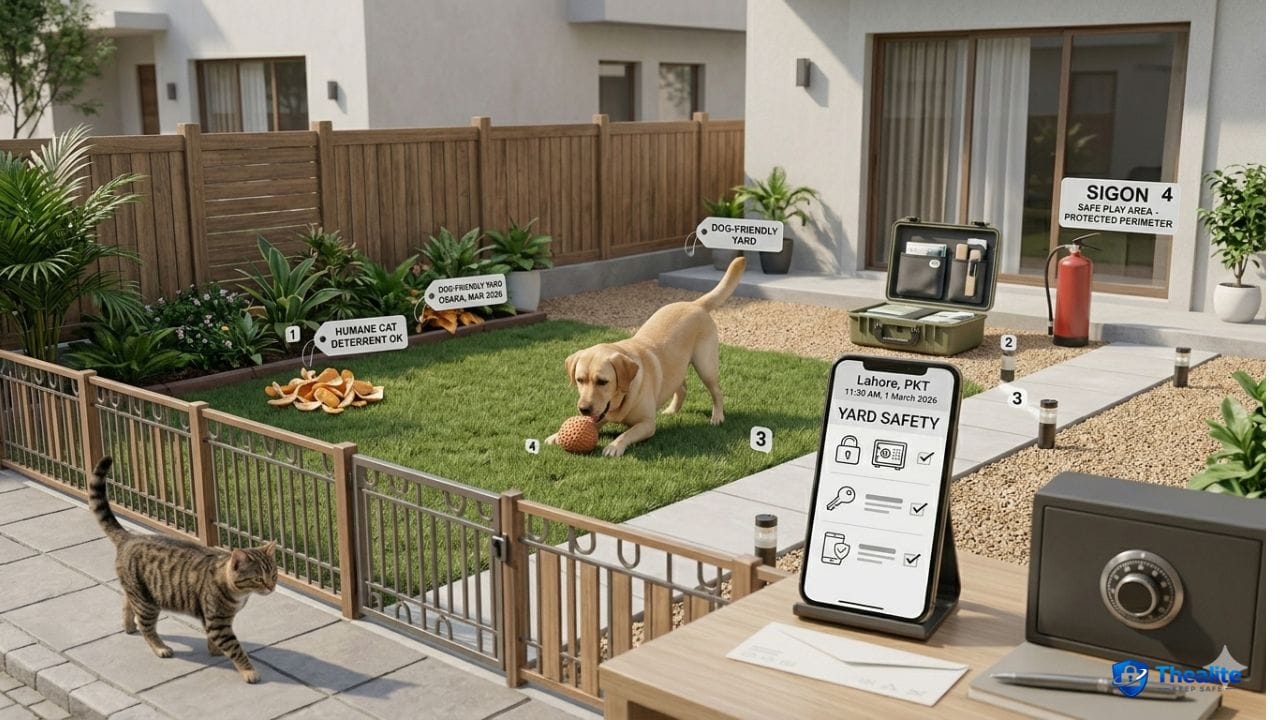
The easiest way to succeed is to create zones: protect the problem areas, keep your dog’s play space comfortable, and block cat entry points.
Example yard plan
- Zone A (entry points): motion sprinklers + fence gap repairs.
- Zone B (garden/mulch): flat barrier mesh under mulch + texture change (rougher mulch).
- Zone C (dog area): keep clean, avoid repellents, place water deterrents away from dog paths.
- Zone D (trash/bird feeder): secure lids, clean spills, and move feeders if needed.
If Cats Are Pooping in Your Yard: Hygiene Tips
Cat feces can carry parasites and bacteria, so treat cleanup carefully—especially if kids or dogs play in the area.
- Wear gloves and use a scoop; avoid direct contact.
- Dispose in a sealed bag (check local disposal rules).
- Rinse the area and consider blocking access to that spot afterward.
- Wash hands and keep dogs from investigating fresh mess.
What If It’s Your Neighbor’s Cat? (Practical and Calm Options)
If you know which cat it is, a calm conversation can help—especially if you can suggest a solution (like keeping the cat inside at night). But your yard plan should work even without neighbor cooperation.
- Ask if they can keep the cat inside at night (peak roaming hours).
- Share that you’re using humane deterrents (so they understand why).
- Avoid conflict—focus on property boundaries and pet safety.
If you’re balancing safety for outdoor cats too, see: How to Keep an Outdoor Cat Safe.
Copy/Paste Checklist: Keep Cats Out of Yard (Safe for Dogs)
- Remove attractions: no outdoor pet food, secure trash, clean birdseed spills
- Use motion sprinklers at entry points and problem zones
- Change digging spots: rough mulch/rocks + flat mesh barrier under mulch
- Fix fence gaps; add cat-proof toppers/rollers if needed
- Clean spray/marking with enzyme cleaner and block repeat access
- Avoid toxic deterrents (mothballs, pepper powders, essential oil DIY sprays)
- Use only dog-safe commercial repellents and keep them away from dog play areas
- Repeat after rain and maintain for 2–3 weeks so cats learn the yard isn’t worth it
FAQs
What is the best dog-safe way to keep cats out of my yard?
Motion-activated sprinklers plus removing food/hiding attractions is one of the most effective humane, dog-safe combinations.
Are cat repellent sprays safe for dogs?
Some are, but many are not ideal if dogs can lick or roll in the area. Prefer motion and barrier methods first, and only use products labeled dog-safe exactly as directed.
Does cayenne pepper keep cats away, and is it safe for dogs?
Pepper powders can irritate eyes, nose, and skin, and dogs may ingest it. It’s not a great dog-safe choice—use sprinklers, barriers, and entry blocking instead.
How do I stop cats from using my garden bed as a litter box?
Make digging uncomfortable: use a flat mesh barrier under mulch, change to rougher mulch, and add a motion sprinkler aimed at that bed.
Will fencing work without making my yard unsafe for dogs?
Yes. Fence gap repair and cat-proof toppers/rollers can reduce cat climbing while keeping the yard dog-friendly.
Conclusion
To keep cats out of your yard while staying safe for dogs, focus on humane, non-toxic deterrents: motion-activated sprinklers, barrier methods for digging spots, and removing the attractions that bring cats back (food, shelter, and easy access routes). Avoid pepper powders, mothballs, and DIY essential oil sprays. With a simple zone plan and 2–3 weeks of consistent deterrence, most cats learn your yard isn’t worth visiting.

As a digital marketer, she has received multiple international awards, including Campaign of the Year at the 2023 European Content Awards and Best Use of Content Marketing at the 2022 Global Search Awards. Nicai holds an MSc in Marketing (First Class Honours) from the UCD Smurfit Graduate Business School and she has also completed the Artificial Intelligence Programme at Oxford University’s Saïd Business School. She is also a contributing writer for publications such as Entrepreneur and Esquire.