To keep skunks out of your yard safely for dogs, focus on prevention: remove food smells, secure trash, block hiding/den areas, and use humane, dog-safe deterrents. Avoid poisons or harsh chemicals—those can hurt pets and wildlife. If you make your yard boring to a skunk, they usually move on.
Why Skunks Come Into Yards (And Why Dogs Get Sprayed)
Skunks are not looking for trouble. They’re looking for easy meals and safe hiding places.
Common skunk attractions include insects in the lawn, pet food left outside, open garbage, fallen fruit, and cozy den spots under decks or sheds.
Dogs get sprayed because they run up fast, bark, and scare the skunk. A skunk sprays as a last defense.
First Rule: Keep Your Dog Safe Before You “Skunk-Proof” the Yard
Before you start changing anything outside, do these basics to reduce surprises:
- Supervise your dog at night (dusk to dawn is skunk time).
- Use a leash for the last potty break, especially near bushes and sheds.
- Teach a strong “Leave it” and “Come” command (it prevents close encounters).
- Keep your dog’s rabies vaccination current (important for any wildlife contact).
Step 1: Remove Food Attractants (Biggest Impact)
If a skunk is finding food in your yard, it will return. Start here because it works fast.
Secure trash and compost
Use tight-fitting lids and, if needed, bungee cords. Rinse sticky cans and keep trash in a closed area until pickup day.
If you compost, avoid meat, dairy, and greasy foods in open piles. Use a sealed compost bin when possible.
Stop feeding pets outdoors
Bring pet bowls inside after meals. Even small leftovers smell strong to wildlife.
If you must feed outside, stay with your pet and remove the bowl right away.
Clean up bird seed and fallen fruit
Bird seed spills are a skunk buffet. Use seed catchers and sweep up regularly.
Pick up fallen fruit and nuts. Skunks love easy sugar and calories.
Step 2: Make Your Yard Less “Buggy” Without Risking Dogs
Skunks often dig for grubs and insects. If your lawn is full of grubs, a skunk may treat it like a dinner plate.
Choose dog-safe, pet-friendly lawn care. Avoid applying pesticides without reading labels and following safety directions.
Simple options that help:
- Keep grass trimmed (fewer hiding spots for insects).
- Water early in the day (standing water attracts bugs at night).
- Remove rotting wood or debris where insects thrive.
- If you use lawn treatments, pick pet-safe products and follow re-entry times strictly.
Step 3: Block Den Sites (Where Skunks Hide and Sleep)
Skunks love sheltered spaces. The most common den spots are under decks, porches, sheds, and woodpiles.
Walk your yard and look for:
- Small holes near foundations or under steps
- Loose lattice or gaps under decks
- Open crawlspaces
- Piles of lumber, brush, or junk
How to skunk-proof under a deck (humane method)
The goal is simple: close entry points after you’re sure no skunk is inside.
Do this in order:
- Check for signs of activity: tracks, digging, odor, or a visible hole.
- Encourage exit first: keep the area bright at night with a motion light and remove food sources.
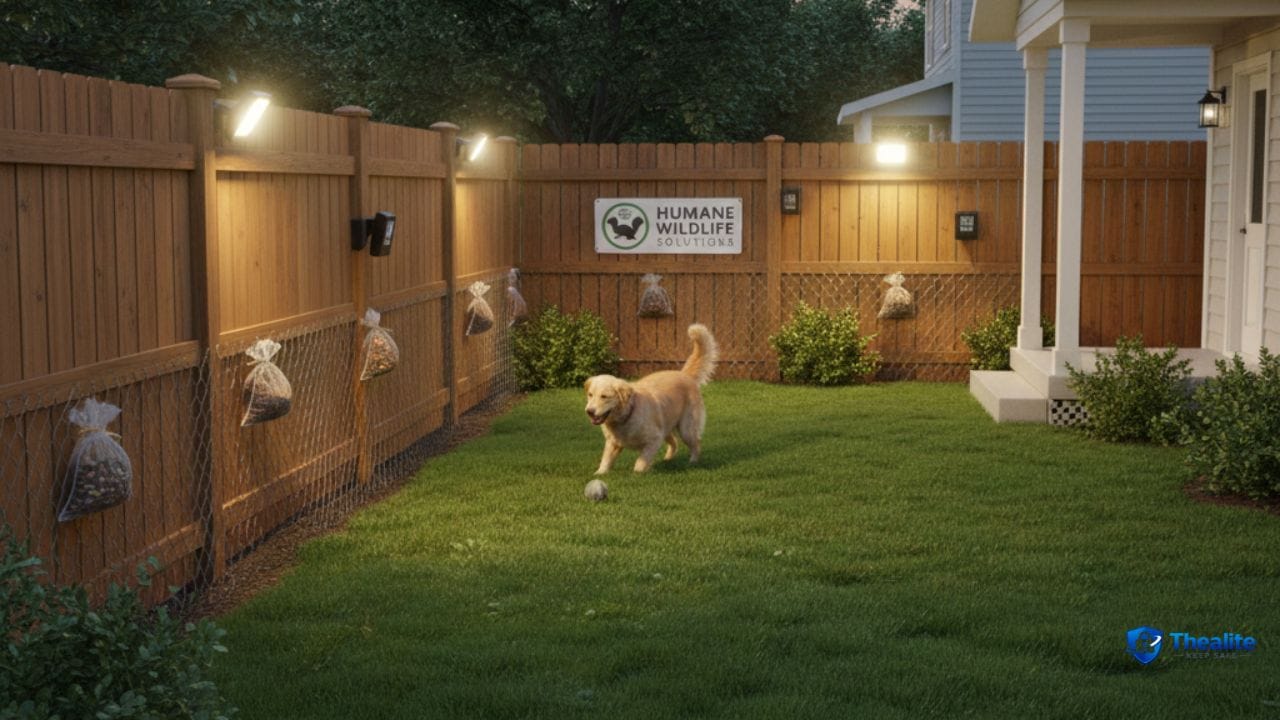
- Once you’re confident the space is empty, install hardware cloth (wire mesh) around the perimeter.
- Bury the mesh a few inches into the ground or create an L-shaped apron outward to stop digging.
If you suspect a mother skunk with babies, don’t seal the area. Contact a licensed wildlife professional to avoid trapping animals inside.
Step 4: Use Dog-Safe Deterrents (What Works and What to Avoid)
Deterrents work best after you remove attractants. Think of deterrents as “extra friction,” not the main fix.
Dog-safe options that usually help
- Motion-activated lights (startles skunks, reduces visits).
- Motion-activated sprinklers (effective and chemical-free).
- Keeping fences maintained (patch gaps; add a low barrier if digging happens).
- Short nightly yard checks with a flashlight before letting your dog out.
Options to be careful with
Some “home remedies” are popular but can be risky for dogs or unreliable.
Be cautious with:
- Strong chemicals or irritants (can harm pets and wildlife).
- Mothballs or toxic pellets (dangerous if ingested).
- Unlabeled sprays or essential oil mixes (some oils are toxic to dogs).
- Glue traps or harmful devices (inhumane and can injure animals).
If you’re unsure whether a product is dog-safe, don’t use it. Choose physical deterrents (light/sprinkler) instead.
Step 5: Manage the “Skunk Time” Schedule
Skunks are most active from dusk to dawn. Small routine changes can prevent 90% of dog-skunk incidents.
- Feed pets indoors, especially in the evening.
- Keep garbage secured overnight.
- Keep your dog leashed after dark in skunk-prone areas (bushes, decks, sheds).
- Use a porch light or motion light to reduce surprise encounters.
What to Do If You See a Skunk (So Your Dog Doesn’t Get Sprayed)
If you spot a skunk, stay calm. Fast movement and yelling can trigger spraying.
Do this:
- Call your dog back immediately in a calm voice.
- Back away slowly and give the skunk space.
- Bring your dog inside and close the door.
- Wait a few minutes before going back out.
Skunks often give warning signs before spraying: they may stomp, raise their tail, or turn their rear toward the threat. If you see that, create distance fast (without rushing).
If Your Dog Gets Sprayed: Quick, Safe Steps
Skunk spray is awful, but it’s usually not dangerous if handled properly. Your first job is to protect your dog’s eyes and keep them from rubbing.
- Keep your dog outside or in a washable area (garage/laundry) to limit odor inside.
- Check eyes and mouth; if eyes are irritated, rinse gently with clean water.
- Avoid using harsh chemicals on the face.
- If your dog is vomiting, drooling heavily, or very uncomfortable, call your vet.
For cleanup, many people use a well-known peroxide-based deodorizing mix, but concentrations and safety matter. If you’re not comfortable, a groomer or vet can help.
When to Call a Professional (Best Choice in These Cases)
DIY prevention works for most yards. But call a licensed wildlife control professional if:
- You suspect a skunk den with babies.
- There’s repeated spraying and you can’t locate the entry point.
- You see aggressive behavior or signs of illness.
- The skunk is trapped in a window well or enclosed space.
Wildlife rules can vary by state. A local pro will know what’s legal and humane in your area.
Dog-Friendly Skunk Prevention Checklist (Print This)
- No pet food outside overnight
- Trash lids secured
- Bird seed spills cleaned
- Fallen fruit removed
- Motion light or sprinkler installed
- Gaps under decks/sheds sealed (after confirming empty)
- Dog supervised at night
- Leash used for late-night potty breaks
FAQs
Do fences keep skunks out of the yard?
Sometimes. Skunks can squeeze through gaps and may dig. A fence helps most when it’s maintained, has no holes, and includes a low barrier that discourages digging.
Are skunks dangerous to dogs?
Skunks usually avoid conflict, but any wildlife contact carries risk. Keep rabies vaccines current and avoid direct encounters.
Will removing grubs stop skunks?
It can help a lot if skunks are digging for food. Combine lawn care with removing other attractants for best results.
What’s the most dog-safe deterrent?
Motion-activated sprinklers and lights are effective and don’t involve chemicals, so they’re a good first choice for dog homes.
More “Keep Safe” Guides
Explore more safety topics at Thealite Keep Safe. For site details, see Privacy Policy, Terms, and Disclaimer.

As a digital marketer, she has received multiple international awards, including Campaign of the Year at the 2023 European Content Awards and Best Use of Content Marketing at the 2022 Global Search Awards. Nicai holds an MSc in Marketing (First Class Honours) from the UCD Smurfit Graduate Business School and she has also completed the Artificial Intelligence Programme at Oxford University’s Saïd Business School. She is also a contributing writer for publications such as Entrepreneur and Esquire.