Guns rust in a safe because humidity gets trapped inside and sits on metal surfaces. To keep guns from rusting in a safe, control moisture first (desiccant or a safe dehumidifier rod), then add a light rust-preventive wipe on metal, and store firearms so air can move around them. Most rust problems go away when the safe stays consistently dry.
Why Guns Rust Inside a Safe
A safe feels sealed, but most home safes are not airtight. Temperature changes pull humid air in and out. That moisture can condense on cool metal parts, especially in basements, garages, or near exterior walls.
Rust risk is higher when guns are stored after handling (fingerprints add salt/oil) or when they sit in foam-lined cases that hold moisture.
Step 1: Control Humidity Inside the Safe (The Most Important Step)
Your target is a dry, stable environment. Do one of these (or combine them for humid areas):
Option A: Desiccant (silica gel / rechargeable canister)
Desiccants absorb water vapor. They’re simple and work well for many safes.
- Use enough desiccant for your safe size (more space = more desiccant).
- Place it in more than one spot (corners and lower shelf).
- Recharge or replace it on a schedule, especially in humid seasons.
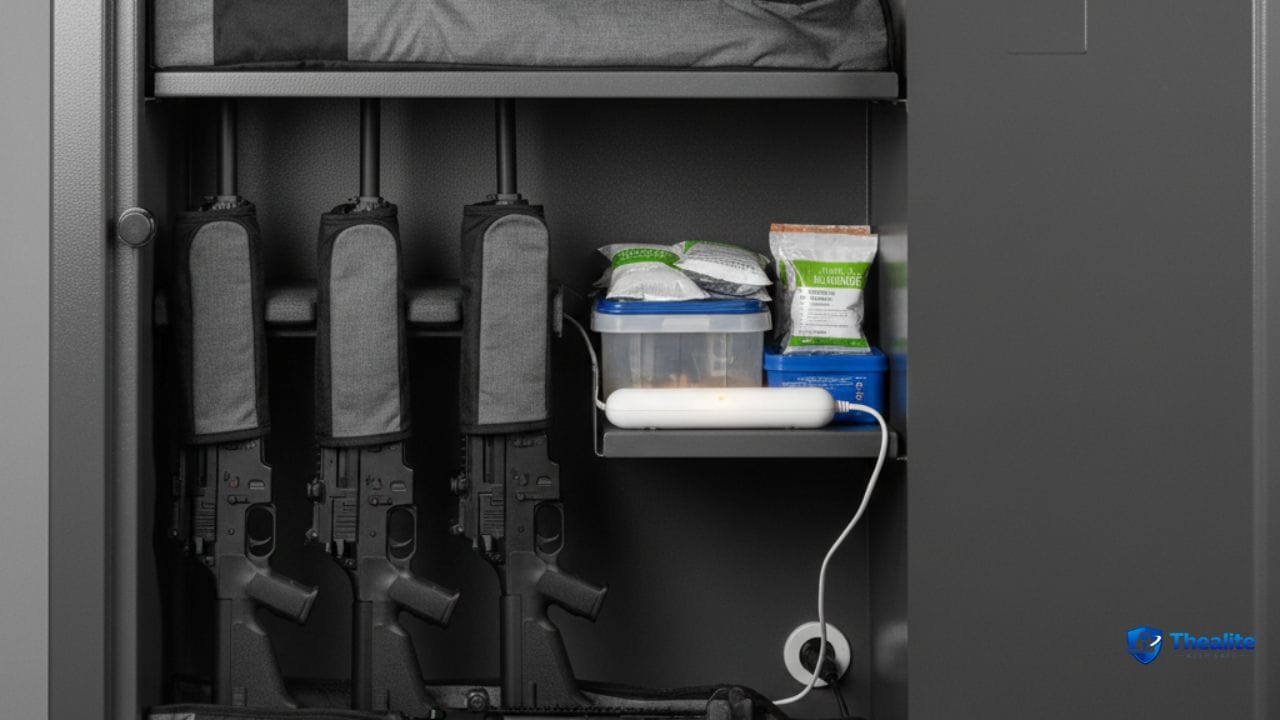
Option B: Dehumidifier rod (GoldenRod-style)
A dehumidifier rod gently warms the air in the safe so condensation doesn’t form. This is a strong choice for larger safes or consistently humid rooms.
Tip: place the rod low and don’t block airflow around it.
Option C: Room dehumidifier (if the safe is in a humid room)
If your safe sits in a basement or damp garage, drying the room helps more than anything inside the safe. A room dehumidifier can make moisture control easier and cheaper long-term.
Step 2: Wipe Down Metal With a Light Rust Preventive
Even with good humidity control, a quick protective wipe reduces rust risk—especially after handling.
Simple routine that works:
- After cleaning or handling, wipe exterior metal with a light rust-preventive oil or protectant.
- Pay attention to high-touch areas (where fingerprints sit).
- Don’t over-oil—excess oil can attract dust and lint.
Step 3: Store Guns the Right Way Inside the Safe
Storage style matters because trapped moisture creates rust spots.
- Avoid long-term storage in foam cases or soft cases (they can hold moisture).
- Leave a little space between firearms so air can circulate.
- If using a rack, make sure barrels/metal aren’t pressed against damp fabric.
- Keep the safe organized so the dehumidifier or desiccant can do its job.
Step 4: Add Extra Protection for Humid Climates
If you live in a very humid area, layered protection helps.
- Use both a dehumidifier rod and desiccant (one prevents condensation, one absorbs moisture).
- Consider VCI (vapor corrosion inhibitor) strips or bags made for safes (use as directed).
- Use a small humidity indicator card or hygrometer to monitor conditions.
What Not to Do (Common Rust-Causing Mistakes)
- Storing guns in foam cases inside the safe for months
- Placing the safe directly on concrete in a damp basement without a barrier
- Ignoring desiccant maintenance (it stops working once saturated)
- Putting wet items (shoes, damp cloth, recently cleaned parts not fully dry) inside the safe
- Assuming “fireproof safe” means “humidity-proof safe”
How Often Should You Check for Rust?
If you’re setting up moisture control for the first time, check weekly for a month. Once stable, monthly checks are usually enough.
Check:
- High-touch areas (fingerprint zones)
- Corners and edges where condensation starts
- Around optics mounts or screw heads (small rust spots often begin here)
If You Already See Rust Spots
Small surface rust can often be handled with careful cleaning and a protectant, but deeper rust or pitting may need professional help. If you’re unsure, ask a qualified gunsmith.
FAQs
What’s the best thing to keep guns from rusting in a safe?
Moisture control. A dehumidifier rod and/or a rechargeable desiccant canister solves most rust problems by keeping humidity low.
Do gun socks help prevent rust?
They can help prevent scratches and reduce contact with other surfaces, but they don’t replace humidity control. Moist air can still reach the metal.
Can I keep guns in the safe in the garage?
You can, but garages often have big temperature swings and higher humidity. If you store a safe there, moisture control inside the safe and in the room becomes more important.
Why do I get rust even though my safe is closed?
Because it’s not airtight and humidity still moves in and out. Condensation can form when temperature changes quickly.
More “Keep Safe” Guides
Read more safety guides at Thealite Keep Safe. For moisture control basics, see what to put in a safe to keep moisture out.

As a digital marketer, she has received multiple international awards, including Campaign of the Year at the 2023 European Content Awards and Best Use of Content Marketing at the 2022 Global Search Awards. Nicai holds an MSc in Marketing (First Class Honours) from the UCD Smurfit Graduate Business School and she has also completed the Artificial Intelligence Programme at Oxford University’s Saïd Business School. She is also a contributing writer for publications such as Entrepreneur and Esquire.