To keep money safe when traveling, don’t rely on one place or one method. Split cash into two or three spots, carry one card and keep a backup card locked away, use secure ATMs, and protect your phone because it often controls your banking and payments. Most travel money losses come from pickpocketing, scams, or simple forgetfulness—not dramatic robberies.
Before You Go: Set Up Money Safety (10 Minutes)
A few setup steps reduce risk fast.
- Tell your bank you’re traveling (or set travel notice if your bank uses it).
- Turn on transaction alerts for cards and banking apps.
- Set daily spending/withdrawal limits if your bank allows it.
- Bring two payment cards (stored separately).
- Save bank contact numbers offline (notes app + paper).
- Keep a small emergency cash amount hidden (for taxis, food, emergencies).
How to Carry Cash Safely (Without Being Paranoid)
Cash is useful, but it’s easy to lose. The trick is splitting it.
Best practice: carry a “day cash” amount and keep the rest hidden.
- Carry small bills for daily use.
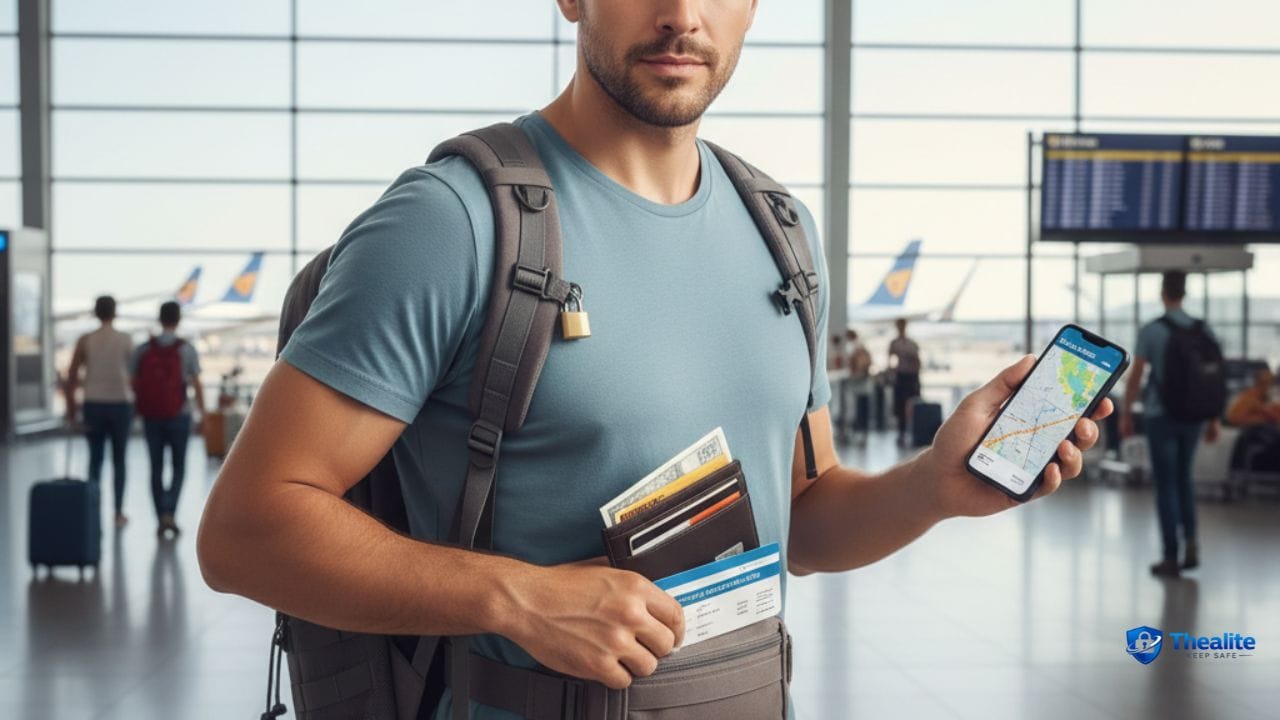
- Split the rest into 2+ locations (money belt, inner pocket, locked bag).
- Never keep all cash in one wallet.
- Don’t flash big wads of cash in public.
Best Places to Keep Money While Traveling
1) On your body (best during transit)
Transit days are high risk—airports, train stations, buses, crowded streets.
- Money belt or hidden pouch under clothing
- Crossbody bag worn in front (zippered)
- Inner jacket pocket with zipper
2) In your accommodation (best for backups)
Keep backup cash and backup cards locked away.
- In-room safe (test it first)
- Locked suitcase (with a small lock)
- Front desk safe deposit (ask about process)
3) In a “dummy wallet” (optional)
Some travelers carry a small decoy wallet with a little cash and expired cards.
It’s optional, but it can reduce panic if you ever get pressured for a wallet.
ATM Safety: How to Withdraw Cash Without Getting Scammed
ATMs can be safe, but location matters.
- Use ATMs inside banks when possible.
- Avoid ATMs in dark, isolated areas or tourist-trap corners.
- Cover the keypad when entering your PIN.
- Check for loose card slots or suspicious attachments (possible skimmers).
- Decline “dynamic currency conversion” if it offers it (often costly).
- Take your cash first, then your card, then your receipt.
Card Safety: The Simple Rules That Prevent Big Losses
Cards are easier to replace than cash, but stolen cards still cause stress.
- Carry one main card and keep a backup card separate.
- Use tap-to-pay when available (often safer than swiping).
- Don’t hand your card away out of sight in restaurants (ask for the terminal).
- Lock your card in your banking app when you’re not using it (if your bank supports it).
Phone Safety = Money Safety
If someone steals your phone, they may get access to banking apps, wallets, and saved passwords.
Do this:
- Use a strong passcode (not just Face ID).
- Turn on Find My / remote wipe.
- Turn on banking alerts and login alerts.
- Avoid logging into bank apps on public Wi‑Fi if possible.
- Keep your phone in a front pocket or crossbody bag in crowds.
Pickpocket-Proof Habits in Crowded Places
Crowds are where money disappears—tourist sites, markets, metro stations.
- Wear your bag in front and keep zippers closed.
- Don’t keep your wallet in your back pocket.
- Be cautious when someone bumps you or creates a distraction.
- Don’t hang bags on the back of chairs in cafes.
Hotel Safe Tips (So You Don’t Lock Yourself Out)
Hotel safes are useful, but people forget codes or leave things behind.
- Test the safe before storing money.
- Store backup cash and backup cards together in one place.
- Set a code you won’t forget at checkout time.
- Do a final safe-check before you leave the hotel.
What to Do If You Lose Money or Cards While Traveling
Act fast. A quick response prevents more damage.
- Lock or freeze your card immediately in your banking app (or call the bank).
- Report theft to local police if needed (some banks/insurance ask for a report).
- Use your backup card/cash stored separately.
- Change passwords if your phone or email might be compromised.
- Check transactions and dispute anything fraudulent.
Quick Travel Money Checklist (Save This)
- Two cards stored separately
- Split cash into 2–3 spots
- Transaction alerts enabled
- ATM plan: use bank ATMs
- Phone secured with strong passcode + Find My
- Emergency contacts and bank numbers saved offline
FAQs
Should I carry cash or use cards while traveling?
A mix is best. Cards are safer for bigger payments, and a small amount of cash helps for tips, transit, and places that don’t accept cards.
Where is the safest place to keep money while traveling?
During transit, a hidden pouch or zipped inner pocket is best. At your accommodation, a safe or locked suitcase works well for backups.
Is it safe to use ATMs abroad?
Yes, especially ATMs inside banks. Avoid sketchy locations and watch for skimming signs.
What if my wallet is stolen?
Freeze cards immediately, use your backup card/cash, and monitor transactions. Having backups separated makes recovery much easier.
More “Keep Safe” Guides
Explore more safety topics at Thealite Keep Safe. For site details, see Privacy Policy, Terms, and Disclaimer.

As a digital marketer, she has received multiple international awards, including Campaign of the Year at the 2023 European Content Awards and Best Use of Content Marketing at the 2022 Global Search Awards. Nicai holds an MSc in Marketing (First Class Honours) from the UCD Smurfit Graduate Business School and she has also completed the Artificial Intelligence Programme at Oxford University’s Saïd Business School. She is also a contributing writer for publications such as Entrepreneur and Esquire.