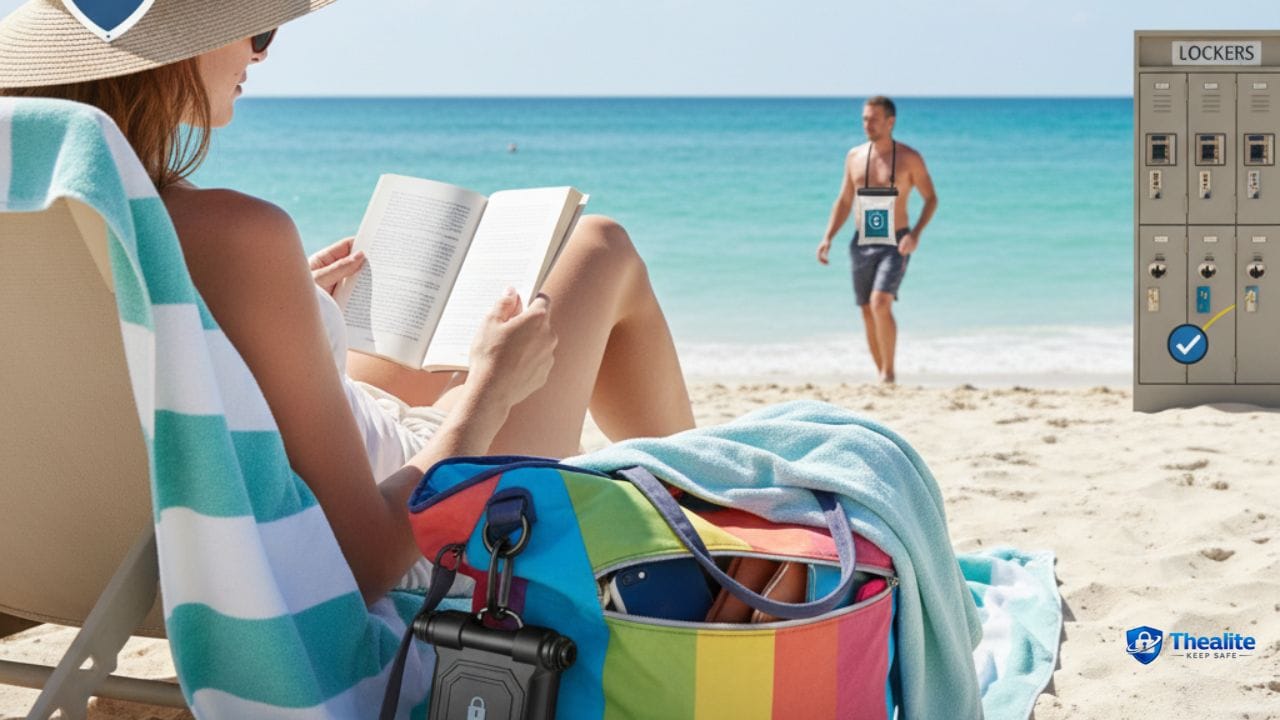
A day at the beach should feel relaxing—not like you have to guard your stuff every second. But beaches are also one of the easiest places for theft because people leave bags unattended, get distracted in the water, and carry high-value items like phones, wallets, and car keys. The good news: you don’t need fancy gear to protect your valuables. You just need a plan.
Below is a practical, step-by-step guide you can use for U.S. beaches—whether you’re going solo, with friends, or with kids. You’ll learn what to bring, what to leave, how to reduce risk, and what to do if something goes missing.
The #1 Rule: Don’t Bring What You Can’t Afford to Lose
Most beach problems disappear when you reduce what you’re carrying. Before you leave home, decide what’s truly necessary. If you won’t need it on the sand, leave it behind.
Bring only the essentials
- One payment method (preferably a single credit card) + a small amount of cash
- Your ID only if needed (some beaches require proof of residency/parking permits)
- Your phone (or keep it locked in the car if you can)
- Car key (and avoid bringing the full key ring if possible)
Leave these at home or locked away
- Extra cards (debit cards, gift cards, secondary credit cards)
- Passport or immigration documents
- Expensive jewelry and watches
- Large amounts of cash
- Laptop/tablet unless you truly need it
If you’re also planning a trip, this guide pairs well with how to keep money safe when traveling and how to keep your money safe.
Understand the Most Common Beach Theft Scenarios
Knowing how theft usually happens makes it easier to prevent. Here are the patterns reported most often at busy beaches:
Quick grab while you’re in the water
Someone watches where you put your bag, waits until you’re distracted, and grabs a phone/wallet in seconds.
“Helpful stranger” distraction
A person asks a question (directions, sunscreen, a lighter, etc.) while another person takes something from your bag.
Car break-ins after watching you hide items
This is a big one: people hide a wallet under a towel or in the trunk at the beach parking lot. If someone sees you do it, your car becomes a target.
What to Do Before You Get to the Beach
1) Make your phone harder to steal (and easier to recover)
Turn on the basics: passcode, Face ID/Touch ID, and location tracking (Find My iPhone / Find My Device). Also enable backup so your photos and data are safe even if the device is gone.
For a deeper checklist, see keep phone safe from hackers and how to keep phone safe from pickpockets.
2) Reduce what’s in your wallet
Use a slim wallet or card sleeve with one card and your ID. Keep the rest at home. If something goes missing, you’ve limited the damage.
3) Decide your “beach key plan”
Car keys are tricky because modern key fobs are expensive and hard to replace. Choose one approach before you leave:
- Bring only the car key/fob (no home keys).
- Use a waterproof pouch to keep your key on your body in the water.
- If you have a trusted group, assign one person to stay with belongings while others swim.
Smart Ways to Keep Valuables Safe on the Sand
Option A: Keep valuables on you (best for solo beach days)
If you’re alone, the safest option is to keep essentials on your body. A waterproof waist pouch, neck pouch, or small dry bag can hold a phone, key, and one card. Keep it under your shirt or rash guard so it’s not obvious.
Option B: Use the buddy system (best for families and friends)
If you’re with others, rotate who watches the setup. It sounds simple, but it works because it removes the biggest vulnerability: everyone being in the water at once.
- Agree on a schedule: one person stays on shore while others swim.
- Keep valuables consolidated in one small pouch rather than spread across multiple bags.
- If you leave for food or a walk, take the pouch with you.
Option C: Lock valuables in the car (but do it the right way)
Car storage can be safe if you avoid the common mistake: hiding items in the parking lot where people can watch you. If you’re going to lock items in the car, stash them before you arrive (at home), or do it discreetly.
- Put valuables in the trunk before you arrive—never in the lot.
- Park in well-lit, higher-traffic areas when possible.
- Don’t leave bags visible through windows (even if “empty”).
Where NOT to hide valuables (thieves know these spots)
- Inside a shoe or under a flip-flop
- Wrapped in a towel on top of your bag
- In an outside pocket of a backpack
- Under the car seat or in the glove box (common break-in targets)
Simple “Low-Tech” Tricks That Actually Help
Use a decoy setup
If you must leave a bag, consider leaving low-value items in an easy-to-see pocket (like sunscreen or a paperback) and keeping real valuables on your body or in a hidden internal pocket. The goal is to make your valuables inaccessible fast.
Keep one ‘valuables pouch’ and never let it out of your routine
Use a small pouch as your valuables container: phone, key, card, ID. Whenever you stand up, the pouch comes with you. This habit prevents the most common mistake—walking away for “just a second.”
Avoid advertising expensive items
High-end jewelry and new phones attract attention. If you want beach photos, take them quickly and put the phone away. If you’re wearing jewelry, consider leaving it at home.
Related: how to keep jewelry safe at home and how to keep gold jewelry safe at home.
Beach Safety for Credit Cards, Cash, and IDs
Payment and identity items are usually harder to fix than replacing a towel. If your wallet gets stolen, the biggest risks are fraud, account takeover, and identity misuse.
Safer payment choices
- Use a credit card instead of a debit card when possible (credit cards usually have stronger protections).
- Use contactless pay on your phone if you’re comfortable—then carry only one backup card.
- Carry a small amount of cash in a separate spot (not in the same pouch as your card).
Protect your identity if your ID is stolen
If your driver’s license or ID is taken, monitor your accounts and consider placing a fraud alert or credit freeze. Also change passwords if your phone or email might be compromised.
Helpful internal guides: how to keep your identity safe online • keep personal information safe online • how to keep passwords safe • keep bank account safe online
What About a Beach Safe, Locker, or Rental Storage?
Some U.S. beaches offer lockers, resort safes, or rental storage. These can be a good layer of protection if:
• the facility is reputable,
• you keep the key/code secure,
• and you still avoid leaving your entire identity kit in one place.
If you’re staying at a hotel or rental
Use the room safe for passports and backup cards, but don’t forget: room safes aren’t perfect. Keep only what you won’t need on the beach and avoid leaving expensive items visible in the room.
Also see keep passport safe while traveling.
How to Keep Your Phone Safe at the Beach (Water + Theft)
At the beach, phones face two threats: water damage and theft. A good plan handles both.
Best practices
- Use a waterproof pouch if your phone will be near water.
- Turn on a strong screen lock (PIN, Face ID/Touch ID).
- Avoid leaving your phone on top of a towel—store it inside a zipped bag or on your body.
- Enable tracking features (Find My iPhone / Find My Device).
Families: don’t put every phone in one bag
If you’re with family, spread risk: keep one phone with the person watching belongings, and keep another protected on someone’s body.
If Something Gets Stolen: What to Do Immediately
Even with good habits, theft can happen. Acting fast reduces damage.
Step-by-step checklist
- Retrace your steps and check nearby trash cans (thieves sometimes dump wallets after taking cash/cards).
- If your phone is missing, use Find My iPhone/Find My Device to locate it and mark it lost.
- Call your bank/credit card issuer to freeze cards immediately.
- Change your email and banking passwords if your phone had access to them.
- File a report with local police or beach security (useful for insurance claims).
For protecting accounts after a scare, see how to keep data safe and secure and keep important documents safe online.
Quick Beach Checklist (Copy/Paste)
- Bring only one card + small cash; leave extras at home.
- Use a valuables pouch and keep it on you or with the designated watcher.
- Don’t hide valuables in the parking lot—stash before you arrive.
- Avoid obvious hiding spots (shoe/towel/outside pockets).
- Lock your phone, enable tracking, and keep it out of sight.
- If theft happens: lock accounts first, then file a report.
FAQs
What’s the safest way to bring valuables to the beach?
The safest approach is to bring fewer valuables and keep essentials on your body in a secure pouch. If you’re with others, use a rotation system so someone is always with your setup.
Is it safe to leave valuables in a car at the beach?
It can be, but only if you stash items before you arrive (so no one sees you do it) and you leave nothing visible through windows. Avoid glove boxes and under-seat hiding spots.
Where do you put your phone when you go in the ocean?
Use a waterproof pouch that stays on your body, or leave the phone with a trusted person who remains on shore. Don’t leave it exposed on a towel.
How do you keep car keys from getting stolen at the beach?
Bring only the car key, avoid leaving it in a bag unattended, and consider a waterproof key pouch if you’ll be in the water.
What should you do if your wallet gets stolen at the beach?
Freeze your cards immediately, monitor your accounts, and consider extra identity protection steps like a fraud alert or credit freeze if your ID was taken.
Conclusion
Keeping valuables safe at the beach is mostly about planning and habits: bring less, keep essentials consolidated, and avoid leaving items unattended. When you build a simple routine—valuables pouch, buddy rotation, and smart car storage—you can enjoy the water without constantly worrying about your stuff.

As a digital marketer, she has received multiple international awards, including Campaign of the Year at the 2023 European Content Awards and Best Use of Content Marketing at the 2022 Global Search Awards. Nicai holds an MSc in Marketing (First Class Honours) from the UCD Smurfit Graduate Business School and she has also completed the Artificial Intelligence Programme at Oxford University’s Saïd Business School. She is also a contributing writer for publications such as Entrepreneur and Esquire.