Yes—**it can be safe to keep baby chicks in the house** for the first several weeks, and many U.S. backyard chicken keepers do exactly that. But “safe” depends on how you set up the brooder. The two biggest risks are:
• **Heat and fire safety** (especially if using a heat lamp)
• **Hygiene and health** (dust, odors, and germs like salmonella)
If you control heat safely, keep the brooder clean and ventilated, and prevent kids/pets from handling chicks unsafely, indoor brooding can be a practical and humane option.
This guide is written for U.S. readers and covers safe brooder setup, temperature management, cleaning routines, air quality, and when chicks are ready to move outdoors.
Related reading on your site: How to Keep Your Home Safe • How to Keep Pets Safe in Hot Weather • How Will These Rules Keep You Safe? • Keep Temperature Control for Safety Food Safe
Quick Answer
Keeping baby chicks indoors is usually safe **if** you use a secure brooder, provide consistent heat (preferably with a safer brooder plate or a properly mounted heat lamp), keep bedding dry, maintain ventilation, and practice good hand hygiene to reduce germ spread. Most chicks can begin spending supervised time outside when feathered enough and weather allows, and they’re usually ready for a full move outdoors once they’re fully feathered and nighttime temps are appropriate.
Why People Keep Chicks Indoors (And Why It’s Often Smart)
- Chicks need stable warmth early on that’s easier to manage indoors.
- Indoor brooders reduce predator risk compared to barns/sheds.
- You can monitor eating, drinking, and health more closely.
- Cold snaps and bad weather are less dangerous indoors.
The Main Risks of Keeping Chicks in the House
Indoor brooding is doable—but you should plan for these risks:
- Fire risk from heat lamps (most serious household safety concern).
- Dust, dander, and odor from bedding (air quality).
- Germs (especially salmonella) from droppings and chicks’ feet/beaks.
- Mess: bedding tracked around, spilled water, and feed dust.
- Pets and children stressing or injuring chicks.
Step 1: Build a Safe Brooder Setup
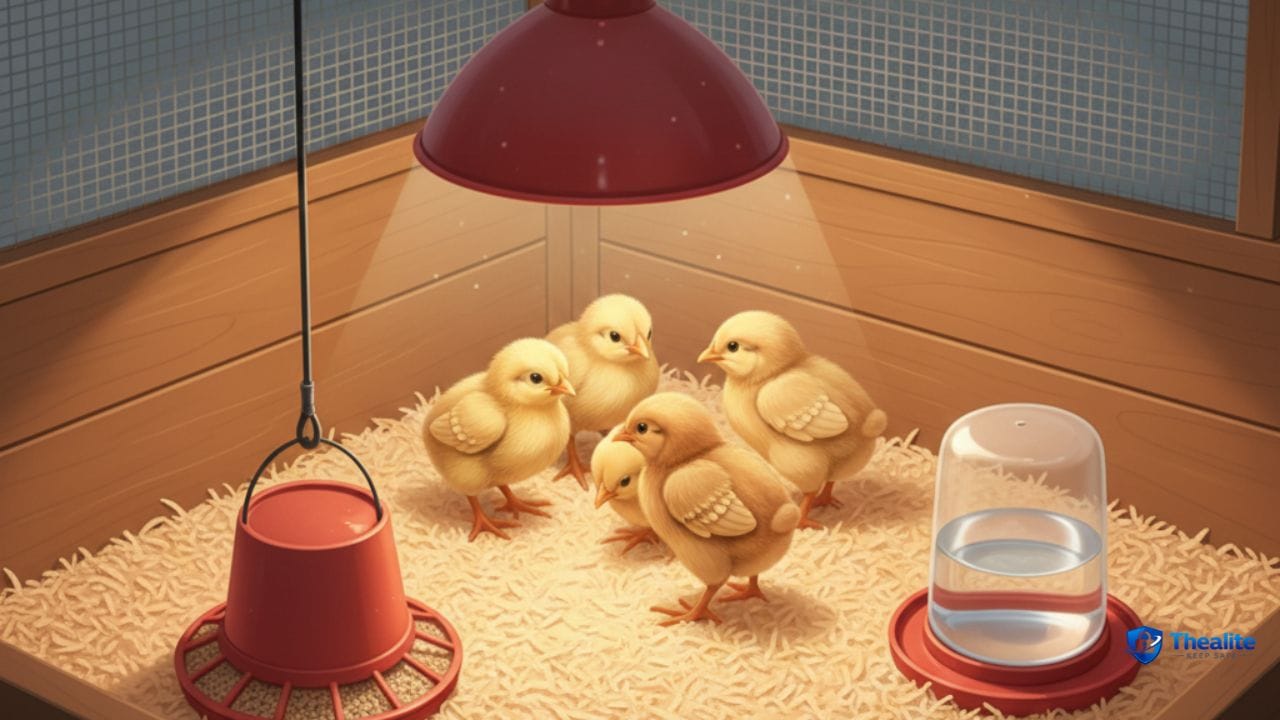
A brooder is basically a warm, draft-free, predator-proof “nursery.” Indoors, it should also be spill-resistant and easy to clean.
Brooder container options
- Large plastic storage tote (with high sides)
- Stock tank (metal or heavy-duty plastic)
- Large cardboard box (short-term only; not ideal around heat sources)
- Commercial brooder box
Brooder basics checklist
- High sides or a lid/cover to prevent escapes and protect from pets.
- Non-slip flooring under bedding (use a rubber mat or textured liner if needed).
- Enough space: overcrowding leads to stress and illness (increase space as chicks grow).
- No drafts directly blowing on chicks (avoid vents/fans aimed into the brooder).
Step 2: Temperature and Heat Safety (The Most Important Part)
Chicks need warmth because they can’t regulate body temperature well in the first weeks. But too much heat (or unsafe heating gear) is dangerous. The goal is **controlled warmth + a cooler area** so chicks can self-regulate.
Safer heat option: brooder heat plate
Many keepers prefer a brooder plate because it provides gentle radiant heat without the same fire risk as a hanging heat lamp. Chicks warm up under it and step away when they’re comfortable.
If you use a heat lamp: reduce fire risk
- Use a quality lamp with a ceramic socket (not cheap plastic).
- Mount it securely (chain/stand) and never rely on a single clip.
- Keep it away from flammable materials (curtains, cardboard, bedding bags).
- Use a protective guard and keep cords out of reach of pets/kids.
- Place the brooder on a non-flammable surface and keep the area clear.
How to tell if chicks are too cold or too hot
- Too cold: chicks huddle tightly under the heat source and chirp loudly.
- Too hot: chicks spread far away from the heat, pant, or hold wings away from body.
- Just right: chicks are evenly spread, quiet, and active with normal eating/drinking.
If you like simple safety rules/checklists, see How Will These Rules Keep You Safe?.
Step 3: Bedding Choice and Cleanliness (Odor + Health)
Bedding controls odor, moisture, and foot health. Wet bedding is the enemy—it increases smell and can lead to health problems.
Common bedding options
- Pine shavings (common; avoid aromatic cedar)
- Paper towels (great for first days so chicks learn to eat and you can monitor droppings)
- Chopped straw (can work but may be harder to keep clean)
Bedding safety tips
- Keep bedding dry and change wet spots daily (especially around water).
- Avoid slippery newspaper alone (leg issues risk); paper towels have better traction.
- Remove moldy or damp bedding immediately.
Step 4: Food and Water Setup (Prevent Spills)
Spilled water is the fastest way to create a smelly, unhealthy brooder. Use equipment that reduces tipping.
Practical feeding/watering tips
- Use a chick waterer designed to resist tipping.
- Raise the waterer slightly as chicks grow (a small stable platform helps).
- Clean and refill water daily (more often if it gets dirty).
- Use a feeder that reduces scratch-and-throw feed waste.
Step 5: Ventilation and Air Quality (House Comfort Matters)
Chicks create dust and dander from bedding and feed. Good ventilation keeps your house comfortable and reduces irritation.
Air-quality best practices
- Choose a space with good airflow (laundry room, mudroom, garage-adjacent room—if temperature is stable).
- Avoid putting brooders in bedrooms or near HVAC returns.
- Spot-clean daily to reduce odor and ammonia buildup.
- If needed, use an air purifier in the room (not blowing directly on chicks).
Step 6: Hygiene and Salmonella Risk (Simple, No Panic)
Chicks and poultry can carry germs like salmonella even if they look healthy. This doesn’t mean you can’t keep chicks indoors—it means you should use **basic hygiene** and keep chicks out of food-prep spaces.
Hygiene rules that work
- Wash hands after touching chicks, bedding, feeders, or the brooder.
- Don’t let chicks roam on kitchen counters or dining tables.
- Don’t kiss chicks or hold them near faces (especially kids).
- Keep brooder cleaning tools separate from kitchen tools.
- Supervise children and teach ‘touch gently, then wash hands.’
Temperature awareness is also a safety habit. See Keep Temperature Control for Safety Food Safe (same mindset: temp control prevents problems).
Step 7: Pets and Kids (Prevent Stress and Injuries)
Cats and dogs may be curious. Even a gentle pet can injure chicks accidentally. Stress alone can harm chicks.
Household safety rules
- Keep the brooder in a room pets can’t access, or use a secure cover.
- Never allow pets to ‘play’ with chicks, even supervised.
- Teach kids not to chase or squeeze chicks; short, calm handling only.
- Limit handling in the first days so chicks settle and learn to eat/drink.
When Can Chicks Go Outside?
Chicks can start enjoying short, supervised outdoor time when conditions are safe—but full-time outdoor living usually waits until they’re **fully feathered** and nighttime temperatures are suitable.
Practical outdoor transition tips
- Start with short daytime outings in mild weather (supervised, protected area).
- Avoid wet/cold/windy conditions early on.
- Bring them back inside before they get chilled.
- Move to the coop when fully feathered and the coop is predator-proof and draft-managed.
Common Indoor Brooding Mistakes
- Using a heat lamp without secure mounting (fire risk).
- Keeping the brooder on carpet or near curtains/flammables.
- Wet bedding from water spills (odor + health issues).
- Overcrowding (stress and pecking).
- Letting chicks roam in the kitchen or food areas.
- Allowing pets unsupervised access to the brooder.
Indoor Chick Brooder Checklist (Copy/Paste)
- Secure brooder container with high sides/cover
- Safe heat source (brooder plate preferred; heat lamp securely mounted if used)
- Warm zone + cool zone so chicks can self-regulate
- Dry bedding; spot-clean daily; change regularly
- Stable waterer + feeder (reduce spills)
- Good ventilation (not drafty) and keep away from food-prep areas
- Handwashing after contact; supervise kids; keep pets out
- Plan outdoor transition once feathered and weather/coop are ready
FAQs
Is it okay to keep chicks in my living room?
It can be, but it’s not ideal. A lower-traffic room with easier cleaning (laundry room/mudroom) is usually better. Wherever you keep them, control heat safely and keep the area ventilated.
What’s safer: a heat lamp or a brooder plate?
Many people consider brooder heat plates safer because they reduce fire risk compared to heat lamps. If you use a heat lamp, secure mounting and clear space around it are critical.
Will baby chicks make my house smell?
They can if bedding stays damp. Spot-clean daily, prevent water spills, and change bedding regularly to control odor.
Can baby chicks make humans sick?
Chicks can carry germs like salmonella. Basic hygiene—washing hands and keeping chicks away from kitchens/food areas—reduces risk.
How long do chicks need to stay in the brooder?
Many chicks need several weeks of brooder care until they’re fully feathered and can handle outdoor temperatures. The exact timing depends on breed, weather, and your setup.
Conclusion
So, is it safe to keep baby chicks in the house? Yes—when you treat indoor brooding like a safety system: secure brooder, safe heat control, clean dry bedding, good ventilation, and smart hygiene. Most problems come from predictable issues (heat-lamp fire risk, wet bedding, and poor handwashing). Set it up right, and indoor chicks can be both safe and enjoyable until they’re ready to transition outdoors.

As a digital marketer, she has received multiple international awards, including Campaign of the Year at the 2023 European Content Awards and Best Use of Content Marketing at the 2022 Global Search Awards. Nicai holds an MSc in Marketing (First Class Honours) from the UCD Smurfit Graduate Business School and she has also completed the Artificial Intelligence Programme at Oxford University’s Saïd Business School. She is also a contributing writer for publications such as Entrepreneur and Esquire.