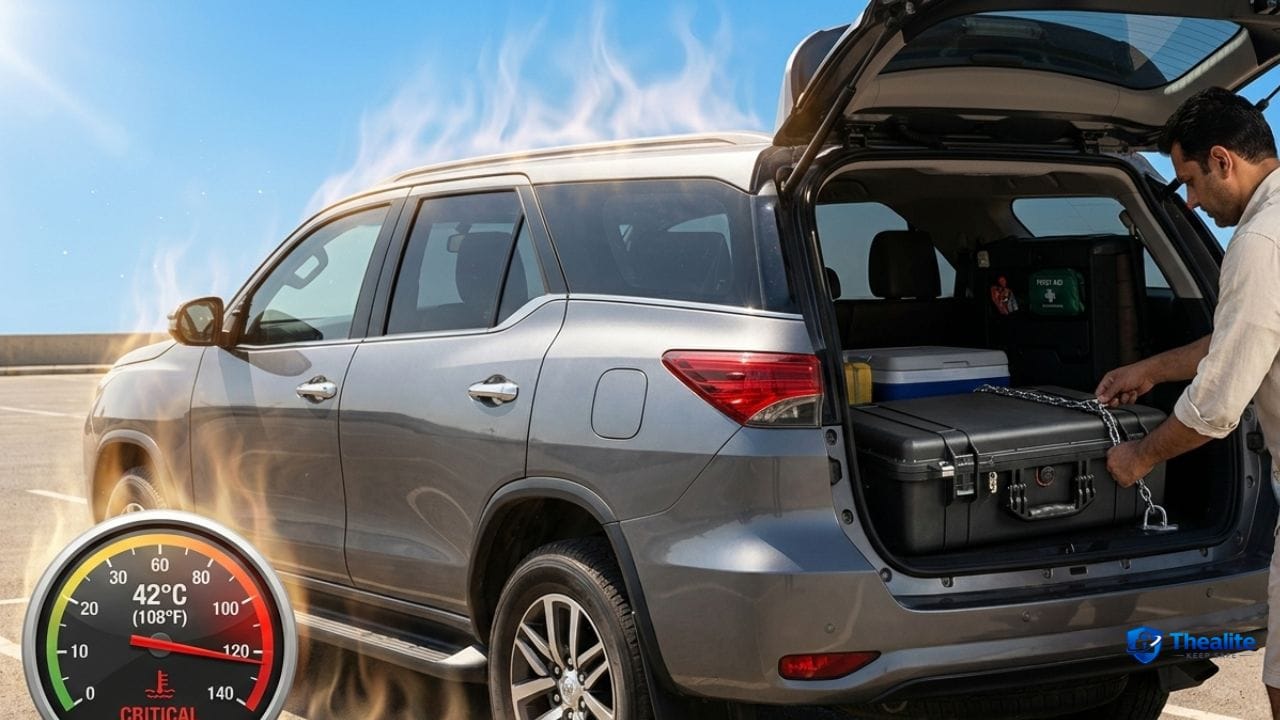
In many parts of the U.S., the inside of a parked car can get extremely hot—especially in direct sun during summer. That leads to a common question from responsible owners: is it safe to keep a gun in a hot car?
The practical answer is: it’s usually not a good idea to leave a firearm in a hot car for extended periods. Heat is one concern, but the bigger everyday risk is often theft (vehicles are a common source of stolen firearms). If you must store or transport a gun in a vehicle, the safest approach is to keep it with you when legal and practical—or use a dedicated, secured vehicle lockbox for short periods.
Quick Answer
Keeping a gun in a hot car is not recommended for long periods. Heat can degrade lubricants, optics/adhesives, some polymers, and ammo performance (in rare cases increasing risk). But the bigger issue is usually security: cars are frequently broken into, and a gun left in a vehicle is easier to steal. If you must temporarily store a firearm in a vehicle, use a quality vehicle lockbox that’s anchored to the car, keep the gun out of sight, and limit the time it stays there.
Why Hot Cars Are a Problem (Heat + Time)
Parked cars can heat up quickly. Even if you’re used to summer heat, the interior temperature can rise well beyond outside air temperature. That matters because many firearms and accessories include oils, greases, polymers, adhesives, batteries, and sealed electronics—materials that don’t love repeated heat cycles.
What heat can affect on a firearm
- Lubricants and oils: can thin out, migrate, or evaporate faster, leaving parts drier.
- Optics and electronics: heat can reduce battery life and stress components.
- Adhesives and thread lockers: repeated heat cycles can weaken some bond/retention over time.
- Polymer components: usually durable, but constant extreme heat can accelerate aging.
- Rust risk later: warm-to-cool cycles can contribute to condensation once temperatures drop, especially with humidity.
Moisture/condensation prevention matters too. See How to Keep Moisture Out of Gun Safe and Keep Guns From Rusting in Safe.
Ammo in a Hot Car: What’s the Real Risk?
Ammunition is manufactured to handle a range of conditions, and many people transport ammo in warm weather without issues. However, extended high-heat storage can change performance characteristics over time and can be hard on primers and powders.
Practical ammo cautions
- Avoid leaving ammo in a vehicle for long periods during peak summer heat.
- If ammo has been repeatedly heat-soaked, consider rotating it out for practice use rather than relying on it for critical use.
- Keep ammo dry and sealed; humidity swings plus heat can accelerate issues.
If your question is specifically about loaded firearms in hot cars, read Is It Safe to Keep a Loaded Gun in a Hot Car.
The Bigger Risk: Theft From Vehicles
From a safety standpoint, the most common and preventable problem with leaving a gun in a car is theft. A car is not a safe. Even a quick errand can become a window-smash theft opportunity.
Vehicle-theft risk goes up when:
- The gun is stored in the glove box or center console (first places thieves check).
- You leave firearm-related stickers, cases, or gear visible (signals value).
- You park in poorly lit, low-traffic areas.
- The gun is not secured with a lockbox anchored to the vehicle.
If You Must Store a Gun in a Vehicle: Best Practices
Sometimes you have no choice (restricted locations, travel stops, etc.). If you must, treat it like a short-term containment plan.
1) Use a dedicated vehicle lockbox
- Choose a lockbox designed for firearms (not a thin, portable cash box).
- Anchor it to the vehicle (cable around a fixed point or bolted mount).
- Keep it out of sight (under a seat or in a covered compartment).
2) Minimize time in the car
- Keep storage time as short as possible—minutes, not hours.
- Avoid leaving the gun in the car overnight.
3) Avoid the hottest locations
- Never leave it on the dashboard or rear shelf.
- If you must store it, pick a lower, shaded area (under seat) and keep it in a case.
4) Reduce handling and administrative errors
- Plan your routine to minimize unnecessary loading/unloading.
- Keep your muzzle discipline and trigger discipline consistent during any transfer.
- Store separately from other loose metal objects that can cause scratches or damage gear.
5) Follow all local laws and venue rules
Firearm vehicle storage rules vary by state and sometimes by specific locations (schools, federal property, certain parking lots, etc.). If you travel, check the rules for the exact state and destination.
Heat-Smart Alternatives (Better Than Leaving It in the Car)
- Bring the firearm with you where legal and appropriate (best security).
- Store it at home in a proper safe and carry only when needed.
- If you frequently need vehicle storage, invest in a high-quality anchored vehicle safe and make it part of your routine.
Home storage guidance: How to Keep a Gun Safe at Home • Can You Keep a Gun Safe in the Garage.
Maintenance Tips After Heat Exposure
If a firearm has spent time in a hot vehicle repeatedly, do a simple maintenance check:
- Inspect for excess oil migration or dried lubricant; re-lube appropriately.
- Check optics mounts and screws for loosening (heat cycles can matter).
- Wipe down metal surfaces and apply corrosion protection if needed.
- Rotate defensive ammo if it has been repeatedly heat-soaked (use it for training and replace).
Car Safety Parallel: Heat-Sensitive Items
Vehicles are harsh storage environments for many items—heat can affect batteries, pressurized items, and some chemicals.
Related: Is It Safe to Keep a Lighter in Your Car • How to Keep Lithium Batteries Safe.
Copy/Paste Checklist: Safe Vehicle Storage (If You Must)
- Gun stored in an anchored vehicle lockbox (not glove box)
- Lockbox placed out of sight (under seat / covered area)
- Storage time minimized (avoid overnight storage)
- No firearm-related cases or stickers visible
- Avoid hottest parts of the car (dashboard/rear shelf)
- Post-storage check: wipe down, inspect, re-lube if needed
- Defensive ammo rotated if repeatedly heat-soaked
- Local laws/venue rules verified for your location
FAQs
Will a gun go off in a hot car by itself?
A properly functioning firearm should not discharge simply from heat. The bigger risks are theft and degradation of ammo or gear over time. Always handle and store firearms responsibly.
Is it safer to keep the gun in the trunk?
The trunk can reduce visibility, but it can still get very hot. If you must store a firearm, an anchored lockbox out of sight is safer than a loose gun in the trunk.
Does heat damage ammunition?
Short-term warm transport is common, but long-term repeated heat exposure can affect ammo performance over time. Many owners rotate heat-exposed carry ammo into training use.
What’s the safest option if I can’t bring my firearm into a building?
A quality anchored vehicle lockbox, out of sight, for the shortest time possible—plus following local storage laws.
Is it okay to leave a gun in the car overnight?
It’s generally not recommended due to theft risk and temperature swings. If you can, store it at home in a proper safe instead.
Conclusion
So, is it safe to keep a gun in a hot car? In most situations, it’s not the best practice, mainly because vehicles are high-theft targets and heat cycles can be hard on ammo and accessories over time. If you must store a firearm in a vehicle, use an anchored lockbox, keep it out of sight, minimize storage time, and follow all local laws. For long-term safety and reliability, home storage in a proper safe is usually the better option.

As a digital marketer, she has received multiple international awards, including Campaign of the Year at the 2023 European Content Awards and Best Use of Content Marketing at the 2022 Global Search Awards. Nicai holds an MSc in Marketing (First Class Honours) from the UCD Smurfit Graduate Business School and she has also completed the Artificial Intelligence Programme at Oxford University’s Saïd Business School. She is also a contributing writer for publications such as Entrepreneur and Esquire.