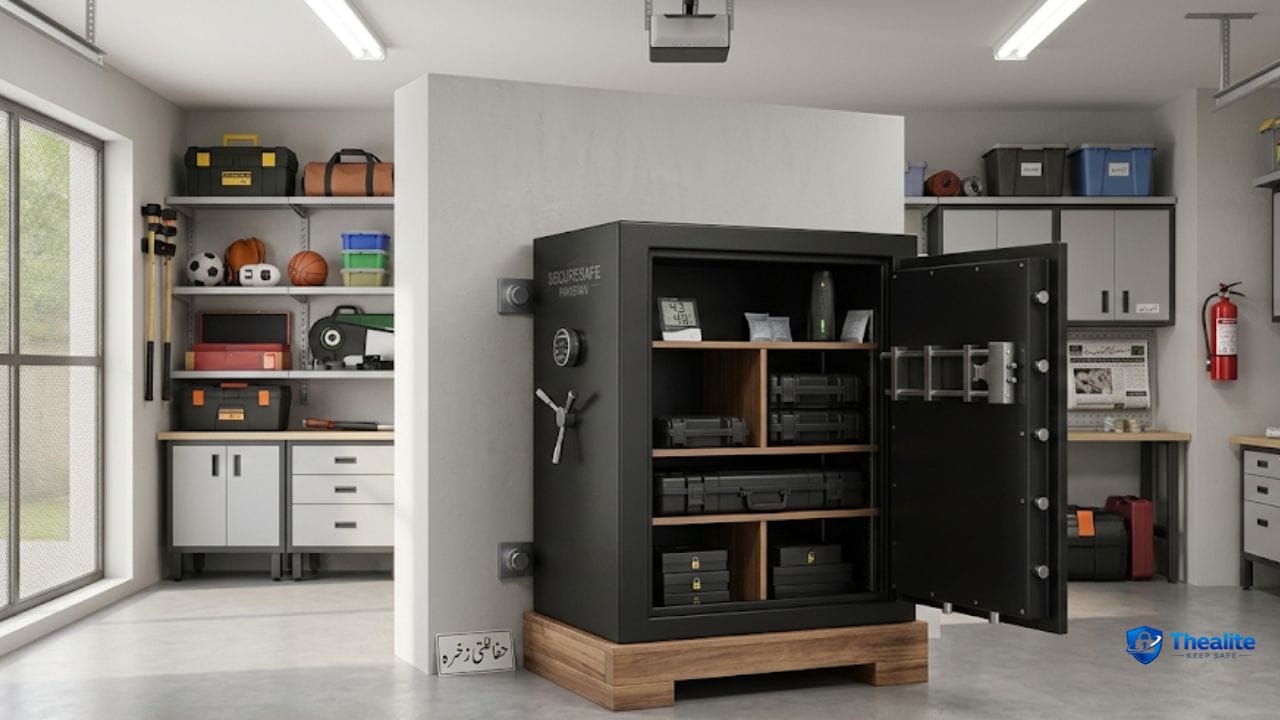
Yes—**you can keep a gun safe in the garage**, and many U.S. gun owners do. But it’s not always the best location. Garages often have bigger temperature swings, higher humidity, and easier access for thieves compared to interior rooms. Those factors can lead to corrosion (rust), moisture damage, and increased theft risk.
The goal isn’t to shame the garage option—it’s to make it safer. This guide explains when a garage gun safe can work, what problems to watch for, and practical steps to protect firearms long-term.
Quick Answer
Yes, you can keep a gun safe in a garage, but garages increase **moisture/condensation risk** (leading to rust) and can increase **theft risk** if the safe is visible or easy to access. If you must use the garage, choose the most climate-stable corner, keep the safe off bare concrete, control humidity inside the safe (dehumidifier rod + desiccant + hygrometer), and anchor the safe securely. An interior closet or conditioned room is usually better for long-term corrosion protection.
Why Garages Are Harder on Gun Safes
Garages are often semi-conditioned spaces. Even if they’re attached, they may not have the same heating/cooling control as the rest of the home. That creates predictable risks.
1) Temperature swings (hot days, cool nights)
Metal safes change temperature with the environment. When warm humid air enters the safe and the safe later cools, moisture can condense—especially in humid climates.
2) Higher humidity and condensation
Humidity plus condensation is the big rust driver. If your garage gets damp, or if the safe sits on cold concrete, moisture problems get worse.
Deep dive: How to Keep Moisture Out of Gun Safe.
3) Concrete floors and exterior walls
Concrete can hold moisture and stay cooler than the air. A safe sitting directly on concrete is more likely to experience condensation.
4) Security exposure
Garages are sometimes easier to access than interior rooms. If a thief enters the garage, a visible safe becomes a high-value target.
When a Garage Gun Safe Can Make Sense
A garage install can be reasonable if:
- Your garage is climate-controlled or stays relatively stable (less humidity/temperature swing).
- You can place the safe out of sight (not obvious from the garage door).
- You can anchor the safe and control moisture inside it.
- Interior placement isn’t possible due to space or floor load concerns.
When it’s usually a bad idea
- Detached garage with major temperature swings or frequent dampness.
- Coastal or very humid areas with known condensation problems.
- Garage is cluttered and frequently opened/left unsecured.
- Safe would be visible from outside when the garage door opens.
Best Practices If You Keep a Gun Safe in the Garage
Think in layers: location + barrier + moisture control + routine checks.
Layer 1: Choose the best spot
- Pick an interior wall if possible (usually more stable than an exterior wall).
- Avoid placing the safe tight against exterior walls that get cold.
- Avoid locations where water can splash (near garage doors, sinks, hoses).
- Keep it out of direct sun (sunlight can heat one side and increase cycles).
Layer 2: Keep the safe off bare concrete
To reduce condensation risk, don’t let the safe sit directly on bare concrete.
- Use a rubber mat, composite shims, or a solid platform designed for heavy loads.
- Keep airflow possible around the base if you can (even small space helps).
Layer 3: Control humidity inside the safe
This is the single most important ongoing step for rust prevention.
- Use a dehumidifier rod (electric) if your safe supports it.
- Add rechargeable silica/desiccant canisters as backup moisture absorption.
- Place a hygrometer inside the safe so you can measure humidity (don’t guess).
More tools and tactics: What to Put in Safe to Keep Moisture Out • How to Keep Moisture Out of a Safe.
Layer 4: Prevent rust on the firearms themselves
- Wipe down metal surfaces after handling (fingerprints can accelerate corrosion).
- Use appropriate corrosion protection (per your firearm manufacturer guidance).
- Avoid putting damp items in the safe (wet cases, sweaty holsters).
Related: Keep Guns From Rusting in Safe.
Layer 5: Improve theft resistance
- Anchor/bolt the safe per manufacturer instructions (prevents carry-off theft).
- Keep the safe out of sight when the garage door is open.
- Avoid firearm stickers and packaging visible in the garage.
- Upgrade garage door security and keep it closed/locked when possible.
Garage Safe Maintenance Routine (Simple Schedule)
A short routine prevents long-term damage:
- Weekly/biweekly: quick humidity check (hygrometer reading).
- Monthly: inspect for any condensation smell, wipe down metal surfaces if needed.
- Every 1–3 months: recharge/replace desiccant depending on climate.
- Season changes: re-check humidity and adjust moisture control tools.
Garage Gun Safe Checklist (Copy/Paste)
- Safe placed in the most stable, least humid garage area
- Not in direct sun; not near water splash zones
- Safe elevated off bare concrete (mat/platform)
- Dehumidifier rod + desiccant inside safe
- Hygrometer inside safe to monitor humidity
- Firearms wiped down; no damp items stored inside
- Safe anchored; kept out of sight; garage security improved
- Humidity and condition checked monthly (or more in humid seasons)
FAQs
Will a gun safe rust in a garage?
It can, mainly due to humidity and condensation. You can reduce risk by keeping the safe off concrete and using humidity control inside the safe (rod + desiccant + hygrometer).
Is an attached garage better than a detached garage?
Often yes, because attached garages can be more temperature-stable. Detached garages usually have bigger swings, which increases condensation risk.
Should I put a dehumidifier rod in my gun safe?
Many safe owners do, especially in garages or humid climates. Combine it with desiccant and a hygrometer so you can confirm humidity is under control.
Is it safer to keep a gun safe inside the house?
For long-term rust prevention and consistent temperature, interior locations are usually better. But a garage setup can work if moisture and security are managed.
Do I need to bolt down a safe in the garage?
Anchoring improves theft resistance and is strongly recommended when possible, especially for smaller safes that could be moved.
Conclusion
You can keep a gun safe in the garage, but garages make moisture control and security more important. If you choose a smart location, keep the safe off bare concrete, control humidity inside the safe, and anchor it securely, a garage gun safe can protect firearms effectively. If you want the easiest long-term rust prevention, an interior, climate-controlled location is usually best.

As a digital marketer, she has received multiple international awards, including Campaign of the Year at the 2023 European Content Awards and Best Use of Content Marketing at the 2022 Global Search Awards. Nicai holds an MSc in Marketing (First Class Honours) from the UCD Smurfit Graduate Business School and she has also completed the Artificial Intelligence Programme at Oxford University’s Saïd Business School. She is also a contributing writer for publications such as Entrepreneur and Esquire.