Modern marketing leaders face one core decision: how to balance AI Marketing vs Traditional Marketing Software for Businesses. This program helps executives understand that balance and lead with clarity.
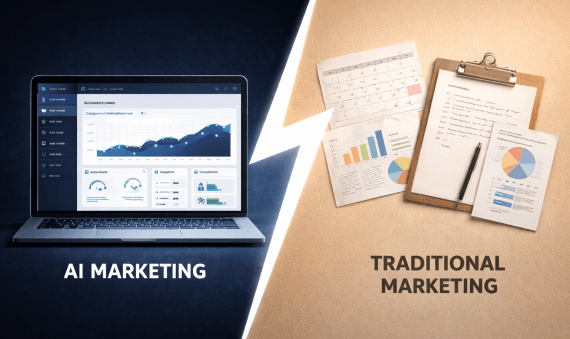
AI marketing software uses Artificial Intelligence (AI), Machine Learning, Predictive Analytics, and Data Analytics to improve campaigns in real time. Traditional marketing software relies on structured workflows, manual campaign management, and fixed reporting models.
Both systems aim to improve Return on Investment (ROI), drive Lead Generation, increase Customer Acquisition, and strengthen Customer Experience (CX). But they operate differently.
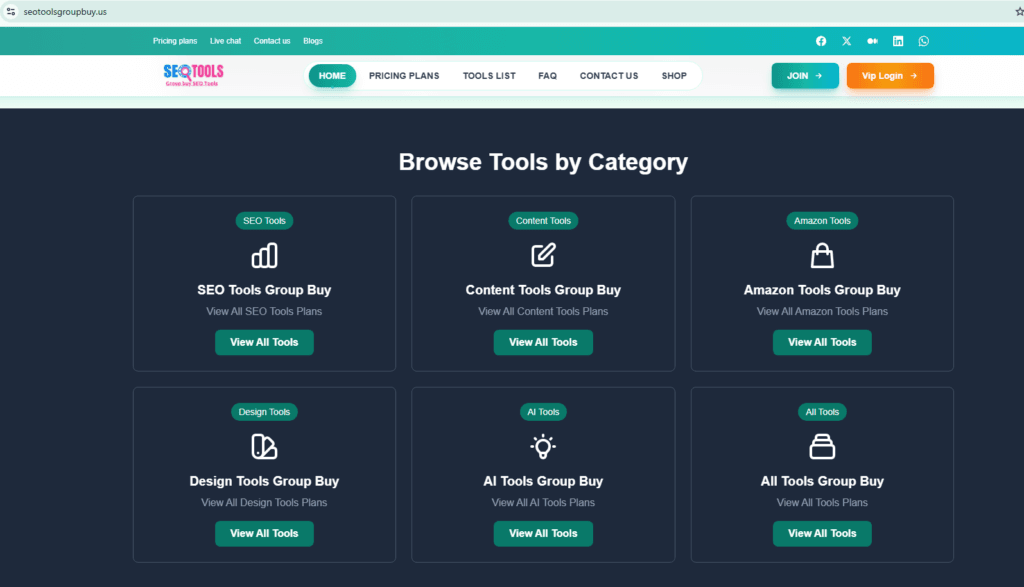
Many businesses evaluating AI marketing tools and traditional marketing software also rely on shared-access SEO platforms. For example, providers like Group Buy SEO Tools platforms offer access to premium tools used for Search Engine Optimization (SEO), content research, and competitive analysis. Some companies explore options such as SEO Tools Group Buy to reduce software costs while testing different marketing technologies.
This Chief Marketing Officer Program explains:
- How AI marketing tools differ from traditional marketing software
- How marketing automation software changes campaign management
- How CRM systems like Salesforce and HubSpot support segmentation
- How platforms like Adobe Marketing Cloud, Marketo, and Google Analytics support enterprise marketing software
- How businesses can align marketing strategy with business goals
You will learn how data driven marketing, personalized marketing strategies, and predictive marketing analytics impact business marketing solutions across industries.
Get Your Brochure
The brochure outlines program structure, curriculum, learning format, and certification path. It explains how marketing leaders can combine traditional marketing benefits with AI marketing benefits.
Early Registration Benefit
Early participants receive:
- Priority access to networking sessions
- AI case studies on marketing software comparison
- Templates for campaign management and A/B Testing
- Budget modeling frameworks for marketing ROI optimization
Program Overview: Chief Marketing Officer Program
This program prepares leaders to manage:
- AI marketing tools and traditional marketing software
- Marketing automation and customer relationship management
- SEO, Content Marketing, Email Marketing, and Social Media Marketing
- Big Data analysis for segmentation and personalization
- Enterprise marketing software selection
You’ll review case examples inspired by frameworks from Philip Kotler, insights from practitioners like Neil Patel, and research sources such as MarketingProfs and Content Marketing Institute.
The focus is practical. Every session connects marketing technology to measurable ROI.
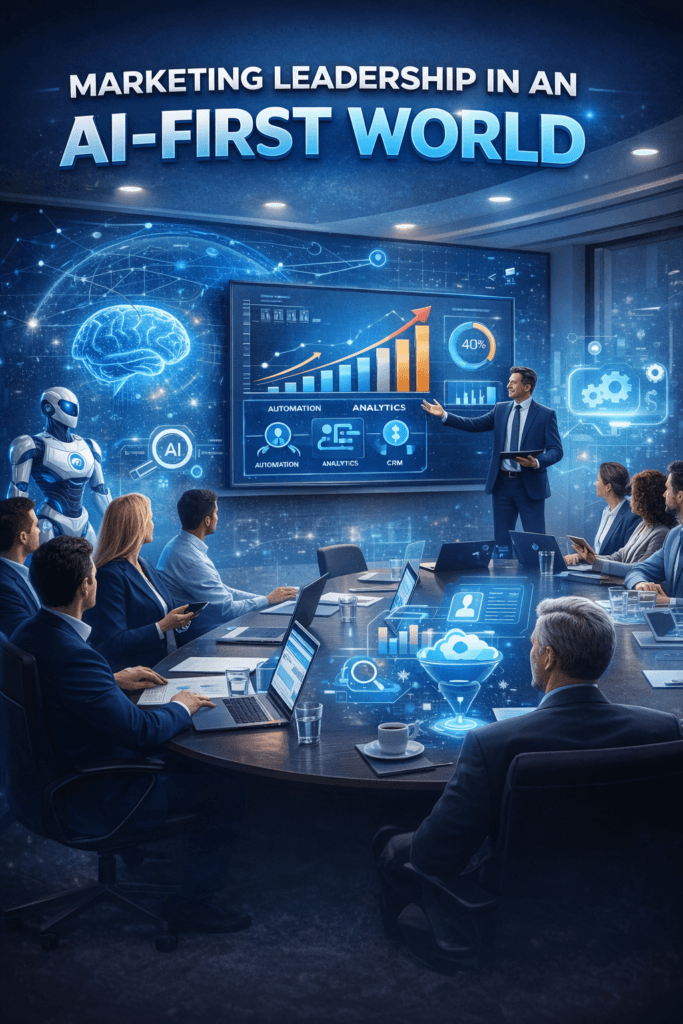
Marketing Leadership in an AI-First World
Marketing leaders now manage two parallel systems: AI marketing software and traditional marketing software. The real question is not which one replaces the other. It is how both work together inside modern business marketing solutions.
In an AI-first environment, Artificial Intelligence (AI) and Machine Learning process large customer data sets in seconds. AI systems use Predictive Analytics, behavioral signals, and real-time feedback to adjust campaigns automatically. Traditional marketing relies more on manual planning, rule-based automation, and historical reports.
Strong leadership means knowing:
- When to rely on marketing automation
- When human judgment matters more than algorithms
- How to align data driven marketing with company goals
- How to protect brand trust while using automation
Marketing today runs on technology. But strategy still belongs to people.
Program Curriculum
The curriculum focuses on applied marketing technology. You learn how to manage:
- Marketing Automation Software
- Customer Relationship Management (CRM) systems
- Campaign management frameworks
- Search Engine Optimization (SEO)
- Content Marketing
- Email Marketing
- Social Media Marketing
- Advanced Data Analytics
- A/B Testing
- Marketing ROI optimization
Participants compare platforms such as HubSpot, Salesforce, Adobe Marketing Cloud, and Marketo. You review how Google Analytics supports marketing analytics and attribution modeling.
The goal is clarity. Not theory. You evaluate marketing software comparison models for small business marketing and enterprise marketing software.
Program Highlights
Networking Event
Live executive networking sessions focused on peer problem-solving.
Live Online AI Series
Hands-on exposure to AI marketing tools, chatbots, and predictive marketing analytics.
World-Renowned Faculty
Sessions include frameworks influenced by marketing thinkers such as Philip Kotler and digital strategy experts like Neil Patel.
Peer Learning
CMOs share campaign case studies, CRM implementation lessons, and segmentation strategies.
Success Coach
Each participant receives guidance on applying AI marketing benefits without losing traditional marketing benefits.
Practitioner Insights
Real campaign data. Real ROI numbers. Real failures and adjustments.
Weekly Live Sessions
Consistent engagement ensures steady progress.
Flexible Learning Journey
Designed for executives managing active marketing campaigns.
CIBE Holder Benefits
Pathway toward Certificate in Business Excellence recognition.
Executive Peer Group and Networking Event
CMOs operate in high-pressure environments. A peer group offers accountability and strategic feedback. Participants discuss:
- AI vs traditional marketing budget allocation
- Campaign management tradeoffs
- Customer segmentation challenges
- Personalization at scale
- Customer Experience (CX) measurement
This group setting strengthens decision confidence.
Meet the Faculty Director
The Faculty Director brings academic research and real market execution together. The focus remains practical: how AI marketing tools improve lead generation and customer acquisition while maintaining compliance and brand voice.
Contributing Faculty
Industry practitioners contribute sessions on:
- Big Data and predictive modeling
- Marketing automation software architecture
- CRM optimization
- Content marketing automation
- Enterprise marketing software governance
Hear from Past Participants
Participants report measurable improvement in:
- Marketing ROI
- Customer engagement
- Campaign efficiency
- Marketing budget clarity
- Cross-channel performance
Who Is the Chief Marketing Officer Program For?
This program is designed for:
- CMOs
- Marketing directors
- Enterprise marketing leaders
- Growth strategists
- Founders managing scaling teams
It benefits organizations balancing AI marketing and traditional marketing systems.
Certificate in Business Excellence
Participants earn recognition aligned with executive leadership standards in marketing technology and strategy.
Why Columbia Business School
The program reflects executive education principles associated with institutions like Columbia Business School. It combines academic structure with applied business intelligence.
FAQs
Questions? Connect with a Program Advisor
Advisors explain curriculum details, time commitments, and ROI expectations.
SECTION 3
Writing Style: Educational Comparison Guide
AI vs. Traditional Marketing Strategy
Introduction: AI and Traditional Marketing Strategies
AI marketing uses automation, algorithms, and predictive data modeling. Traditional marketing depends on structured planning, manual campaign setup, and rule-based workflows.
Both aim to increase ROI, improve customer engagement, and strengthen brand positioning. The difference lies in speed, scale, and adaptability.
What is Traditional Marketing?
Traditional marketing software includes:
- Email marketing platforms
- CRM systems
- Campaign scheduling tools
- Rule-based segmentation systems
It relies heavily on human decision-making. Campaigns are created, launched, then analyzed after completion.
This model works well for stable industries with predictable customer behavior.
Key Differences Between AI and Traditional Marketing
AreaAI MarketingTraditional MarketingData ProcessingReal-time Big Data analysisHistorical reportingPersonalizationAutomated personalizationManual segmentationCampaign AdjustmentDynamic optimizationFixed campaignsPredictive CapabilityUses Machine LearningLimited forecastingBudget AllocationAdaptivePre-set budgets
AI marketing tools adapt continuously. Traditional marketing software follows planned cycles.
SECTION 4
Writing Style: Analytical + Practical Strategy
Advantages and Disadvantages of AI Marketing
AI Marketing Benefits
- Faster decision-making
- Predictive analytics improves targeting
- Personalized marketing at scale
- Improved lead generation
- Better ROI tracking
Challenges and Practical Considerations in Blending AI with Traditional Marketing
- Data quality issues
- CRM integration complexity
- Privacy compliance risks
- Skill gaps in marketing teams
AI Driven Strategy Tradeoffs
AI reduces manual effort but increases reliance on data integrity and algorithm accuracy.
AI vs Traditional Marketing Strategy
The best strategy combines:
- AI for automation and analytics
- Traditional frameworks for brand consistency
Compare Table AI and Traditional Marketing
AI wins on scale and speed. Traditional wins on control and simplicity.
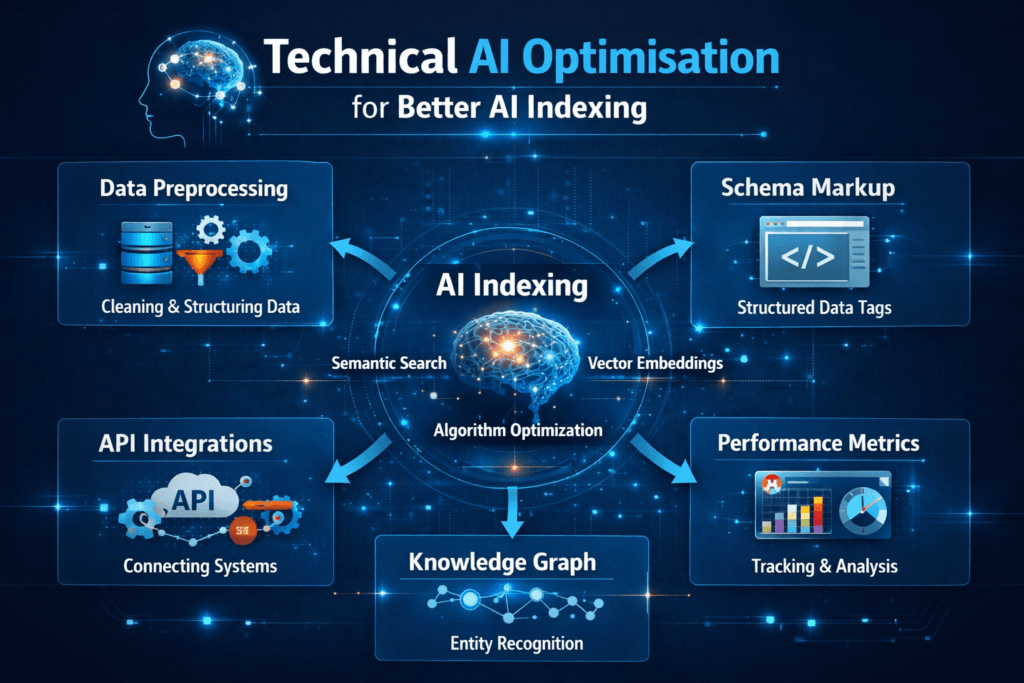
Dynamic Budget Allocation Model
AI reallocates budget based on live campaign performance. Traditional systems follow quarterly planning cycles.
Customer Proof Channel Orchestration
AI integrates SEO, social media marketing, email marketing, and content marketing automation across platforms. Traditional systems often treat channels separately.
AI vs. Traditional Marketing: Which Strategy is Better
For small businesses, traditional marketing software may be simpler. For scaling enterprises, AI marketing software delivers measurable competitive advantage.
AI-driven Marketing’s Evolution and Impact
AI marketing evolved from simple automation to predictive systems powered by machine learning marketing models.
5 Key Components of a Successful AI-Powered Marketing Strategy
- Clean data sets
- Strong CRM integration
- Clear ROI measurement
- Ongoing A/B testing
- Human oversight
How to Create Personas: A Step-by-Step Guide
- Collect CRM data
- Segment by behavior
- Analyze predictive patterns
- Test messaging
- Optimize campaigns
SECTION 5
Writing Style: Insight-Based Educational
Our Process
People, not data points.
Data matters. But understanding behavior matters more.
Audience Recruitment
Collect qualitative and quantitative insights.
Audience Profiling
Combine segmentation with behavioral intelligence.
Qual + Quant Integration
Merge survey insights with CRM data analytics.
Digital Twin Generation
Create behavioral models that simulate customer response patterns.
Built for Real Connection
Personalization should improve Customer Experience (CX), not automate noise.
Meet Your Brand Soulmates
Digital twins help brands align messaging with audience psychology.
Learn
What Is Behavioral Intelligence?
Behavioral intelligence studies how customers act, not just what they click. It looks at patterns across channels, purchase timing, content interaction, and response behavior. Instead of focusing only on surface metrics like impressions or open rates, it connects actions to intent.
This approach strengthens data driven marketing and improves customer segmentation.
Fidelity Metrics Explained: How to Measure Behavioral Model Accuracy
Fidelity metrics measure how closely predictive models reflect real customer behavior. If a model predicts a purchase and the customer buys, the fidelity score increases. If not, it signals a gap in data or logic.
Accurate measurement improves predictive analytics and campaign performance.
From Personality Insights to Marketing Results
Personality insights help marketers move beyond demographic segmentation. When behavioral data is matched with campaign management systems, messaging becomes more precise.
Linking personality signals to email marketing, content marketing, and social media marketing increases engagement and improves ROI.
How to Create Messaging That Resonates With Every Personality Type
Effective messaging follows three steps:
- Identify behavioral segments using CRM and data analytics
- Match tone and offer structure to each segment
- Test through A/B testing and optimize
This method supports personalized marketing strategies without guesswork.
Digital Twins 101: The Truth About Personas and Composites
Digital twins are data-based models that simulate how customer groups respond to campaigns. Unlike traditional personas built on assumptions, digital twins rely on real behavioral data.
They improve targeting accuracy and support predictive marketing analytics.
Why Marketers Are Swapping Vibes for Validated Traits
Assumptions create weak campaigns. Validated traits come from data analysis, Big Data signals, and machine learning marketing models.
Using evidence instead of intuition strengthens customer acquisition strategies.
Bring Your Teams Into Sync
AI marketing vs traditional marketing software for businesses is not a battle. It is alignment.
AI marketing tools improve predictive analytics, marketing automation, and ROI optimization. Traditional marketing software provides structure and governance.
When CRM systems, campaign management platforms, SEO tools, and content marketing automation work together, organizations gain clarity.
The future of business marketing solutions depends on balance:
- Data driven marketing with human oversight
- Predictive analytics with ethical control
- Automation with strategic leadership
Marketing leadership now requires fluency in both systems.
That is how businesses compete.

As a digital marketer, she has received multiple international awards, including Campaign of the Year at the 2023 European Content Awards and Best Use of Content Marketing at the 2022 Global Search Awards. Nicai holds an MSc in Marketing (First Class Honours) from the UCD Smurfit Graduate Business School and she has also completed the Artificial Intelligence Programme at Oxford University’s Saïd Business School. She is also a contributing writer for publications such as Entrepreneur and Esquire.