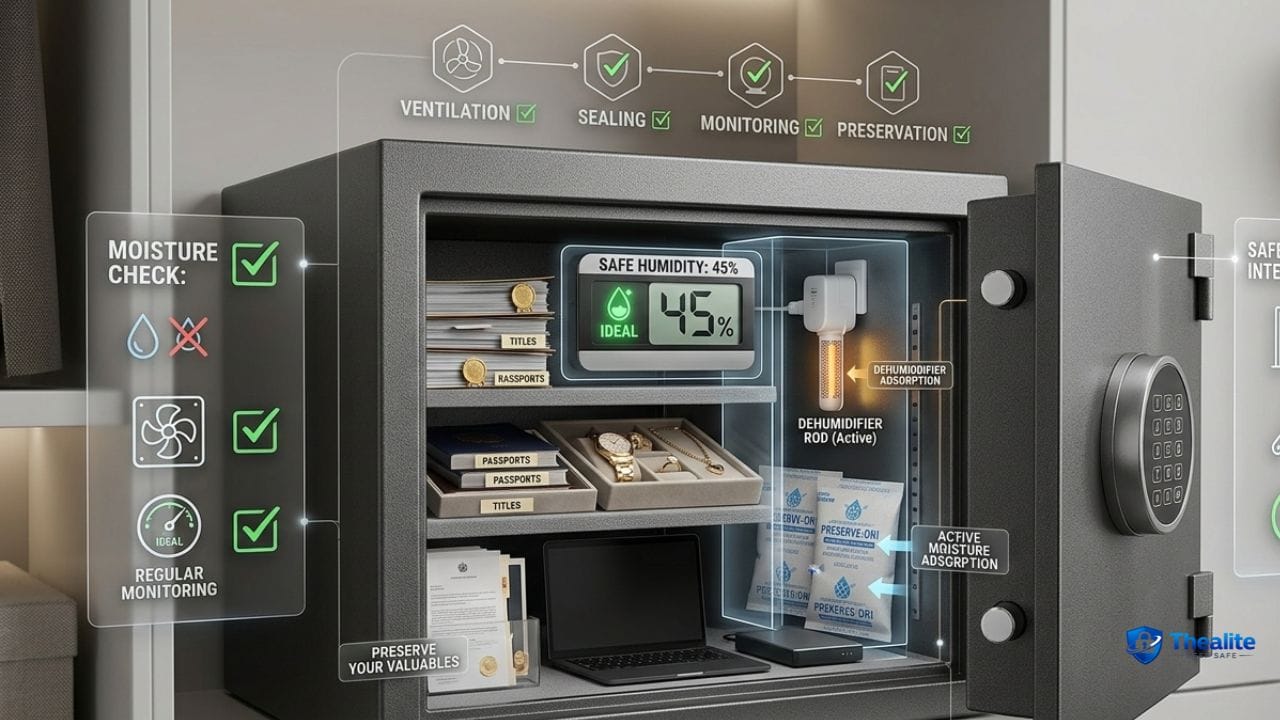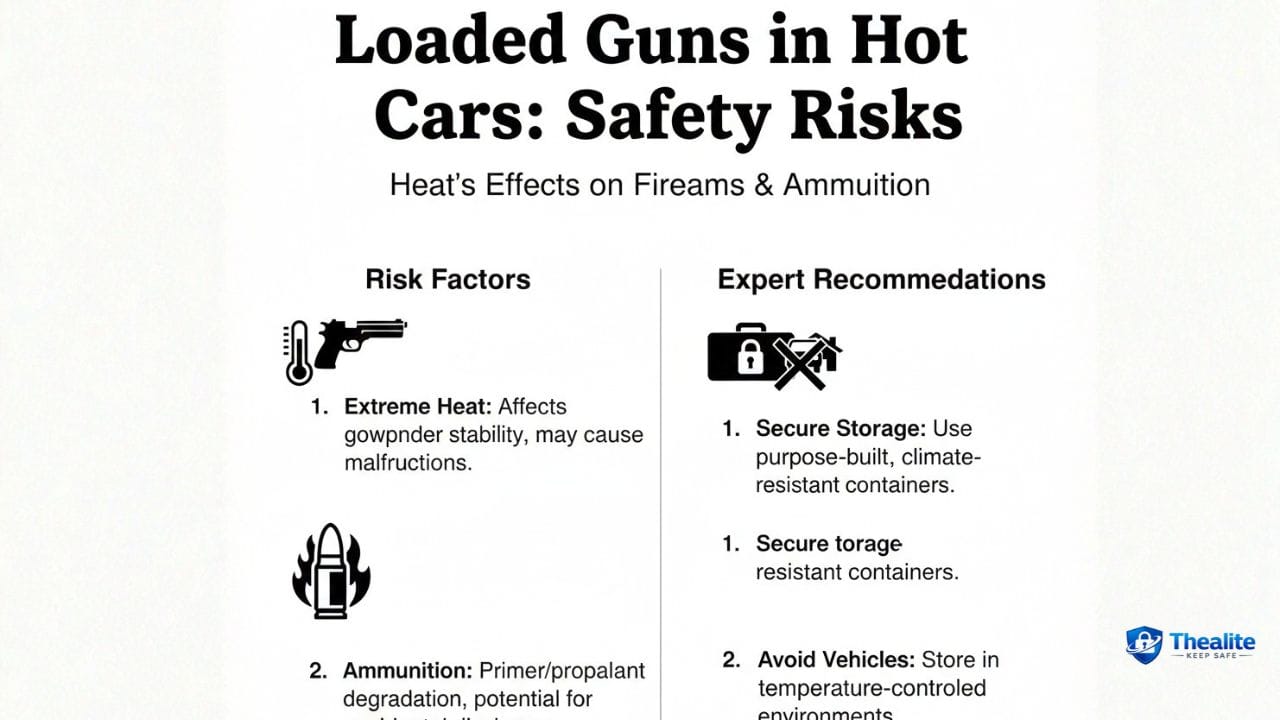
If you carry a firearm, you might eventually face a tough situation: you arrive somewhere you can’t legally carry, or the location has strict rules, and you’re tempted to leave the gun in your vehicle. In summer, that question gets sharper—because the inside of a parked car can become extremely hot.
So, **is it safe to keep a loaded gun in a hot car?** For routine storage, the best answer is **no**. The biggest danger isn’t that the firearm will magically fire from heat. The biggest danger is **theft and unauthorized access**. Cars are common targets for smash-and-grab theft, and a stolen firearm can end up in the wrong hands.
Heat does matter too: it can speed up wear on lubricants, optics/electronics, and some polymers, and repeated hot/cold cycles can create condensation that increases rust risk. Ammunition is also not ideally stored in extreme heat for long periods—especially defensive ammo you rely on.
Related reading on your site: How to Keep Moisture Out of Gun Safe • Keep Guns From Rusting in Safe • Can You Keep a Gun Safe in the Garage • Is It Safe to Keep a Lighter in Your Car • How to Keep Lithium Batteries Safe
Quick Answer
Keeping a loaded gun in a hot car is **not recommended** for regular storage. The primary risk is **theft and unauthorized access**. Heat can accelerate wear and increase moisture/rust concerns through temperature cycling. If you must leave a firearm in a vehicle, use a **dedicated, secured vehicle lock box** (ideally bolted down), keep it **out of sight**, minimize how long it’s left unattended, and reduce unnecessary loading/unloading handling in the car.
Why Cars Are a High-Risk Place to Store Firearms
A vehicle is not a vault. It’s a thin metal shell with windows, parked in public, and attractive to thieves. Even a locked car can be breached quickly.
1) Theft and unauthorized access (the #1 risk)
- Glove boxes and center consoles are easy to pry open.
- Under-seat “hiding” is predictable—thieves check there first.
- A firearm stolen from a car can be used in crimes or accessed by a child/unauthorized person.
2) Heat and environmental stress
Hot cars create extreme temperature swings—especially when you go from air conditioning to sun heat. Over time this can:
- Change how lubricants behave (thin, migrate, or dry faster).
- Shorten life of electronics (red dots, lights) with repeated heat exposure.
- Contribute to condensation and corrosion when temperatures swing.
If rust prevention is your concern, start with Keep Guns From Rusting in Safe and How to Keep Moisture Out of Gun Safe.
3) Ammunition and high heat (what’s realistic)
Many people worry that ammunition will ‘cook off’ in a hot car. In typical real-world situations, modern ammunition is unlikely to spontaneously fire just because the inside of a vehicle is hot. However, **long-term storage in extreme heat is still not ideal**, especially for defensive ammo you depend on.
- Repeated heat cycling can stress components over time.
- Sealants and primers may age faster in harsh environments.
- Even small reliability changes matter more for defensive use.
Practical approach: avoid long-term car storage of ammo; if you keep defensive ammo in a vehicle setup, rotate it periodically.
Loaded vs Unloaded: What Actually Changes?
Keeping the firearm loaded vs unloaded doesn’t meaningfully change theft risk—either way, a stolen gun is dangerous. Where it does matter is handling risk: frequent loading/unloading in a vehicle increases the chance of a negligent discharge through administrative handling errors.
Practical guidance
- Prioritize secure storage first (a real lock box).
- Minimize handling—don’t repeatedly load/unload in public parking lots.
- If your routine forces frequent car storage, reconsider your daily plan and storage solutions.
Safer Vehicle Storage (If You Have No Choice)
Sometimes there’s no perfect option. If you must leave a firearm in a vehicle, the goal is to reduce three things: visibility, access, and time.
1) Use a dedicated vehicle lock box
- Use a lock box designed for firearms (not a thin cash box).
- Bolt it down when possible; cable-only setups are better than nothing but less secure.
- Keep it hidden from casual view (position matters).
- Use a reliable lock you can operate quickly and consistently.
2) Keep it out of sight (before you arrive)
- Do not stash a firearm in the parking lot where people can see you.
- Avoid stickers/decals advertising firearms.
- Park in well-lit, high-traffic areas if you must leave valuables behind.
3) Minimize time and frequency
Even the best lock box doesn’t make a car a safe. Reduce how often you do this and how long the firearm is left unattended.
What NOT to Do
- Leaving a gun in the glove box or center console without a proper lock box
- Hiding it under the seat or in the door pocket (easy to find)
- Leaving it overnight or using the car as routine storage
- Handling the firearm repeatedly in the vehicle (higher accident risk)
- Leaving ammo and electronics in extreme heat for months without checks/rotation
Better Long-Term Alternatives (Outside the Car)
If you regularly need secure storage, a better solution is usually at home (or another lawful, secure location) rather than a vehicle.
- A properly installed home safe or lockable storage device
- Secure storage that accounts for humidity (moisture control matters)
- A garage-installed safe can work if you control moisture and temperature swings
Related: Can You Keep a Gun Safe in the Garage.
Legal Notes (General, Not Legal Advice)
Vehicle firearm laws vary widely by state (and sometimes by city). Rules can depend on permit status, whether the firearm is loaded, how it’s stored, whether it’s accessible, and where you’re parked (schools, federal property, workplace lots, etc.). For accuracy, check your state’s official resources and local rules, or consult a qualified attorney.
If You Must Leave It Behind: Quick Checklist
- Use a dedicated vehicle lock box; bolt it down if possible
- Keep it out of sight and avoid public handling
- Minimize time unattended; avoid overnight storage
- Rotate defensive ammo periodically if exposed to harsh temps
- When you return, secure your setup discreetly and safely
FAQs
Can ammo go off in a hot car?
In typical real-world conditions, modern ammo is unlikely to fire just from a hot car. But extreme heat and repeated heat cycling still aren’t ideal for long-term storage or reliability.
Is a glove box a safe place to store a gun?
Usually no. Most glove boxes and consoles can be opened quickly and aren’t designed for firearm security.
Is a vehicle lock box worth it?
If you truly must leave a firearm in a car at times, a dedicated lock box is far safer than unsecured storage—but it’s still not a replacement for home storage.
Does heat damage firearms?
Heat and cycling can accelerate wear on lubricants and electronics and can increase moisture/condensation concerns. It’s not ideal as routine storage.
What’s the biggest danger of leaving a gun in a car?
Theft and unauthorized access. Preventing theft is the top priority.
Conclusion
A hot car is a poor place to store a loaded gun as a routine habit. Heat can accelerate wear and increase corrosion risks through temperature cycling, but the biggest issue is theft and unauthorized access. If you must leave a firearm in a vehicle, use a dedicated secured lock box, keep it out of sight, and minimize the time it’s unattended. When possible, choose safer storage solutions outside the car and build routines that reduce handling mistakes.

As a digital marketer, she has received multiple international awards, including Campaign of the Year at the 2023 European Content Awards and Best Use of Content Marketing at the 2022 Global Search Awards. Nicai holds an MSc in Marketing (First Class Honours) from the UCD Smurfit Graduate Business School and she has also completed the Artificial Intelligence Programme at Oxford University’s Saïd Business School. She is also a contributing writer for publications such as Entrepreneur and Esquire.