Opening a safe and smelling a musty odor is frustrating—and it can be expensive. Moisture trapped inside a safe can lead to rust on metal valuables, mildew on papers, and damage to electronics, photos, and important documents.
The good news is you can fix most safe humidity problems with a simple system: choose the right safe location, prevent condensation, control humidity inside the safe, and check it on a schedule. This guide is written for U.S. homeowners and covers both document safes and gun safes.
Quick Answer
To keep moisture out of a safe: (1) place the safe in a climate-stable area and keep it off bare concrete, (2) control humidity inside the safe using **desiccant** and/or an **electric dehumidifier rod**, (3) monitor with a small **hygrometer**, and (4) refresh moisture-control tools on a schedule. If you already smell mildew, remove items, dry the safe, and restart your moisture-control setup immediately.
Why Safes Get Moist Inside (Condensation Explained Simply)
A safe is a sealed metal box. Metal heats and cools with the room. When warm, humid air gets trapped inside and the safe later cools, water can condense on the inside surfaces—like a cold drink “sweats” on a warm day. That moisture then lingers because airflow is limited.
Common moisture causes
- Safe placed in a basement, garage, or humid room
- Safe sitting directly on a concrete floor (cold surface encourages condensation)
- Seasonal temperature swings (hot days, cool nights)
- Opening the safe frequently in humid air (humidity gets trapped inside)
- No humidity control tools inside the safe (desiccant/rod)
- Storing damp items inside (wet cases, sweaty holsters, recently cleaned items)
Step 1: Fix the Location (Biggest Upgrade)
If your safe lives in a humid area, it will fight moisture forever. The easiest long-term win is choosing a better location.
Best locations for safes (humidity control)
- Interior closet in a conditioned room
- Bedroom/office closet away from exterior walls
- Climate-controlled area of the home
Riskier locations
- Basements (high humidity is common)
- Garages (big temperature swings)
- Directly against exterior walls (cool surface = condensation risk)
- Laundry rooms or near bathrooms (steam/humidity)
If your safe is in a garage, use the garage-specific guidance here: Can You Keep a Gun Safe in the Garage.
Step 2: Keep the Safe Off Bare Concrete
Concrete can stay cool and hold moisture. A safe sitting directly on bare concrete is more likely to experience condensation at the base.
- Use a heavy-duty rubber mat, composite shims, or a solid platform rated for the safe’s weight.
- Avoid carpet that can trap moisture (unless you’re sure the area stays dry).
- If possible, allow a tiny bit of airflow around the base.
Step 3: Control Humidity Inside the Safe
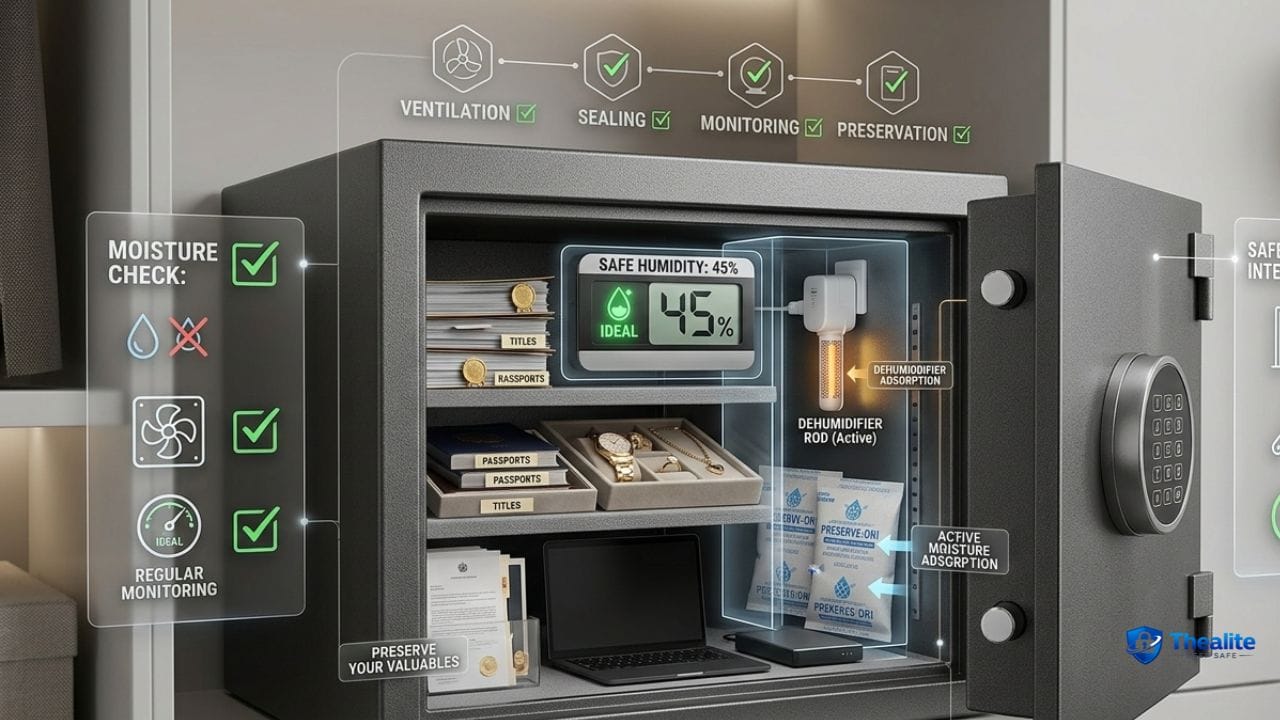
Even with a great location, most safes benefit from internal humidity control. You have three main tools: desiccant, electric dehumidifier rods, and measurement.
Tool A: Desiccant (silica gel / rechargeable canisters)
Desiccant absorbs moisture from the air. It’s simple and affordable, but it must be recharged or replaced.
- Use enough desiccant for the safe size (bigger safe = more).
- Recharge/replace on schedule (more often in humid seasons).
- Place it where air circulates (not buried under stacks).
Tool B: Dehumidifier rod (electric)
A dehumidifier rod gently warms the air inside the safe. Warmer air holds moisture better, reducing condensation. These are common in gun safes but can help any metal safe if it’s designed for power access.
- Install per manufacturer guidance; keep cords tidy and protected.
- Use a rod plus desiccant for better results in humid areas.
- Check that the rod stays warm and the outlet is reliable.
Tool C: Hygrometer (don’t guess—measure)
A hygrometer tells you the humidity inside the safe. Without it, you’re guessing.
- Place it where you can read it easily.
- Check monthly (or weekly in humid seasons).
- If humidity stays high, increase moisture control or improve location.
What humidity level should you aim for?
There’s no single perfect number for every home, but you want a level low enough to prevent musty odor and condensation. If you see condensation, smell mildew, or feel dampness, humidity is too high for your setup. A hygrometer helps you spot trends early.
Step 4: Store Items in Moisture-Smart Ways
How you store items inside the safe matters. Some materials hold moisture and can transfer it to other items.
Document and photo protection
- Use a fire-rated document pouch for critical papers (adds a barrier).
- Keep papers off the safe walls and floor (use a shelf or tray).
- Avoid sealing slightly damp paper in tight plastic (traps moisture).
More document storage: How to Keep Important Documents Safe at Home.
Cash and paper money
Cash can pick up musty odor or mold if humidity stays high. Store it clean, dry, and organized.
- Use envelopes/currency straps inside a small box (breathable organization).
- Keep cash away from damp leather items or wet cases.
- Monitor humidity and refresh desiccant regularly.
Related: How to Keep Money From Molding in a Safe.
Metal items (guns, jewelry, collectibles)
- Wipe down metal surfaces to reduce corrosion risk.
- Avoid storing items in damp fabric cases.
- Use rust-prevention products as appropriate (follow manufacturer guidance).
Gun-specific: Keep Guns From Rusting in Safe and How to Keep Moisture Out of Gun Safe.
Step 5: What to Do If Your Safe Already Smells Musty
If you smell mildew, treat it as an early warning. Fix the environment first so it doesn’t happen again.
Fast action plan
- Remove items and let them air out in a dry room (away from direct heat).
- Wipe the safe interior and let the door stay open for several hours (or overnight) to dry.
- Replace or recharge desiccant immediately.
- Add a hygrometer and monitor for the next few days.
- If humidity stays high, add a dehumidifier rod or move the safe to a better location.
Common Mistakes That Keep Moisture Problems Alive
- Using a tiny desiccant pack for a large safe (not enough capacity).
- Forgetting to recharge/replace desiccant.
- Placing the safe on bare concrete in a humid space.
- Storing damp items inside the safe.
- Overpacking the safe so air can’t circulate.
- Assuming the safe is ‘sealed’ so it can’t get humid (humidity can enter every time you open it).
Maintenance Schedule (Simple and Realistic)
- Weekly (humid season): check hygrometer reading quickly.
- Monthly: smell test + quick visual check for condensation or rust.
- Every 1–3 months: recharge/replace desiccant (depends on climate).
- Season changes: re-check setup and add capacity if humidity rises.
Copy/Paste Checklist: Keep Moisture Out of a Safe
- Safe placed in a climate-stable area (avoid basement/garage if possible)
- Safe elevated off bare concrete (mat/platform)
- Desiccant installed and refreshed on schedule
- Dehumidifier rod added if humidity stays high
- Hygrometer inside safe to monitor humidity
- Items stored off walls/floor; no damp items stored inside
- Monthly check for smell/condensation/rust
FAQs
Why is there moisture in my safe if it’s closed?
Humidity can get trapped inside when you open the safe, and temperature swings can cause condensation on metal surfaces. Safes aren’t perfectly air-tight, and humidity can build over time.
Do silica gel packs really work in safes?
Yes, but only if you use enough and recharge/replace them regularly. A large safe needs more desiccant capacity than a small one.
Should I use a dehumidifier rod or desiccant?
Desiccant is great for many setups. In humid areas or garages/basements, a rod plus desiccant often works best.
Can moisture damage paper documents in a fireproof safe?
Yes. Fireproof doesn’t always mean moisture-proof. You still need humidity control and smart storage (pouches, shelves, desiccant).
How do I get rid of a musty smell in a safe?
Dry the safe completely, replace/recharge desiccant, add a hygrometer, and improve humidity control. If the safe stays humid, add a rod or move the safe to a better location.
Conclusion
Moisture inside a safe is usually a humidity + condensation problem—not a mystery. Fix the location, keep the safe off concrete, control humidity with desiccant and/or a dehumidifier rod, and measure with a hygrometer. A simple monthly check prevents rust, mold, and musty odors—and keeps your valuables protected long-term.

As a digital marketer, she has received multiple international awards, including Campaign of the Year at the 2023 European Content Awards and Best Use of Content Marketing at the 2022 Global Search Awards. Nicai holds an MSc in Marketing (First Class Honours) from the UCD Smurfit Graduate Business School and she has also completed the Artificial Intelligence Programme at Oxford University’s Saïd Business School. She is also a contributing writer for publications such as Entrepreneur and Esquire.