If you’ve ever opened a home safe and noticed a musty smell—or found cash that feels damp—you’re not alone. Safes can trap humid air, and when humidity stays high, paper items like currency can absorb moisture and develop mildew or mold odors over time.
The good news is you can prevent this with a simple humidity-control system: choose the right safe location, add moisture control tools (desiccant or a dehumidifier rod), store cash the right way, and monitor humidity so you catch problems early.
Related reading on your site: How to Keep Moisture Out of a Safe • How to Keep Moisture Out of Gun Safe • What to Put in Safe to Keep Moisture Out • How to Keep Cash Safe at Home • How to Keep Money Safe at Home • What to Keep in a Safe
Quick Answer
Money molds in a safe when humidity stays trapped inside. To prevent it: keep the safe in a climate-stable location, add moisture control (desiccant packs or a dehumidifier rod), store cash in breathable organization (not tight plastic that traps moisture), and monitor humidity with a small hygrometer. If cash already smells musty, dry it out safely and replace moisture control tools immediately.
Why Money Can Mold in a Safe
Paper currency can absorb moisture from the air. Safes are enclosed metal boxes, and metal changes temperature. When warm humid air enters a safe and the safe later cools, moisture can condense—especially if the safe is in a basement, garage, or against an exterior wall.
Common causes of humidity in safes
- Safe located in a basement, garage, or humid room
- Seasonal temperature swings causing condensation
- Safe placed against an exterior wall or on a concrete floor without insulation
- Safe opened often in humid air (humidity gets trapped inside)
- No desiccant or dehumidifier rod inside the safe
- Cash stored in a way that traps moisture (sealed plastic when cash is not fully dry)
Step 1: Pick a Better Safe Location (Biggest Upgrade)
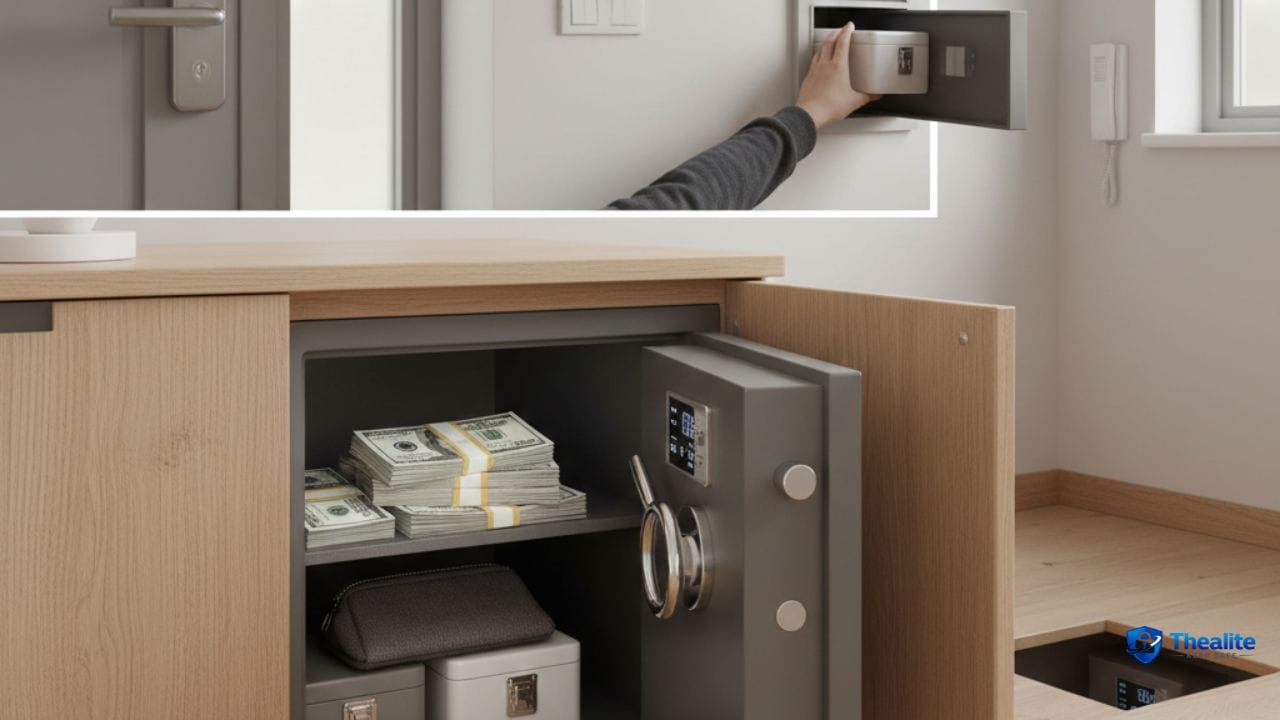
Humidity control starts with where your safe lives. The more stable the room temperature and humidity, the easier it is to keep cash dry.
Best locations (for humidity control)
- Interior closet (climate-stable)
- Office or bedroom closet away from exterior walls
- A conditioned room (heated/cooled) rather than garage/basement
Riskier locations
- Basements (often humid)
- Garages (temperature swings)
- Near laundry rooms or bathrooms (moist air)
- Directly on concrete floors (cold surface encourages condensation)
More about moisture control strategies: How to Keep Moisture Out of a Safe.
Step 2: Add Moisture Control Inside the Safe
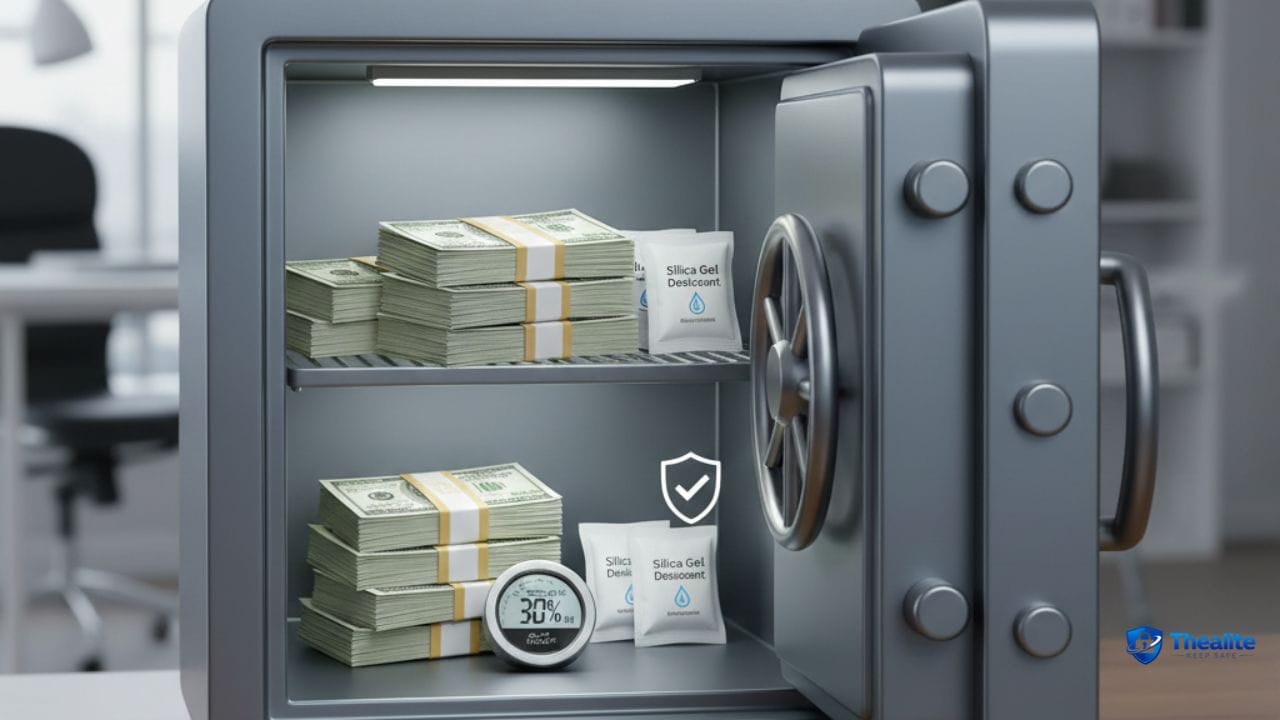
You usually need at least one of these: **desiccant** (absorbs moisture) or a **dehumidifier rod** (warms air slightly to prevent condensation). Many people use both for better results.
Option A: Desiccant (silica gel / rechargeable canisters)
Desiccants absorb moisture from the air. They’re simple and inexpensive, but they must be replaced or recharged.
- Use enough desiccant for the safe size (bigger safe = more desiccant).
- Recharge or replace on schedule (humidity and seasons change).
- Place desiccant where air circulates (not buried under stacks).
Option B: Dehumidifier rod (electric)
A dehumidifier rod warms the air slightly and helps prevent condensation. It’s commonly used in gun safes but can help any metal safe if supported.
- Use a safe with a power pass-through if possible (or install per manufacturer guidance).
- Keep cords tidy and away from sharp edges.
- Combine with a hygrometer so you can confirm results.
More: What to Put in Safe to Keep Moisture Out • How to Keep Moisture Out of Gun Safe.
Option C: Hygrometer (don’t guess—measure)
A hygrometer is a small humidity gauge. It’s cheap and makes your system smarter because you can see if humidity is climbing.
- Place it where you can read it easily.
- Check it monthly (more often in humid seasons).
- If humidity stays high, increase desiccant or improve safe location.
What Humidity Level Should You Aim For?
There isn’t one perfect number for every home, but the goal is **low enough to prevent musty odors and condensation**. Many safe owners try to keep humidity roughly in the comfort range where paper and metals stay dry. If you see condensation, smell mildew, or feel dampness, humidity is too high for your setup.
Step 3: Store Cash the Right Way (Avoid Moisture Traps)
How you package cash matters. You want to protect it from spills and grime, but you don’t want to trap moisture inside.
Better cash storage methods
- Use paper envelopes or currency straps inside a small box (breathable organization).
- Keep cash off the safe floor/walls (use a small tray or shelf).
- Separate cash from items that might hold moisture (leather, certain fabrics).
Be careful with plastic bags
Plastic can be helpful against spills, but it can also trap moisture if the cash or air inside isn’t completely dry. If you use plastic, make sure everything is dry and include desiccant in the safe.
Step 4: Prevent Common Safe Moisture Mistakes
- Don’t put the safe directly on bare concrete—use a moisture barrier or platform.
- Don’t push the safe tight against an exterior wall (cold wall = condensation risk).
- Don’t store wet items (or recently cleaned jewelry) in the safe before fully drying.
- Don’t ignore humidity after seasonal changes—adjust moisture control as needed.
- Don’t overpack the safe (airflow helps keep humidity even).
Step 5: What to Do If Money Already Smells Musty or Shows Mold
If you open the safe and cash smells like mildew, treat it as a humidity warning. Fix the environment first so it doesn’t happen again.
Immediate steps
- Remove the cash and let it air-dry in a clean, dry room (away from direct heat).
- Wipe and dry the inside of the safe; replace or recharge desiccant.
- Add a hygrometer and check humidity over the next few days.
- If you see visible mold, avoid breathing dust and consider using gloves; severely damaged bills may need professional guidance (banks can advise).
How much cash should you keep in a safe?
A home safe is great for a modest emergency stash, but large amounts increase risk (theft, fire, moisture, and recovery challenges). Many people keep only what they might need during a short outage or emergency and store bigger savings in a bank.
Related: How to Keep Cash Safe at Home • What to Keep in a Safe.
Copy/Paste Checklist: Keep Cash Dry in a Safe
- Safe placed in climate-stable area (not basement/garage if possible)
- Safe elevated off concrete and not tight against exterior wall
- Desiccant (and/or dehumidifier rod) installed and maintained
- Hygrometer inside safe to monitor humidity
- Cash stored in breathable envelopes/straps; avoid trapping moisture in plastic
- Monthly quick check: smell test + humidity reading + desiccant refresh
FAQs
Why does money get moldy in a safe?
Because safes can trap humid air. Temperature swings can cause condensation, and paper currency absorbs moisture, leading to mildew odors or mold over time.
Should I store cash in plastic bags inside a safe?
It can protect from spills, but plastic can trap moisture. If you use plastic, make sure cash is completely dry and use desiccant plus a hygrometer.
Do I need a dehumidifier rod or is desiccant enough?
Desiccant often works for small safes in stable rooms. In humid areas or larger safes, a rod plus desiccant can work better.
What’s the best place to put a safe to prevent moisture?
A climate-controlled interior location (like an interior closet) is usually best. Basements, garages, and concrete floors raise moisture risk.
What if my bills already smell musty?
Remove them, air-dry them in a clean dry space, and fix the safe humidity problem immediately (replace desiccant, add a hygrometer, and reconsider safe placement).
Conclusion
To keep money from molding in a safe, focus on humidity control: place the safe in a stable indoor area, use desiccant and/or a dehumidifier rod, measure humidity with a hygrometer, and store cash in a way that doesn’t trap moisture. A small monthly check is usually enough to prevent musty surprises and keep your emergency cash clean and usable.

As a digital marketer, she has received multiple international awards, including Campaign of the Year at the 2023 European Content Awards and Best Use of Content Marketing at the 2022 Global Search Awards. Nicai holds an MSc in Marketing (First Class Honours) from the UCD Smurfit Graduate Business School and she has also completed the Artificial Intelligence Programme at Oxford University’s Saïd Business School. She is also a contributing writer for publications such as Entrepreneur and Esquire.