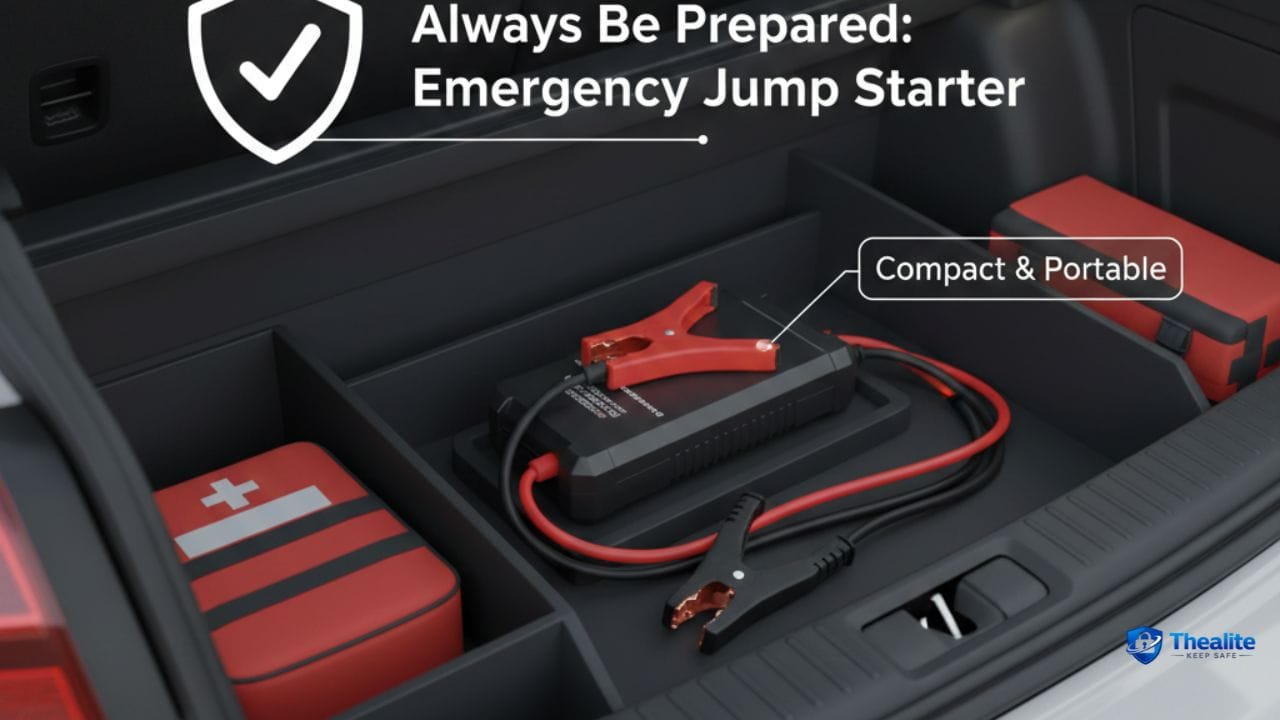
Portable jump starters (often called jump packs) are one of the most useful car emergency tools—especially in the U.S. where long highway drives, cold winters, and summer heat can all lead to dead batteries. But many modern jump starters use lithium batteries, which raises a fair question: is it safe to keep a jump starter in your car?
In most cases, keeping a jump starter in your vehicle can be safe if you store it correctly and follow the manufacturer’s temperature guidance. The main concerns are extreme heat (which can shorten battery life and increase risk) and extreme cold (which can reduce power when you actually need it).
Related reading on your site: How to Keep Lithium Batteries Safe • Is It Safe to Keep a Lighter in Your Car • How to Keep Your Home Safe
Quick Answer
Yes, it’s usually safe to keep a jump starter in your car if you store it out of direct sun, avoid extreme heat exposure, and charge/inspect it regularly. Heat is the biggest risk for lithium jump packs (it can degrade the battery and increase safety risk). Cold weather is mostly a performance issue (the pack may have less power). For best results, keep it in a case in the trunk organizer or under-seat area, don’t leave it on the dashboard, and follow the manufacturer’s temperature limits.
First: What Type of Jump Starter Do You Have?
Storage advice depends on the battery technology inside the jump starter.
Lithium-ion portable jump starters (most common today)
Compact, lightweight, and powerful—but more sensitive to temperature extremes.
Lead-acid jump packs (older, heavier models)
Heavier and bulkier, but still affected by heat and long periods without charging.
Why Heat Is the Main Concern (Hot Car Reality)
The inside of a parked car can become extremely hot in summer sun. Repeated heat exposure can accelerate lithium battery aging and, in worst cases, contribute to failure. Most reputable jump starters include safety circuitry, but no lithium device enjoys being baked repeatedly.
More: How to Keep Lithium Batteries Safe.
What About Cold Weather?
Cold weather usually affects performance, not safety. In freezing temps, lithium packs can deliver less power—exactly when car batteries are more likely to die.
Cold-weather best practices
- Keep the jump starter inside the cabin (under a seat) rather than the trunk in extreme cold.
- If the pack is very cold, warm it gradually inside the car before use.
- Keep the jump pack charged; cold reduces available power.
Where to Store a Jump Starter in the Car (Best to Worst)
Your goal: stable temperature, no crushing, and no direct sun.
Best storage spots
- In a protective case under a seat (stable temps, hidden from sun).
- In the trunk inside a closed organizer (hidden, but hotter/colder than cabin).
- In a center console if it fits (out of sun and protected).
Avoid these spots
- Dashboard or rear shelf (direct sunlight + highest heat).
- Loose on the floor where it can be kicked or crushed.
- Next to sharp tools or heavy items that can damage it.
How to Store It Safely (Simple Rules)
- Keep it in a padded case to protect from impacts.
- Don’t store it with loose metal tools that could damage the casing or cables.
- Keep clamps/cables neatly stored to prevent insulation damage.
- Avoid moisture; store in a dry area and don’t leave it in wet bags.
- Avoid leaving it on a charger 24/7 unless your model is designed for that.
Charging and Maintenance (So It Works When You Need It)
A jump starter that’s dead when you need it is basically extra trunk weight. Maintenance is easy—just schedule it.
Maintenance checklist
- Top it off every 2–3 months (or per manufacturer instructions).
- Check charge level monthly during extreme seasons (summer/winter).
- Inspect for swelling, cracks, or unusual smell.
- Check cables/clamps for fraying or exposed wire.
- Test the flashlight/USB output occasionally to confirm basic function.
Warning Signs a Jump Starter May Be Unsafe
Replace the unit if you see any of these:
- Battery swelling/bulging case
- Strong chemical smell or hissing sounds
- Melted plastic, cracked case, or damaged ports
- Gets extremely hot while charging (beyond normal warmth)
- Won’t hold a charge anymore or drops rapidly
How to Use a Jump Starter More Safely (Quick Tips)
Always follow your model’s manual. These general habits reduce mistakes:
- Turn the car off before connecting clamps.
- Keep clamps from touching each other.
- Keep the jump pack away from moving engine parts.
- Start the vehicle as soon as the pack is ready (don’t leave it connected longer than needed).
- Disconnect in the correct order and store clamps safely afterward.
When You Should NOT Keep a Jump Starter in the Car
- You live in extreme heat and your car bakes in direct sun daily (bring it inside when parked at home if possible).
- The unit is old, damaged, or has ever shown swelling/overheating signs.
- You store it loose with tools or heavy objects that can crush it.
- You can’t keep it charged—better to store indoors and bring it for trips.
Best Practices by Season (U.S. Quick Guide)
Summer
- Store out of sun (under-seat or trunk organizer).
- If you park in extreme heat for long hours, consider bringing it inside.
- Check charge monthly; heat shortens battery life.
Winter
- Keep it in the cabin (under a seat) for better cold performance.
- Keep it charged; cold reduces available power.
- Warm the pack gradually before use if it’s very cold.
Jump Starter Car Storage Checklist (Copy/Paste)
- Store out of direct sun (never on dashboard)
- Use a padded case; keep away from sharp tools
- Recharge every 2–3 months (or per manual)
- Inspect for swelling, cracks, smell, or overheating
- In winter, keep in cabin (under seat) for best performance
- Replace immediately if swelling or damage appears
FAQs
Can a jump starter explode in a hot car?
It’s uncommon with reputable products, but extreme heat can increase risk and shorten battery life. Store it out of sun and avoid repeated high-heat exposure.
Is it better to keep a jump starter in the trunk or cabin?
For cold performance, the cabin is usually better. For heat, both can work if it’s out of sun, but trunks often get hotter in summer.
How often should I recharge my portable jump starter?
Many manufacturers recommend topping off every few months. Follow your manual and check it more often during extreme seasons.
What’s the biggest mistake people make with jump starters?
Letting them sit discharged for months, storing them in direct sun, or ignoring swelling/damage signs.
Can I keep my jump starter plugged into my car all the time?
Only if your model is designed for continuous charging. Many are meant to be charged periodically, not left plugged in 24/7.
Conclusion
Keeping a jump starter in your car is usually safe—and often smart—if you store it properly. Protect it from extreme heat, keep it out of direct sunlight, charge it on a schedule, and replace it if you ever see swelling or damage. Do that, and your jump pack will be a reliable lifesaver when a battery fails.

As a digital marketer, she has received multiple international awards, including Campaign of the Year at the 2023 European Content Awards and Best Use of Content Marketing at the 2022 Global Search Awards. Nicai holds an MSc in Marketing (First Class Honours) from the UCD Smurfit Graduate Business School and she has also completed the Artificial Intelligence Programme at Oxford University’s Saïd Business School. She is also a contributing writer for publications such as Entrepreneur and Esquire.