Gold is valuable because it holds value, but that also makes it a target. At home, gold is most often lost through burglary, opportunistic theft (guests/contractors), and disasters like fire or water leaks. The safest home setup isn’t a clever hiding spot—it’s a layered system: secure storage, smart placement, privacy habits, and documentation.
This U.S.-focused guide shows exactly how to keep gold safe at home whether you have gold jewelry, coins, or bars. You’ll learn what works, what doesn’t, and how to build a routine that makes theft much harder.
Quick Answer (The Home Gold Safety System)
- Use a quality safe (preferably fire-rated) and bolt it down to prevent grab-and-go theft.
- Place the safe in a non-obvious location (not the main bedroom closet).
- Don’t rely on common hiding spots (dresser, sock drawer, under mattress, freezer).
- Separate gold into ‘daily use’ vs ‘long-term’ and store accordingly.
- Use privacy rules: fewer people know you have gold and where it is stored.
- Create an inventory with photos/receipts and store it separately (secure digital backup).
- Protect against fire and water: elevation, pouches, and moisture control.
Step 1: Decide What Kind of Gold You’re Storing
Gold storage changes based on the type of item and how often you need it.
Gold jewelry (rings, chains, bracelets)
- Often handled and worn (higher risk of misplacement).
- Can scratch (needs soft storage).
- Tempting to leave out on nightstands or bathroom counters (high theft/loss risk).
Gold coins and bars
- Typically stored long-term; less daily handling.
- Main risk is theft and disaster loss.
- Documentation (receipts, photos, serial numbers for bars) matters more.
Rule of thumb: daily-wear jewelry needs an easy routine; long-term gold needs stronger security + documentation.
Step 2: Understand the Real Risks at Home
Most gold losses come from predictable causes:
- Burglary (fast search of common hiding spots).
- Opportunistic theft by visitors/contractors (items left out).
- Fire/smoke damage and water damage (including sprinkler or firefighting water).
- Simple misplacement (small jewelry items).
A safe system reduces all four: theft, disaster damage, and ‘I can’t find it’ moments.
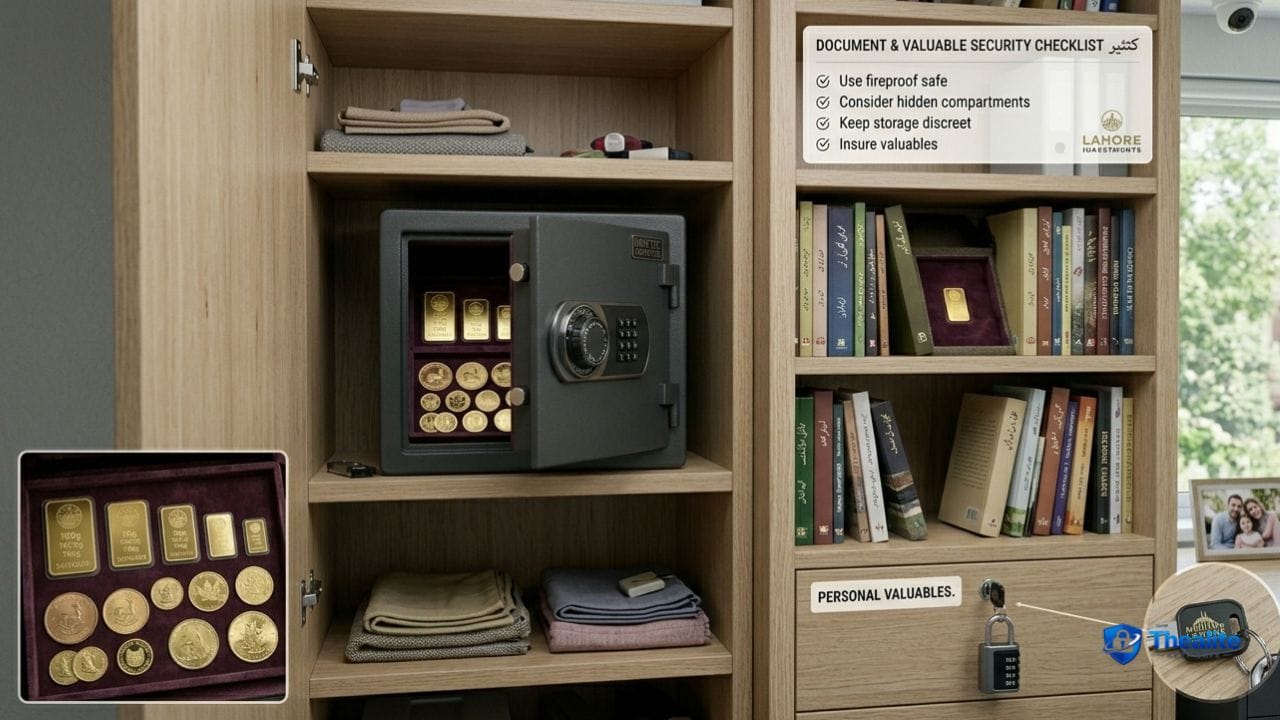
Step 3: The Best Way to Store Gold at Home: A Real Safe (Bolted Down)
If you’re storing meaningful value at home, a quality safe is the most reliable option. The key detail most people miss: a safe that isn’t bolted down can be carried out.
What to look for in a home safe (practical checklist)
- A size and weight that fits your space and needs (bigger is harder to steal, but placement matters).
- Bolt-down capability (to floor studs or concrete with proper anchors).
- Fire rating (for paperwork and to protect nearby valuables).
- A lock type you can reliably use (mechanical or electronic—either can work if quality is good).
Safe placement: where it should go
- A less-obvious area that isn’t the first place burglars search.
- Away from humid basements and away from garages if possible.
- Not directly on bare concrete if moisture is a concern (use a barrier or riser).
Safe placement: where NOT to put it
- Master bedroom closet (classic burglar target).
- Right under a desk or in an obvious office corner.
- A garage (temperature swings, moisture, and easier forced entry).
Safe basics: What to Keep in a Safe.
Step 4: Stop Using Common Hiding Spots (Burglars Know Them)
If you’re hiding gold in typical places, assume it will be found in a burglary. Burglars search quickly and start with obvious locations.
Common hiding spots to avoid
- Sock drawers, underwear drawers, jewelry boxes on dressers
- Under mattresses, inside pillowcases
- Freezers, cereal boxes, kitchen cabinets
- Bathroom cabinets, medicine cabinets
- Closets, shoe boxes, handbags hanging on hooks
- Nightstands and dresser tops
If your method is ‘I’ll remember where I put it,’ it’s also easy to forget—especially months later.
Step 5: Build a Daily Jewelry Routine
Most jewelry loss happens during routine moments: taking off rings at night, removing earrings in the bathroom, or leaving a chain on a dresser. Fix it with one habit: a dedicated return location.
Daily routine that works
- Choose one secure ‘landing spot’ at home (inside the safe, or a locked drawer inside a secured room).
- Use small labeled containers for tiny items (rings, earrings) so they don’t disappear.
- Avoid bathroom counters—water and cleaning chemicals are also hard on jewelry.
- If you must temporarily set jewelry down, use a small tray that lives in one place (then return to safe daily).
More: How to Keep Gold Jewelry Safe at Home • How to Keep Jewelry Safe at Home.
Step 6: Protect Gold From Fire, Water, and Moisture
Gold itself won’t ‘ruin’ like paper, but jewelry can be damaged by heat, and documents (receipts/appraisals) can be destroyed. Moisture can cause issues for settings, boxes, and nearby valuables.
Fire and water protection moves
- Choose fire-rated storage for items stored with documents (appraisals, receipts).
- Store valuables elevated (off floor level) to reduce flood/leak risk.
- Use soft pouches for jewelry to prevent scratches and tangling.
- Add moisture control inside the safe (especially in humid climates).
Moisture control help: What to Put in a Safe to Keep Moisture Out • How to Keep Moisture Out of a Safe.
Step 7: Inventory and Insurance
If gold is stolen, photos and documentation help with police reports and insurance claims. Even if you never file a claim, an inventory helps you understand what you own.
Simple inventory plan
- Take photos of each item (front/back, any markings/stamps).
- Save purchase receipts and appraisals (scan them).
- For coins/bars: record weights, types, and serial numbers (if present).
- Store the inventory separately from the gold (secure cloud + encrypted offline copy).
Insurance reality check
Coverage varies by policy and often has limits for jewelry/precious metals. If your gold value is significant, review your policy and consider appropriate coverage options for valuables.
Step 8: Privacy and Need-to-Know Rules
Security improves when fewer people know what you have. Many thefts are opportunity-based.
- Avoid discussing gold holdings casually.
- Don’t post high-value jewelry in real time with location tags.
- When contractors/guests are in the home, keep valuables locked and out of view.
- Keep safe keys/codes private; don’t store codes on sticky notes or in obvious places.
General home safety habits: How to Keep Your Home Safe.
Step 9: Should You Keep All Gold at Home?
Home storage can be safe with the right setup, but it doesn’t have to be all-or-nothing. Many people use a hybrid approach: some gold at home for access and the rest stored off-site.
If you’re considering off-site options, see Where to Keep Gold Safe and How to Keep Gold Safe in Bank.
Copy/Paste Checklist: Keep Gold Safe at Home
- Use a quality safe (preferably fire-rated) and BOLT IT DOWN
- Place the safe in a non-obvious location (not master closet)
- Avoid common hiding spots (drawer, mattress, freezer, closet, bathroom)
- Separate daily-wear jewelry vs long-term holdings
- Use pouches/containers; build a daily return-to-safe habit
- Protect from water/moisture: store elevated; add moisture control in safe
- Create an inventory: photos + receipts/appraisals + serial numbers (store separately)
- Keep privacy: don’t advertise holdings; secure valuables during guests/contractors
FAQs
What is the safest way to store gold at home?
A quality safe that’s bolted down and placed in a non-obvious location is the most reliable option. Pair it with privacy habits and an inventory for documentation.
Where should I NOT hide gold at home?
Avoid drawers, closets, under the mattress, freezers, kitchen cabinets, and jewelry boxes on dressers—burglars search these first.
Is it better to store gold jewelry differently than coins or bars?
Yes. Jewelry needs scratch protection and an easy daily routine. Coins/bars are usually long-term storage, so the focus is stronger security and documentation.
How do I protect gold at home from fire or water damage?
Use fire-rated storage for documents and keep items elevated and away from plumbing. Add moisture control inside the safe in humid environments.
Should I keep all my gold at home?
Not necessarily. Many people keep daily-use items at home and store bulk value off-site (bank/vault) for additional risk reduction.
Conclusion
To keep gold safe at home, don’t rely on clever hiding spots. Use a layered approach: a quality bolted-down safe, smart placement, daily routines for jewelry, privacy habits, and a clear inventory. If your holdings are significant, consider a hybrid approach—keep what you need at home, and store bulk value off-site.

As a digital marketer, she has received multiple international awards, including Campaign of the Year at the 2023 European Content Awards and Best Use of Content Marketing at the 2022 Global Search Awards. Nicai holds an MSc in Marketing (First Class Honours) from the UCD Smurfit Graduate Business School and she has also completed the Artificial Intelligence Programme at Oxford University’s Saïd Business School. She is also a contributing writer for publications such as Entrepreneur and Esquire.