Hotels are convenient, but they’re also shared spaces with lots of access points: front desk staff, housekeeping, maintenance, and plenty of guests moving around. Most travelers never have a problem—yet theft does happen, and it’s usually opportunistic. The good news is that protecting your money in a hotel room doesn’t require paranoia; it requires a simple system.
This U.S.-focused guide covers smart ways to protect cash, cards, and valuables in hotel rooms, how to use the in-room safe safely, when to use front-desk storage, and what to do if you notice something missing.
Quick Answer (Hotel Money Safety in 10 Rules)
- Bring less cash; don’t travel with a large wad unless necessary.
- Split money: daily cash in wallet + backup cash stored separately + emergency backup card.
- Never leave money loose on desks, nightstands, or bathroom counters.
- Use the room safe as one layer (test it, use a unique code, don’t store your only backup there).
- Consider front-desk safe deposit storage for higher-value items when available.
- Hide obvious targets (wallet, spare cash, passport) from plain view before housekeeping enters.
- Keep your room locked; use deadbolt + latch when inside.
- Don’t announce room number or show cash in the lobby.
- Use banking alerts and lock cards fast if something goes missing.
- Document and report quickly if theft is suspected.
Step 1: Understand the Real Risks in Hotels
Hotel money loss usually happens in one of these ways:
- Opportunistic theft (cash left on a counter or in an open bag).
- Lost wallet during travel transitions (check-in, breakfast, pool/beach).
- Room access by many people (housekeeping, maintenance, staff).
- Crowded areas and distraction theft (lobby, elevator banks, tourist zones).
Because the most common risk is opportunistic, visibility is the enemy: valuables that are easy to see are easy to take.
Step 2: Use the Split-Money System (So One Mistake Doesn’t End the Trip)
Your goal is to make sure no single loss wipes you out. A simple split system works for most U.S. travelers.
A practical 3-part split
- Spending cash: small amount in your wallet for today’s needs.
- Backup cash: separate spot (room safe or hidden pouch) used only when needed.
- Emergency backup: a spare card or small cash reserve stored separately from the others.
Key rule: don’t store cash + cards + passport all together.
Step 3: Should You Use the In-Room Hotel Safe?
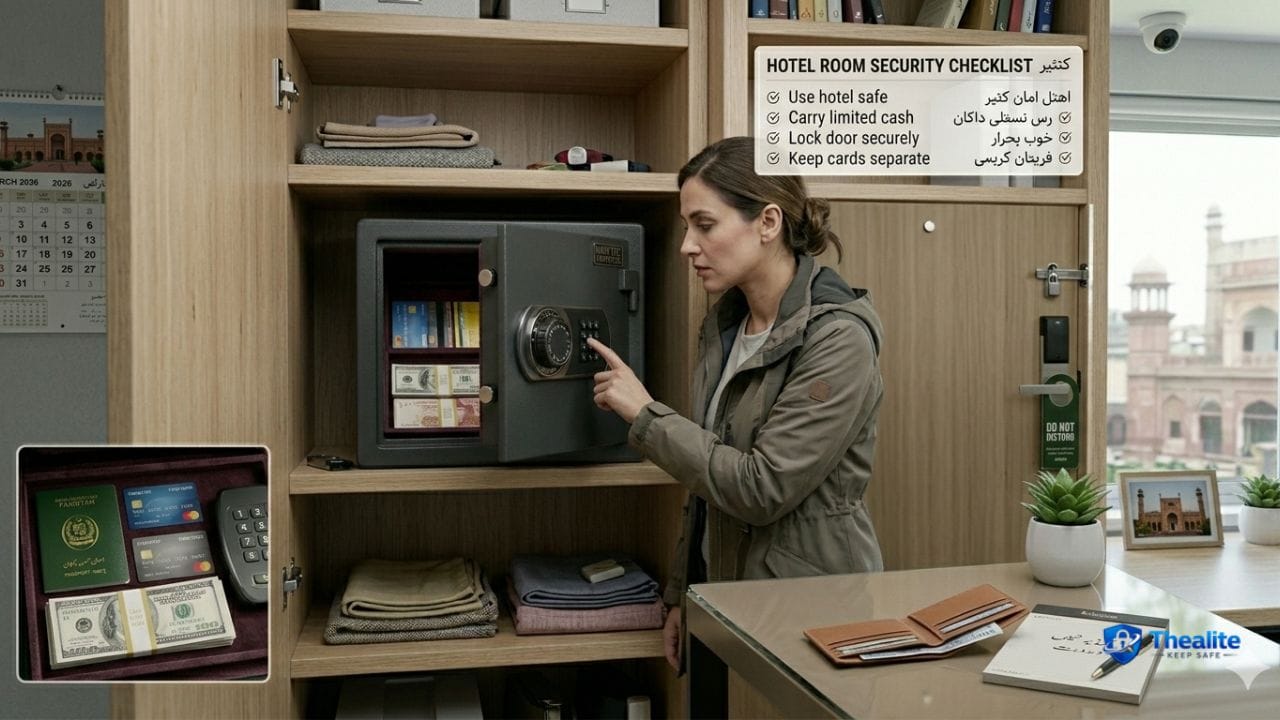
Room safes can help, but they are not identical to a bank vault. Treat the room safe as one layer—good for backup cash, spare cards, and small valuables—not as the only protection for everything you own.
How to use a hotel safe safely
- Test it first: lock/unlock once before trusting it.
- Use a unique code (not 0000, 1111, or your birthday).
- Don’t store your only backup in the safe—keep a second backup elsewhere.
- Take a quick note (or photo) of what you stored so you don’t forget items at checkout.
When the room safe is NOT enough
- If the safe looks loose, damaged, or poorly installed.
- If you’re storing very high-value items.
- If you don’t trust the room or you expect frequent staff entry.
Step 4: Front Desk Safe Deposit Storage (When It’s a Better Choice)
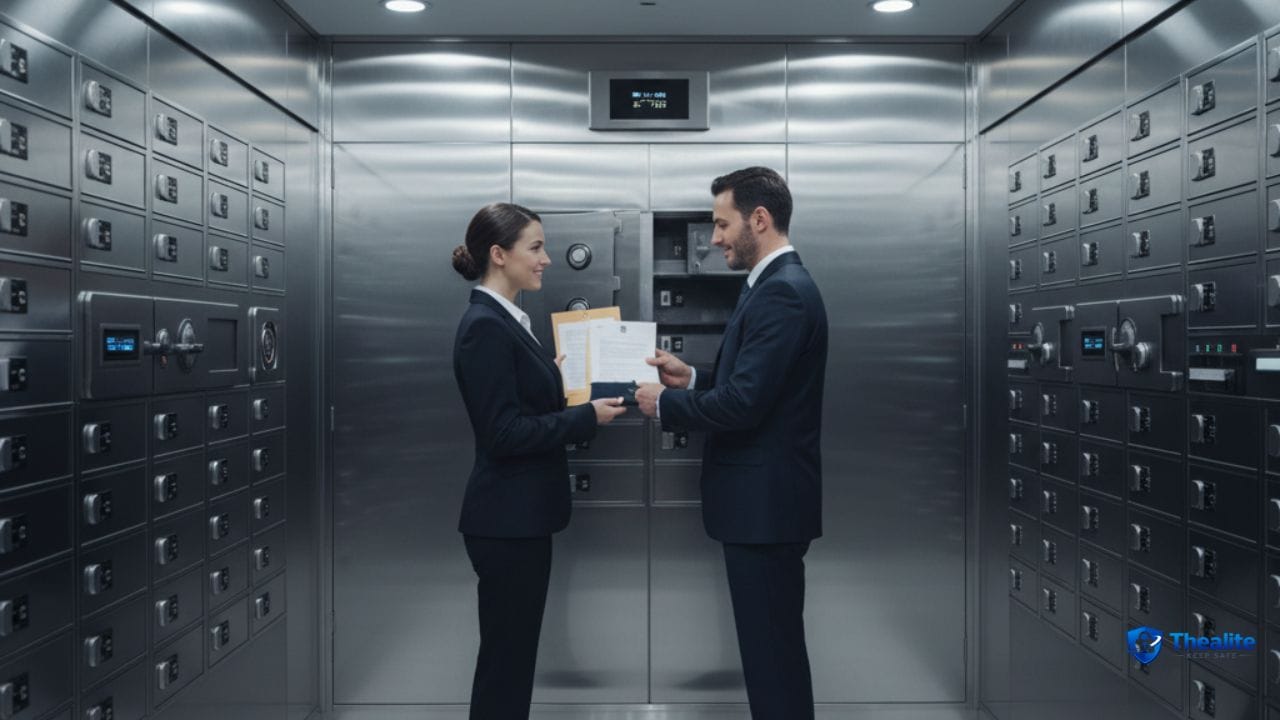
Some hotels offer front desk safe deposit storage or secure storage options. For high-value items, this can be a better choice than a small in-room safe.
- Ask about secure storage, access procedure, and receipts/records.
- Understand access times and the hotel’s process.
- Keep your own inventory of what you stored and when.
Step 5: Where NOT to Hide Money in a Hotel Room
Some hiding places feel clever—but they’re the first places thieves check because everyone uses them.
Avoid these common hotel hiding spots
- Under the mattress or pillow
- Inside shoes by the door
- In a nightstand drawer
- In an open suitcase in the middle of the room
- In the bathroom
- In plain view inside a backpack
Best practice: don’t rely on a hiding spot as your only protection. Use lockable storage + separation instead.
Step 6: Housekeeping Days—Use a Simple Reset Routine
Many hotel theft complaints start with: “Housekeeping came and then my cash was missing.” Whether or not staff were involved, the fix is the same: remove temptation and remove uncertainty.
Before leaving the room
- Do a 30-second sweep: cash, wallet, spare cards, passport, electronics.
- Put backup cash/cards into the safe (or locked luggage) before housekeeping enters.
- Clear counters and nightstands (nothing valuable left out).
- If you don’t need service, use Do Not Disturb.
Step 7: Protect Your Cards and Accounts (Cash Is Only Part of the Risk)
If your wallet disappears, the bigger risk can be card fraud and identity issues.
- Use banking alerts for card charges.
- Keep cards you don’t need in the room safe rather than carrying everything.
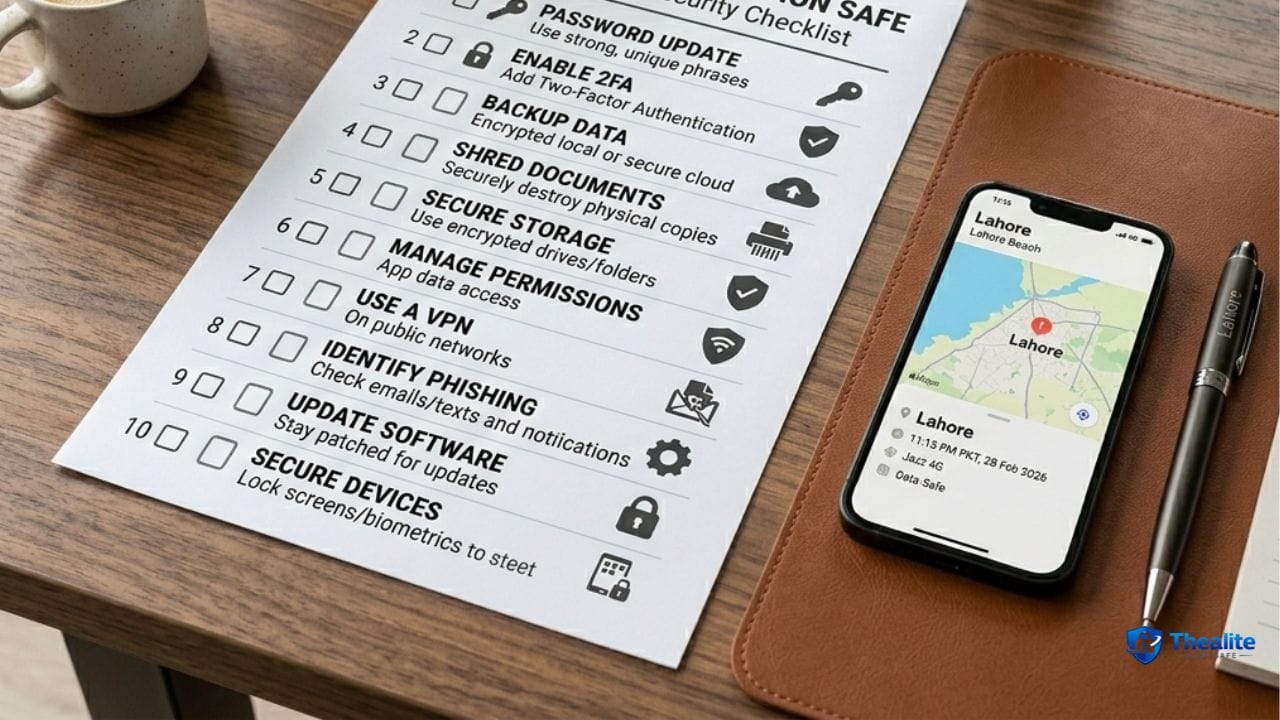
- Use a strong phone passcode and keep your phone secured (it’s your banking control center).
Related: How to Keep Bank Account Safe • Keep Bank Account Safe Online • How to Keep Your Identity Safe Online
Step 8: Pool/Beach and Hotel Public Areas
A lot of hotel money loss happens outside the room—at the pool, breakfast area, lobby, or beach.
- Carry minimal cash and one card in public areas.
- Use a zip pouch/crossbody worn in front in crowds.
- Don’t leave wallets unattended on chairs or towels.
- Use swim shifts when with family/friends (someone always stays with belongings).
More: How to Keep Stuff Safe at Beach.
Step 9: What to Do If Money Goes Missing in a Hotel
Act quickly and methodically—don’t panic.
Fast action plan
- Double-check your storage spots and recent spending (mistakes happen).
- Report to hotel management immediately and request incident documentation.
- Lock/freeze missing cards via your banking app.
- If your phone is missing, use device tracking to lock/erase and change key passwords.
- File a police report if needed for significant theft or insurance claims.
Travel docs guidance: How to Keep Documents Safe While Traveling.
Step 10: A Simple Setup That Works for Most Trips
If you want a low-effort default system, use this:
- Wallet: one card + small daily cash.
- Room safe: backup cash + spare card + passport copy.
- Separate location: emergency cash or second backup card (not in the safe).
Copy/Paste Checklist: Keep Money Safe in a Hotel Room
- Carry minimal daily cash; keep the rest secured
- Split money into 2–3 locations (wallet + safe + separate backup)
- Never leave cash loose on counters or nightstands
- Use room safe correctly: test it, unique code, don’t store your only backup
- Consider front-desk secure storage for high-value items
- Before housekeeping: sweep and secure valuables; clear counters
- Use deadbolt/latch when inside; keep door locked when out
- Don’t show cash or say room number in public
- Use banking alerts; lock cards immediately if missing
- Report quickly and document incident if theft suspected
FAQs
Is it safe to keep cash in a hotel room safe?
It can be a helpful layer for backup cash and spare cards, but it’s not a perfect vault. Test the safe, use a unique code, and don’t store your only backup there.
Where is the safest place to keep money in a hotel room?
The safest approach is separation: small daily cash with you, backup cash in the room safe (or front desk storage), and an emergency backup stored separately.
Should I keep my wallet in the hotel room?
Don’t leave your primary wallet loose in the room. Carry essentials with you and store backup cards/cash securely.
Can housekeeping steal money from hotel rooms?
Most housekeeping staff are honest, but opportunistic theft can happen. Reduce risk by not leaving cash out and securing valuables before service.
What should I do if money goes missing at a hotel?
Check your system first, then report to hotel management immediately, lock cards, and document everything. File a police report if needed for significant loss.
Conclusion
Keeping money safe in a hotel room comes down to three things: carry less, split what you have, and secure backups before staff entry. Use the room safe as one layer, consider front-desk storage for higher value, and keep strong account security so you can lock cards quickly if needed. With a simple routine, hotel stays stay relaxing—not stressful.

As a digital marketer, she has received multiple international awards, including Campaign of the Year at the 2023 European Content Awards and Best Use of Content Marketing at the 2022 Global Search Awards. Nicai holds an MSc in Marketing (First Class Honours) from the UCD Smurfit Graduate Business School and she has also completed the Artificial Intelligence Programme at Oxford University’s Saïd Business School. She is also a contributing writer for publications such as Entrepreneur and Esquire.