The beach is supposed to be relaxing—until you realize you can’t swim without leaving your phone, wallet, and keys on a towel. In most U.S. beach towns, theft is usually opportunistic: someone spots an unattended bag, grabs what’s easy, and disappears into the crowd. The best defense isn’t a complicated gadget—it’s a simple plan: bring less, separate essentials, and use smart positioning.
This guide gives you practical steps to keep your stuff safe at the beach whether you’re going solo, with friends, or with kids. It includes low-effort strategies, what to avoid, and a checklist you can copy/paste.
Quick Answer (Beach Safety in 10 Rules)
- Bring less: leave passport, extra cards, and expensive jewelry at home.
- Take only one payment method + a small amount of cash.
- Keep your phone locked (strong passcode) and enable Find My / device tracking.
- Use a crossbody bag or small pouch you can keep on you—don’t rely on open totes.
- Split items: don’t keep phone + wallet + keys in one easy-grab bundle.
- Choose a spot near families or lifeguards, not isolated sections.
- When swimming, use a buddy system or swim shifts (someone stays with the stuff).
- Hide-in-plain-sight tricks (inside a clean diaper bag or boring-looking container) can help, but don’t rely on them alone.
- Don’t flash cash or expensive items; thieves watch behavior.
- If something is stolen, act fast: lock cards, track device, and report.
Step 1: Decide What to Bring vs Leave (The #1 Anti-Theft Move)
The safest valuables are the ones you didn’t bring. Most beach theft problems happen because people bring too much—full wallets, extra electronics, and car keys with expensive fobs.
Leave at home (if possible)
- Passport and important documents
- Extra credit cards, spare keys, expensive jewelry
- High-end headphones, tablets, and anything you won’t actively use
Bring only essentials
- Phone (locked)
- One card (or a small amount of cash)
- ID if needed
- Car key (ideally a simpler key setup)
Step 2: Use a “Beach Wallet” System
A beach wallet is a slim, minimal setup so even if something goes wrong, your exposure is limited.
- Bring one card and a small bill (or two).
- Keep the main wallet at home or locked in your car (only if your car storage is secure).
- Use a small waterproof pouch so sweat/sand doesn’t damage cards.
Step 3: Phone Safety (Lock It Down Before You Arrive)
Phones are the #1 target because they’re valuable and easy to resell. Your goal is to reduce theft incentives and increase recovery options.
Phone protection steps
- Use a strong passcode (not 1234) and enable Face ID/Touch ID.
- Turn on Find My / device tracking and keep location services enabled.
- Disable lock-screen sensitive notifications if you’re worried about privacy.
- Avoid leaving your phone face-up on the towel where it’s visible from far away.
More: How to Keep Your Phone Safe From Pickpockets.
Step 4: Keys and Key Fobs (The Sneaky Risk)
Car keys are tricky because you often need them nearby. Losing keys can ruin your day—even if nothing else is stolen.
Safer key strategies
- Use a waterproof key pouch you can wear on a lanyard or keep in a secure zip pocket.
- If you have a key fob, keep it hidden and separate from the phone.
- Don’t leave keys under your towel or in shoes (common theft spot).
- If you travel with multiple people, rotate who carries the key pouch.
Step 5: Choose a Smarter Beach Spot
Thieves prefer isolated areas where no one is watching. Your location matters.
Pick a spot that reduces risk
- Near a lifeguard stand or busier section (more eyes).
- Near families or groups rather than empty stretches.
- Not right next to public walkways where people can grab-and-go easily.
Step 6: The Best Strategy for Swimming: Swim Shifts (Buddy System)
If you’re with friends or family, the simplest solution is swim shifts: one person watches the stuff while others swim, then you rotate.
- Agree on the plan before anyone goes in the water.
- Keep the valuables pouch on the person staying behind (not on the towel).
- If you’re with kids, have one adult always stay on shore.
Step 7: Solo Beach Day? Use Low-Effort “Keep-It-On-You” Methods
Going solo makes it harder because no one can watch your bag while you swim. Your best move is to bring almost nothing.
Solo-friendly tactics
- Bring one payment method + small cash only (no full wallet).
- Use a small waterproof pouch you can keep on your body (if comfortable).
- If you must leave items on shore, keep them out of sight and choose a busy area.
- Consider swimming at times when you can keep eyes on your belongings (short dips).
Step 8: ‘Hide in Plain Sight’ Tricks (Helpful but Not Perfect)
These can reduce opportunistic theft, but don’t treat them as foolproof security.
- Use a boring-looking bag (like a plain tote) instead of a designer backpack.
- Place valuables inside an unremarkable container (clean snack bag, plain pouch).
- If you’re with a baby/toddler, a diaper bag looks less attractive (still keep items secured).
Step 9: Avoid These Common Beach Theft Mistakes
- Leaving your phone on top of the towel while you swim.
- Putting all valuables in one bag and walking away ‘for a minute.’
- Trusting a stranger to watch your stuff (high risk).
- Leaving valuables in an unlocked car or visible in the vehicle.
- Flashing large cash or expensive jewelry (advertises value).
Step 10: If Something Gets Stolen (Action Plan)
Act quickly—minutes matter for phones and cards.
- Lock cards and contact your bank (use banking app or call number on back of card).
- Use Find My / device tracking to locate, lock, or remotely erase your phone.
- Change important passwords if your phone or wallet was stolen (email first).
- Report theft to beach security or local police (needed for some claims).
- If keys were stolen, consider car security steps (depends on vehicle/key type).
Travel money guidance: How to Keep Your Money Safe While Traveling.
Copy/Paste Checklist: Keep Stuff Safe at the Beach
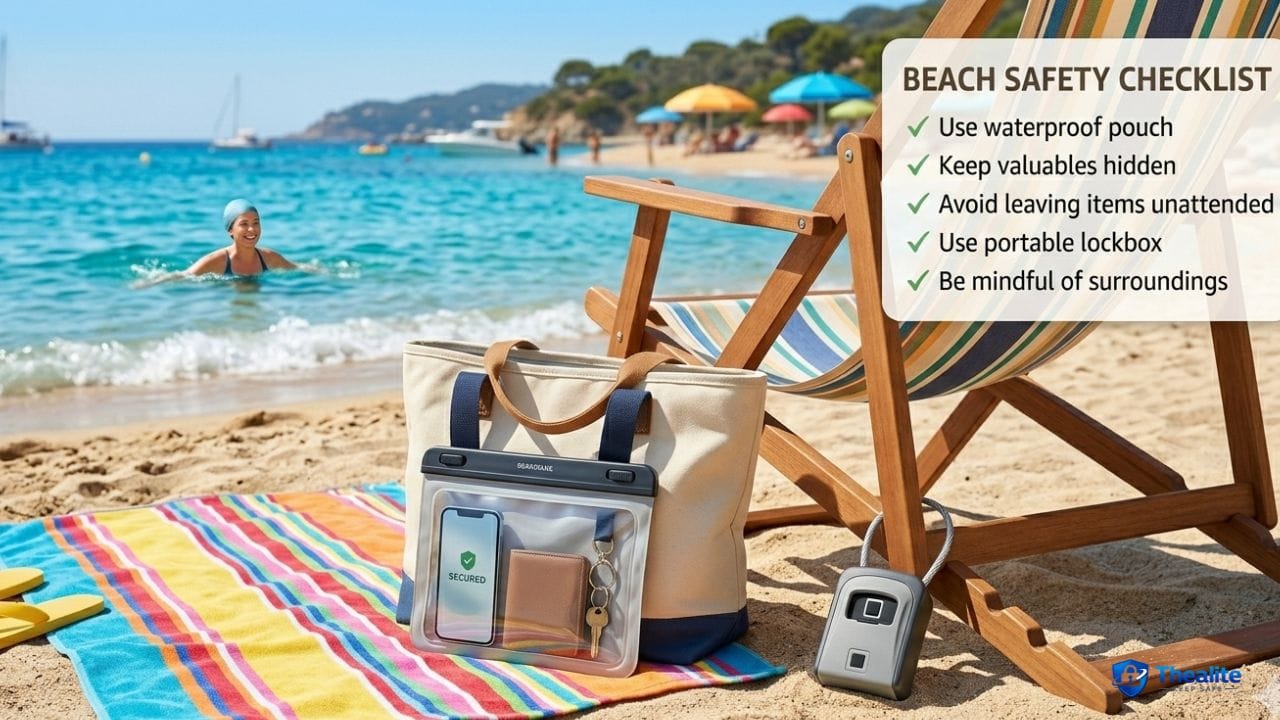
- Bring less: no passport, extra cards, or expensive jewelry
- Use a beach wallet: one card + small cash only
- Phone locked + Find My enabled; keep it out of sight
- Split items (don’t bundle phone+wallet+keys together)
- Use a zip pouch or crossbody you can keep on you
- Choose a busy spot near lifeguards/families
- Swim shifts: someone always stays with the stuff
- Keys in waterproof pouch; not under towel/shoes
- Avoid trusting strangers to watch your belongings
- If stolen: lock cards → track/lock phone → report
FAQs
What is the safest way to keep your stuff safe at the beach?
Bring as little as possible, keep essentials on your person in a zip pouch/crossbody, and use swim shifts so someone is always with the belongings.
Is it safe to leave valuables under a towel at the beach?
It’s a common hiding spot and not reliable. Opportunistic thieves look for towels and bags left unattended. Use a keep-it-on-you system or a buddy plan.
How do I keep my phone safe while swimming?
Lock it, enable Find My, and keep it in a secure pouch. If you’re with others, one person should stay with the items. Solo swimmers should bring minimal items and consider a waterproof pouch.
Should I trust strangers to watch my things at the beach?
It’s risky. Even well-meaning strangers can leave, get distracted, or be part of a scam. Use your own system instead.
How do I keep my car keys safe at the beach?
Use a waterproof key pouch in a zip pocket or wearable pouch. Don’t hide keys under towels, in shoes, or in obvious containers.
Conclusion
To keep your stuff safe at the beach, the winning strategy is simple: bring less, separate essentials, choose a busier spot, and use swim shifts so someone is always with the valuables. Add phone lock + device tracking, and you’ll prevent most opportunistic theft while still enjoying the water.

As a digital marketer, she has received multiple international awards, including Campaign of the Year at the 2023 European Content Awards and Best Use of Content Marketing at the 2022 Global Search Awards. Nicai holds an MSc in Marketing (First Class Honours) from the UCD Smurfit Graduate Business School and she has also completed the Artificial Intelligence Programme at Oxford University’s Saïd Business School. She is also a contributing writer for publications such as Entrepreneur and Esquire.