School should feel like a safe place for kids to learn and grow. But every parent asks the same question at some point: How can I keep my child safe at school? The answer isn’t one magic product—it’s a set of routines that reduce risk and help your child respond confidently.
This U.S.-focused guide covers the most practical steps parents can take: pickup rules, communication plans, trusted adults, bullying prevention, online and social media safety, and what questions to ask the school. It ends with a simple checklist you can copy/paste.
Quick Answer (The School Safety System)
- Set ironclad pickup rules (approved list + code word for changes).
- Teach your child 2–3 “safe helpers” at school (teacher, counselor, office staff).
- Create a daily check-in habit so kids report problems early.
- Teach boundary skills: what to do if someone pressures, threatens, or tries to isolate them.
- Build a bullying plan (document, report early, and follow up).
- Keep online safety connected to school life (group chats, DMs, social apps).
- Know the school’s emergency procedures and update your contact info.
- Use safe routes and drop-off/pickup routines that reduce chaos.
Step 1: Lock Down Pickup and Release Rules
Pickup and release is one of the most important (and preventable) safety issues. The goal is simple: your child never leaves with an unapproved adult.
Pickup rules that work
- Keep an approved pickup list on file with the school and update it when life changes.
- Teach your child: never leave with someone not on the list—even if they say you asked.
- Create a family code word for unexpected pickup changes.
- If a pickup change happens, communicate through official channels (call the front office).
- If your child walks home, confirm the route and a time window (and who is allowed to join).
Code word example (simple and memorable)
Pick a word your child can remember but others won’t guess. If someone says they’re picking them up, your child asks for the code word. No code word = no leaving.
Step 2: Identify “Safe Adults” at School
Kids handle problems better when they know exactly who to go to. Don’t assume they’ll figure it out under stress.
Choose 2–3 safe helpers
- Main teacher or homeroom teacher
- School counselor
- Front office staff or principal/assistant principal
- Coach or trusted staff member (if appropriate)
Teach kids the script
Kids freeze less when they have words ready. Example: “I need help. I don’t feel safe. Can you stay with me while we call my parent?”
Step 3: Daily Safety Communication (Catch Problems Early)
Most safety problems grow because kids stay quiet. Your job is to make talking easy.
Try a simple daily check-in
- Ask: “Was anything weird, scary, or uncomfortable today?”
- Ask: “Did anyone break your boundaries or ask you to keep a secret?”
- Ask: “Who did you sit with at lunch? How did that feel?”
- Keep it calm—if kids fear punishment, they hide problems.
Step 4: Bullying and Peer Safety
Bullying is one of the most common school safety issues. Treat it like a process: document, report, follow up, and escalate if needed.
Signs to watch for
- Sudden anxiety about school or stomach aches before class
- New sleep problems or mood changes
- Lost/broken belongings or unexplained injuries
- Avoiding friends or groups they used to enjoy
Bullying response plan
- Document details (dates, names, what happened, who witnessed).
- Report to the teacher and counselor early (don’t wait weeks).
- Ask for a specific plan: seating changes, supervision, safe routes, check-ins.
- Follow up in writing (email) so there’s a record.
Step 5: Safety on the Bus and in Car Line
Crowded transitions are where kids can get lost, pressured, or hurt. Build routines for bus and pickup.
Bus safety tips
- Teach kids to sit near friends and avoid conflict zones if possible.
- Kids should report problems to the driver and tell you immediately.
- If bullying happens on the bus, report it to the school (bus issues can be addressed).
Drop-off/pickup safety
- Practice the route and exact pickup spot.
- Teach kids: don’t wander the parking lot; stay at the designated spot.
- Use clear clothing/gear so you’re easy to identify.
Step 6: School Emergency Planning (What Parents Should Know)
Ask the school about emergency procedures so your family plan matches reality.
Questions to ask the school
- How are parents notified during emergencies? (text/email/app)
- Where is the reunification location if evacuation happens?
- How do you verify identity for student release during emergencies?
- How are lockdown/shelter-in-place drills handled and communicated?
- What supports exist for kids with medical needs or anxiety?
Your parent checklist
- Keep your phone numbers updated with the school.
- Add school phone numbers to contacts.
- Know the reunification plan and don’t rush to the building unless instructed.
Step 7: Online Safety Connected to School
School life often continues online: group chats, class apps, gaming after school, and social media drama. Online conflicts can become real-world safety issues.
Rules that reduce online school drama
- Keep accounts private and limit DMs (especially for younger kids).
- Teach: don’t share school schedules, address, or live location.
- Save evidence (screenshots) if harassment happens.
- Teach kids to block/report and tell you quickly—don’t retaliate.
More: How to Keep Kids Safe Online • How to Keep Your Child Safe on Social Media.
Step 8: Teach Simple Boundary and Help-Seeking Skills
Kids are safer when they know how to respond to pressure. Keep the skills simple and repeatable.
Three skills to practice
- Say NO loudly and move toward other people if pressured.
- Go to a safe adult immediately (teacher/office) if something feels wrong.
- Use the code word for pickup changes and never leave without it.
Step 9: For Teens (Different Risks, Same Principles)
Teens face more peer pressure, dating issues, and social media risk. The best safety tool is an open communication channel.
- Agree on safe ride rules (no riding with unsafe drivers).
- Talk about consent and respectful relationships.
- Discuss what to do if a friend is in danger (get adult help, call 911).
- Review privacy settings and location-sharing on social apps.
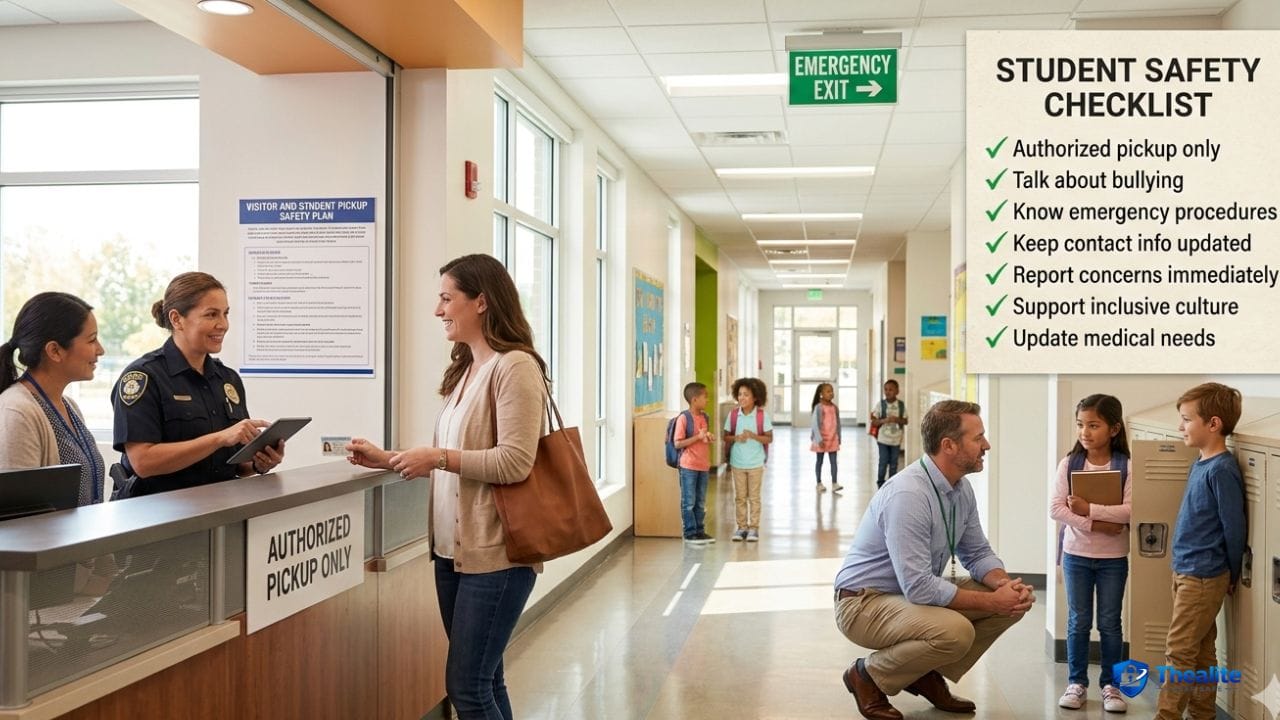
Copy/Paste Checklist: Keep My Child Safe at School
- Approved pickup list updated; family code word set for changes
- Child knows 2–3 safe helpers at school (teacher, counselor, office)
- Daily check-in questions to catch problems early
- Bullying plan: document → report early → written follow-up
- Bus/car line routine practiced; child knows exact pickup spot
- Emergency plan understood: school notifications + reunification location
- Online rules connected to school: private accounts, limit DMs, screenshot evidence
- Boundary skills practiced: NO + move away + find safe adult
FAQs
What is the best way to keep my child safe at school?
Clear routines: approved pickup rules, safe helpers, daily check-ins, and a plan for bullying or uncomfortable situations. Kids do best with simple rules they can remember.
How do I prevent someone from picking up my child without permission?
Use an approved pickup list and a family code word for changes. Teach your child never to leave with someone not on the list—even if they claim it’s an emergency.
What should I do if my child is being bullied?
Document incidents, report early to teacher/counselor, request a specific plan, and follow up in writing so there is a record.
How can I improve school safety for my child without scaring them?
Frame it as skills and routines, not fear. Practice a code word and safe helper steps like you’d practice a fire drill.
How does online safety affect school safety?
Group chats and social media can escalate into real-world conflict. Privacy settings, limiting DMs, and saving evidence help prevent problems.
Conclusion
Keeping your child safe at school is about routines and communication. Secure pickup rules and code words stop many preventable problems. Safe helpers, daily check-ins, and a clear bullying response plan help you catch issues early. Add online safety and emergency awareness, and your child will be safer—and more confident—throughout the school year.

As a digital marketer, she has received multiple international awards, including Campaign of the Year at the 2023 European Content Awards and Best Use of Content Marketing at the 2022 Global Search Awards. Nicai holds an MSc in Marketing (First Class Honours) from the UCD Smurfit Graduate Business School and she has also completed the Artificial Intelligence Programme at Oxford University’s Saïd Business School. She is also a contributing writer for publications such as Entrepreneur and Esquire.