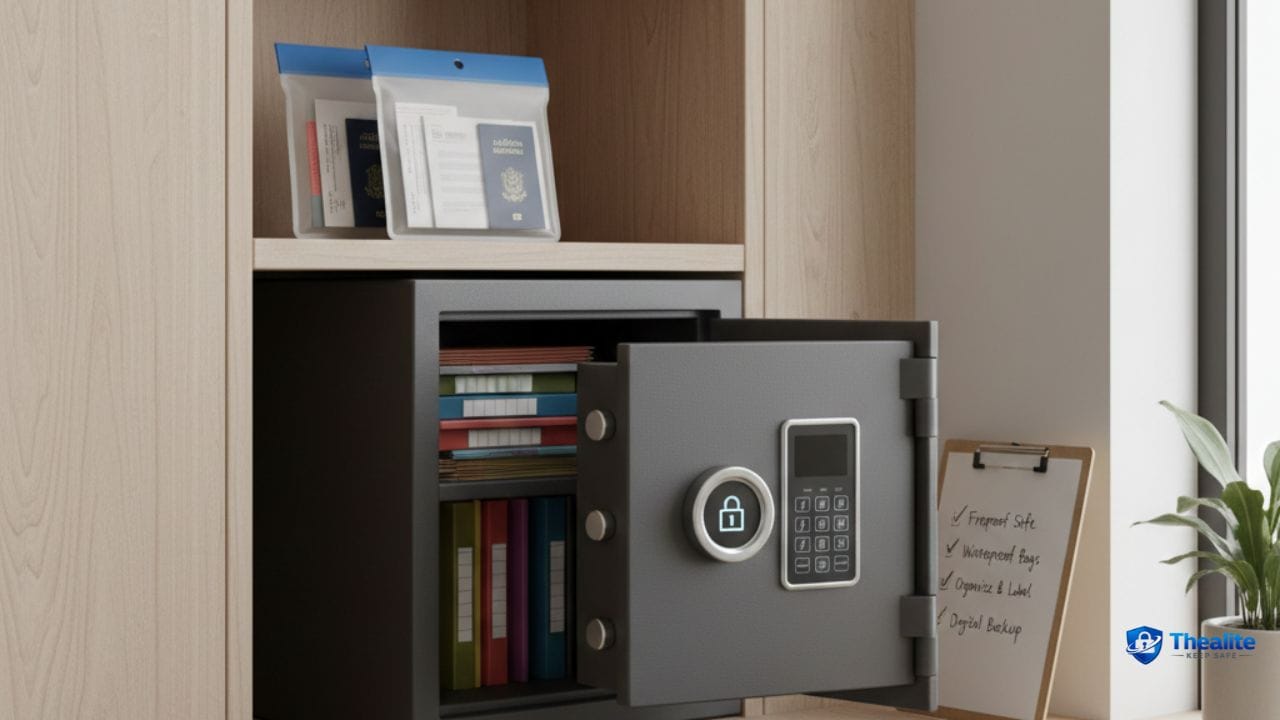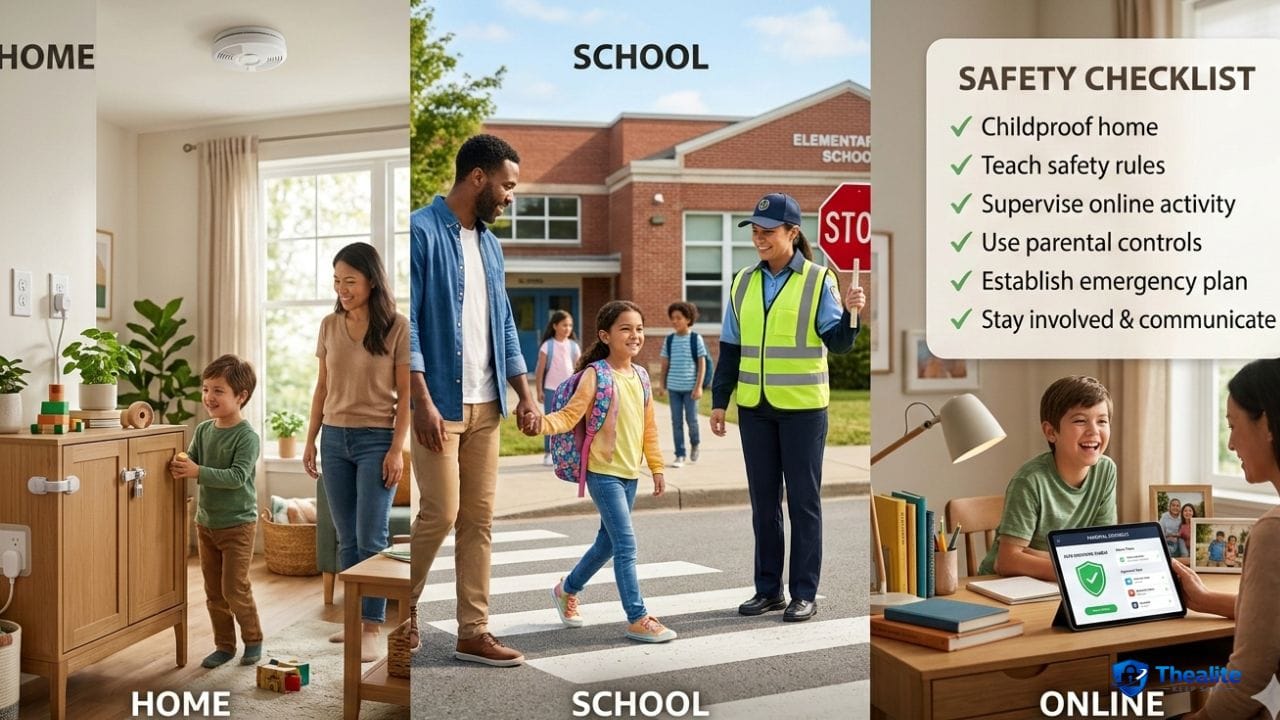
Keeping kids safe isn’t about creating fear—it’s about building simple systems that prevent the most common injuries and risks. In the U.S., the biggest everyday dangers are usually predictable: unsafe home environments, distracted driving and travel moments, online scams or predators, and unclear pickup/permission rules.
This guide gives you a practical approach: protect the home, set clear rules for school and public spaces, build strong online safety habits, and create an emergency plan that kids can actually remember. Use it as a menu—start with the highest-impact steps first.
Quick Answer (The 12 Rules That Keep Kids Safer)
- Childproof by age: lock meds/chemicals, use outlet covers, secure furniture, and gate stairs.
- Create a “safe home routine”: doors locked, safe storage, and a family meeting spot.
- Set a strict car safety rule: car seat/booster/seat belt every ride, every seat.
- Teach boundary rules: no leaving with adults without parent permission + a family code word.
- Use clear pickup rules for school/activities (approved list + changes only through parent).
- Teach kids how to ask for help from safe adults (uniformed staff, moms with kids, employees).
- Online safety basics: private accounts, strong passwords, no sharing personal info, report/block.
- Use parental controls and device time rules that match the child’s age.
- Talk about “tricky people” behaviors (secrets, gifts, asking to meet alone).
- Reduce bullying risk: open communication, screenshot evidence, involve school early.
- Have an emergency plan: address, parent phone numbers, 911 basics, and a practice drill.
- Trust your instincts: if something feels unsafe, leave and report.
Step 1: Home Safety (Where Most Everyday Injuries Happen)
For young kids especially, home is where many preventable injuries occur. The goal is to remove the biggest hazards and create a consistent routine.
High-impact home safety upgrades
- Lock up medications, vitamins, alcohol, and cannabis products (out of reach and preferably locked).
- Store cleaning chemicals and detergents in a locked cabinet.
- Use safety gates for stairs and keep windows secured (especially above ground floor).
- Anchor heavy furniture and TVs to prevent tip-overs.
- Use outlet covers for toddlers and manage cords to prevent pulling/strangulation.
- Keep small choking hazards away (coins, batteries, tiny toys).
Kitchen and bathroom quick rules
- Use back burners when cooking and turn pot handles inward.
- Keep knives and matches/lighters locked away.
- Reduce scald risk (keep hot drinks away from edges; consider safer water heater settings).
- Never leave young kids unattended in bath water—even briefly.
Home safety deep dive: How to Keep Your Home Safe.
Step 2: Car and Travel Safety (Seat Belts + Routines)
Car safety is simple but non-negotiable: proper restraints and consistent habits.
- Use the correct car seat or booster for your child’s size and age (follow seat + vehicle instructions).
- Seat belt every ride, even short trips.
- Back seat is generally safer for kids than front seat.
- Teach kids: stay buckled until the car stops and an adult says it’s okay to unbuckle.
Seat belt basics: How Do Seatbelts Keep You Safe.
Step 3: School Safety (Pick-Up Rules and Trusted Adults)
Most school safety issues are solved with clear routines: pickup authorization, communication plans, and teaching kids what to do when something feels wrong.
School pickup safety rules
- Keep an updated list of approved adults with the school.
- Teach your child: never leave with someone not on the list—even if they claim it’s an emergency.
- Set a family “code word” for unexpected pickup changes.
- Agree on a safe meeting spot if separated (office/front desk).
Related: How to Keep Your Child Safe at School • How to Keep Schools Safe.
Step 4: Stranger and Public Safety (Teach ‘Tricky People’ Skills)
Instead of teaching kids only ‘stranger danger,’ many families use the idea of ‘tricky people’—anyone (even someone familiar) who behaves in unsafe ways.
Red-flag behaviors to teach kids
- Asking the child to keep secrets from parents.
- Offering gifts, money, or special favors to meet alone.
- Trying to isolate the child (come with me, don’t tell).
- Asking for photos or personal information.
- Trying to get the child into a car or away from a safe area.
Simple skills kids can practice
- Yell “NO!” and move toward other adults if someone grabs or pressures them.
- Find a safe helper: uniformed staff, store employee, or a parent with kids.
- Know parent phone numbers and home address (or carry it on an ID card/bracelet).
- Use the family code word for any ‘emergency pickup’ request.
Step 5: Online Safety (Where Kids Are Targeted)
Online safety is now part of child safety. The biggest risks: oversharing, strangers messaging, scams, grooming behavior, and bullying.
Online rules that matter most
- Keep accounts private; limit who can message and comment.
- Never share personal info: full name, school, address, phone number, or live location.
- Teach kids to report/block and tell you immediately if something feels weird.
- Use strong passwords and MFA on parent-controlled accounts.
- Keep devices updated; avoid random apps and suspicious links.
Online resources: How to Keep Kids Safe Online • How to Keep Your Child Safe on Social Media • How to Keep Your Passwords Safe.
Gaming and chat platforms (quick guidance)
- Disable or limit open chat for younger kids.
- Use friend-only messaging and block strangers.
- Teach kids not to click unknown links or accept “free” gifts.
- Keep usernames non-identifying (no school name or birth year).
Gaming-focused reading: How to Keep Kids Safe on Roblox.
Step 6: Social Media Safety (Privacy + Real-Life Consequences)
Social media can create safety risks when kids share locations, routines, or private details. Set rules that match the child’s maturity.
- No real-time location posts (post after leaving).
- No school logos, schedules, or home exterior photos.
- Limit DMs to friends only; require approval before adding new friends.
- Discuss screenshots: anything sent can be saved and shared.
More: How to Keep Your Child Safe on Social Media.
Step 7: Bullying and Peer Safety
Bullying is a safety issue because it affects mental health and can lead to risky behavior. Make it easy for kids to talk to you.
- Ask specific questions (not just “how was school?”).
- Encourage kids to tell you about threats, harassment, or uncomfortable situations.
- Save evidence (screenshots) for online bullying.
- Involve school staff early when safety is affected.
Step 8: Emergency Plan Kids Can Remember
The best emergency plan is simple enough to remember under stress. Practice it like a fire drill.
Family emergency basics
- Kids know their full name, parent names, home address, and at least one phone number.
- Agree on a family meeting spot if separated (at home + at a common public place).
- Teach when to call 911 and what to say (location + what happened).
- Keep a printed emergency contact card in backpacks.
Step 9: Babysitters, Sleepovers, and Activity Safety
Kids are safest when adults set expectations clearly. For babysitters, friends’ houses, and activities, use clear rules.
- Confirm supervising adult names and contact info.
- Teach kids they can call you anytime to leave—no punishment.
- Use the code word for emergency pickup.
- Ask about pets, pool access, firearms storage, and who else is in the home (as appropriate).
Copy/Paste Checklist: How to Keep Kids Safe
- Home: lock meds/chemicals; gate stairs; anchor furniture; secure windows
- Car: correct car seat/booster; seat belt every ride; back seat for kids
- School: approved pickup list + code word; clear meeting spot
- Public: teach ‘tricky people’ red flags; safe adults; practice saying NO + moving away
- Online: private accounts; no personal info; report/block; parental controls
- Social media: no real-time location; DM limits; talk about screenshots
- Bullying: open communication; save evidence; involve school early
- Emergency plan: address/phone memorized; meeting spots; 911 practice
- Activities/sleepovers: confirm supervision; kid can call you anytime to leave
FAQs
What is the most important thing to teach kids about safety?
Simple rules they can remember under stress: don’t go with anyone without parent permission, use a code word for changes, and find a safe adult if they feel uncomfortable.
How can I keep my child safe online?
Keep accounts private, limit messaging, teach kids not to share personal info, use strong passwords/MFA on parent-controlled accounts, and encourage kids to report and tell you immediately.
What are ‘tricky people’ and why is it better than stranger danger?
‘Tricky people’ focuses on unsafe behavior (secrets, gifts, isolation), which can come from strangers or familiar people. It teaches kids what to watch for.
How do I make school pickup safer?
Use an approved pickup list, set a family code word for changes, and teach kids never to leave without verifying the adult with the school.
What should be in a family emergency plan for kids?
Address and phone numbers, meeting spots, 911 basics, and a simple practice routine so kids remember what to do.
Conclusion
Keeping kids safe is mostly about routines: a safer home setup, consistent car restraints, clear school pickup rules, practical public safety skills, and strong online boundaries. You don’t need to do everything at once—start with the highest-impact basics, talk often, and practice simple plans so kids know what to do when it matters.

As a digital marketer, she has received multiple international awards, including Campaign of the Year at the 2023 European Content Awards and Best Use of Content Marketing at the 2022 Global Search Awards. Nicai holds an MSc in Marketing (First Class Honours) from the UCD Smurfit Graduate Business School and she has also completed the Artificial Intelligence Programme at Oxford University’s Saïd Business School. She is also a contributing writer for publications such as Entrepreneur and Esquire.