Hotels are designed to be convenient, but you’re still sleeping in an unfamiliar building with strangers nearby. Most hotel trips are perfectly safe, yet problems happen for predictable reasons: weak door habits, leaving valuables out, falling for “front desk” scams, or ignoring basic fire safety.
The goal isn’t to be fearful—it’s to use a simple system. This U.S.-focused guide shows you how to keep a hotel room safe from unauthorized entry, theft, and privacy risks, plus what to do if something feels off.
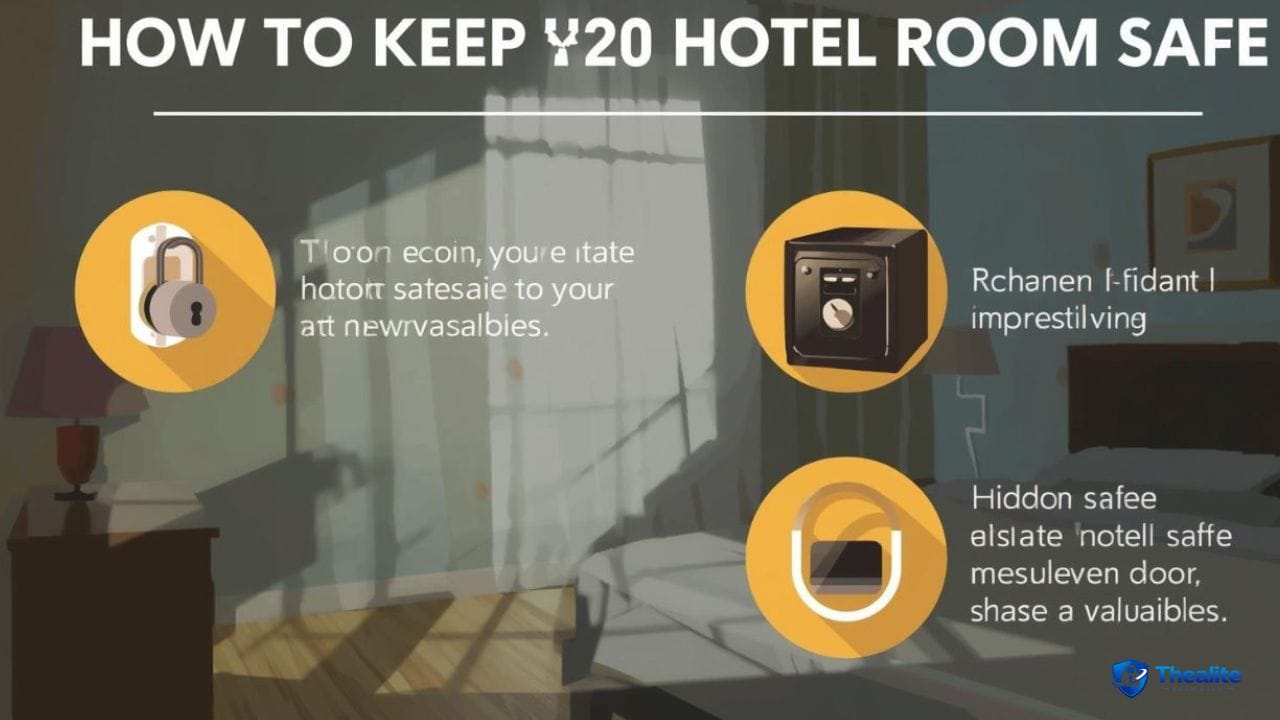
Quick Answer (Hotel Room Safety in 10 Steps)
- Choose a safer room location (avoid easy ground-floor access; balance with fire exit access).
- Test door locks, deadbolt, and security latch immediately.
- Use a door stopper/door wedge at night for extra resistance.
- Do a quick “room scan”: hiding spots, connecting doors, balcony access, windows.
- Keep valuables secured (use the room safe when appropriate, or lock/secure items and carry essentials).
- Never open the door to unexpected visitors—verify through the front desk.
- Limit what you share: room number privacy and “no name/room” requests.
- Protect devices and Wi‑Fi privacy (avoid sensitive logins on unknown networks).
- Learn fire exits and keep a clear path (know your route in the dark).
- Trust your gut—if something feels wrong, request a new room or leave.
Step 1: Pick a Safer Room (Before You Even Check In)
Room location can reduce opportunity for break-ins and noise. There isn’t one perfect floor for every situation, but these guidelines help most travelers.
Safer room location tips
- Avoid ground-floor rooms with easy outside access (especially rooms near parking lots, side doors, or stairwells).
- Avoid rooms directly next to stairwell doors, elevators, or ice machines (more foot traffic).
- Prefer a room that isn’t isolated at the end of a long empty hallway.
- If you’re traveling alone, consider requesting a room closer to the lobby or in a well-trafficked, well-lit area.
Note: Fire safety also matters. You want quick access to exits—so don’t choose a location that feels unsafe in an emergency.
Step 2: Secure the Door (Your #1 Safety Task)
Most hotel room safety comes down to the door. Do a fast lock test as soon as you enter.
Door security checklist
- Close the door fully and test that it latches (no gap or loose fit).
- Engage the deadbolt and security latch/chain (if present).
- Check the door frame and strike plate for looseness.
- If anything seems broken, request a different room immediately.
Add a simple extra layer at night
- Use a rubber door wedge/stopper at night (cheap, travel-friendly).
- Some travelers also use a portable door alarm (optional) for extra peace of mind.
Step 3: Do a “Room Scan” (Windows, Balcony, Connecting Door)
Before you unpack, do a 60-second scan so you know what you’re dealing with.
What to check
- Windows: do they lock properly? Can they be opened from outside?
- Balcony doors: lock engaged; don’t leave it cracked open.
- Connecting door (between rooms): confirm it’s locked on your side.
- Back entrances: some suites have extra doors—make sure all are secured.
Step 4: Valuables Strategy (What to Lock, What to Carry)
The safest approach is to reduce what you bring and separate essentials from non-essentials. Think in three categories: must-carry, must-lock, and not-needed.
Must-carry items
- Passport/primary ID when required for the day
- One payment method (card) and a small amount of cash
- Phone (with passcode)
Must-lock or secure items
- Backup cash, spare cards, spare keys
- Primary travel documents when not needed daily
- Jewelry and small valuables
- Laptop/tablet if you’re not carrying it
Related: How to Keep Documents Safe While Traveling • How to Keep Your Passport Safe While Traveling.
Using the hotel room safe: when it helps (and when it doesn’t)
Room safes can be useful for small valuables, but treat them as one layer—not a perfect vault.
- Use a unique code (not 0000 or your birthday).
- Test the safe before you rely on it.
- Photograph valuables and keep serial numbers for electronics when possible.
- If the safe looks loose or unreliable, ask the front desk about secure storage options.
Step 5: Front Desk and “Fake Staff” Scams
One of the most common hotel scams is a call to your room pretending to be the front desk, asking you to ‘verify’ your credit card or personal info.
Rules that stop most hotel scams
- Never share card numbers, passwords, or verification codes over an unsolicited call.
- If someone claims to be staff, hang up and call the front desk using the official number (or go in person).
- Don’t open your door to unexpected “maintenance” without verifying first.
Step 6: Protect Your Privacy (Room Number + Social Sharing)
Privacy is part of physical safety. Don’t make it easy for strangers to know where you’re staying or which room is yours.
- Don’t say your room number out loud in public spaces.
- If you’re given a key sleeve with room number, keep it hidden or ditch the sleeve.
- Avoid posting real-time location details on social media (post after you leave).
- Use the hotel ‘do not announce room number’ or privacy options if available.
Related online privacy: How to Keep Your Identity Safe Online • How to Keep Your Passwords Safe.
Step 7: Device and Wi‑Fi Safety in Hotels
Hotels are high-risk for digital privacy because Wi‑Fi networks are shared and attackers can set up look-alike networks.
Hotel Wi‑Fi rules
- Confirm the official Wi‑Fi network name with the front desk.
- Avoid banking and password changes on unknown Wi‑Fi; use cellular data/hotspot when possible.
- Turn off auto-join and file sharing when traveling.
- Keep devices locked and updated; don’t leave laptops unattended in public areas.
More: How to Keep Safe Online • How to Keep Your Computer Safe • Keep Phone Safe From Hackers.
Step 8: Fire and Emergency Safety (Don’t Skip This)
Fire safety is often overlooked. A quick plan takes one minute and could save your life.
- Locate the nearest exit stairs and a secondary exit route.
- Count doors between your room and the exit (helps if visibility is low).
- Find the fire alarm pull station location if visible.
- Keep your room key, phone, and shoes in the same place at night (grab-and-go).
- Don’t block the doorway with luggage.
Step 9: Solo Traveler Tips (Extra Practical Layers)
- Use the door wedge at night even in reputable hotels.
- Keep someone informed: share itinerary with a trusted person.
- Avoid revealing you are alone to strangers; keep conversations neutral.
- Request a room change if you feel watched, followed, or uncomfortable.
Step 10: What to Do If Something Feels Unsafe
Trust your instincts. Safety isn’t about proving a threat—it’s about reducing risk.
- If the door or lock seems faulty: request maintenance or a room change immediately.
- If someone knocks unexpectedly: don’t open; call the front desk to verify.
- If you find evidence of tampering (door marks, broken locks): document and request a new room.
- If you feel in immediate danger: leave the room, go to the lobby, and call 911 in the U.S.
Copy/Paste Checklist: How to Keep a Hotel Room Safe
- Choose a safer room location (avoid ground-floor easy access; avoid isolated areas)
- Test latch + deadbolt + security latch immediately
- Use a door wedge/stopper at night (extra layer)
- Check windows, balcony door, and connecting door locks
- Secure valuables: carry essentials; lock or store backups safely
- Don’t open door to unexpected visitors; verify with front desk
- Avoid sharing room number; hide key sleeve; don’t post real-time location
- Use hotel Wi‑Fi carefully; avoid banking on unknown networks; keep devices locked
- Learn fire exits and keep grab-and-go items ready at night
- If uncomfortable: request new room or leave—trust your gut
FAQs
Should I use the hotel room safe?
It can help for small valuables, but treat it as one layer. Use a unique code, test it, and consider front-desk secure storage for high-value items when available.
Is it safe to open the door for hotel staff?
Only after you verify. If someone claims to be staff unexpectedly, call the front desk to confirm before opening.
How do I stay safe in a hotel as a solo traveler?
Use a door wedge at night, keep privacy about your room and being alone, share your itinerary with someone you trust, and request a room change if anything feels off.
Is hotel Wi‑Fi safe?
It can be risky. Confirm the network name, avoid sensitive logins on unknown Wi‑Fi, and use cellular/hotspot for banking and password changes when possible.
What’s the first thing I should do after entering a hotel room?
Secure the door: test latches and locks. Then do a quick scan for windows, balcony access, and connecting doors.
Conclusion
Keeping a hotel room safe is mostly about habits: secure the door, control access, protect valuables, and avoid common scams. Add privacy and digital safety (Wi‑Fi and devices), and don’t skip fire exit awareness. With a simple checklist and consistent routines, you can enjoy travel with a lot more peace of mind.

As a digital marketer, she has received multiple international awards, including Campaign of the Year at the 2023 European Content Awards and Best Use of Content Marketing at the 2022 Global Search Awards. Nicai holds an MSc in Marketing (First Class Honours) from the UCD Smurfit Graduate Business School and she has also completed the Artificial Intelligence Programme at Oxford University’s Saïd Business School. She is also a contributing writer for publications such as Entrepreneur and Esquire.