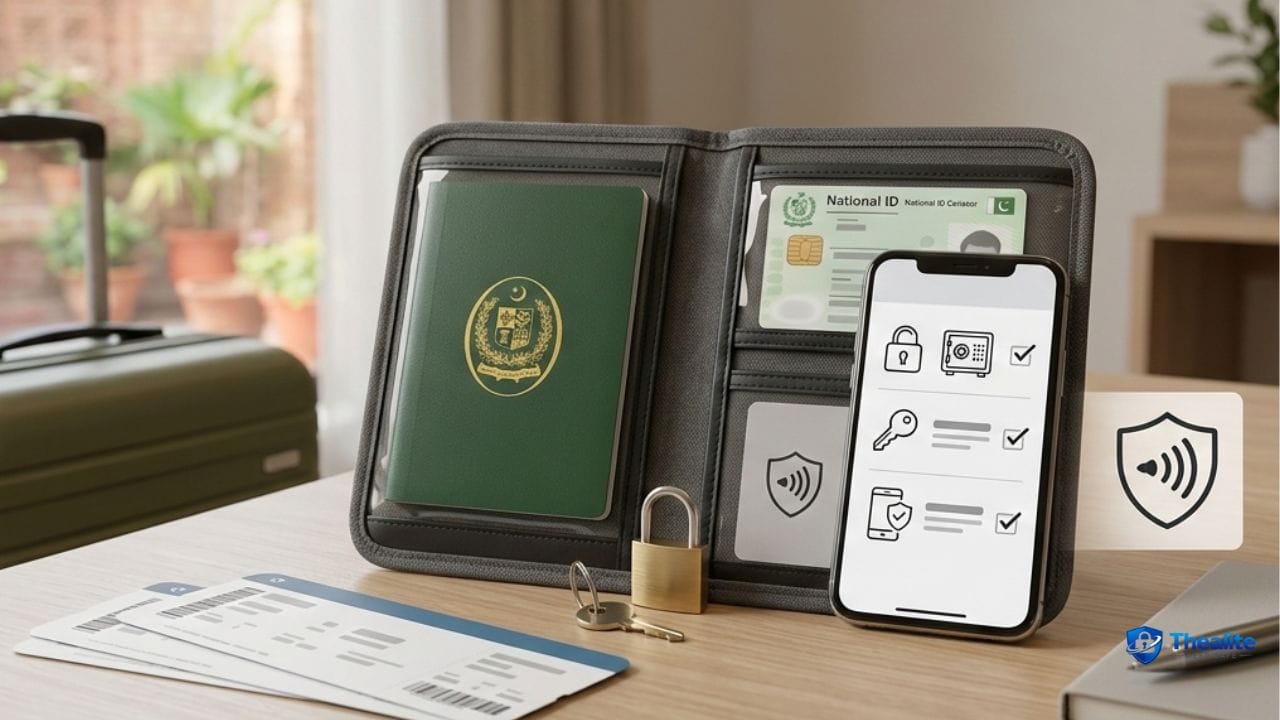
When you travel, documents become your lifeline: passport, driver’s license, visas, travel insurance details, reservation confirmations, and emergency contacts. If these documents are stolen or lost, it can turn a simple trip into a stressful scramble—missed flights, bank freezes, and emergency appointments.
The best defense is a simple system carry the right documents, store originals safely, keep backups, and avoid common loss moments at airports and hotels. This U.S.-focused guide breaks it down step-by-step and includes a copy/paste checklist.
Quick Answer (Document Safety in 8 Steps)
- Carry only what you need; leave extras secured.
- Make backups before you leave (paper + secure digital).
- Use a dedicated ‘document home’ (same pouch/pocket every time).
- Choose pickpocket-resistant carry (hidden pouch/inner zip pocket).
- Store originals securely in lodging when not needed.
- Protect documents from water and bending (sleeves/pouches).
- Avoid common loss moments (security bins, counters, taxis).
- If lost/stolen: retrace → report → replace; use backups to speed it up.
Step 1: Decide What Documents You Actually Need
The safest document is the one you didn’t bring. Many travelers carry too much: extra IDs, old passports, multiple credit cards, and papers they’ll never use.
Core documents (varies by trip)
- Passport (international travel)
- Driver’s license or state ID (domestic travel; backup ID for some situations)
- Visa/entry documentation if required
- Travel insurance details (policy number + contact)
- Emergency contacts
Documents to avoid carrying daily
- Social Security card
- Extra credit cards and unnecessary IDs
- Original birth certificate (unless required for a specific purpose)
- Anything that would be hard to replace and not needed during the day
Step 2: Make Backups (This Saves Trips)
Backups don’t replace the original for border crossings, but they speed up replacement and prove identity.
Backup checklist
- Paper copies of passport ID page, driver’s license, and important confirmations.
- Digital copies stored securely (cloud folder with strong password + MFA).
- Write down key numbers: passport number, emergency numbers, airline/hotel confirmations.
- Keep backups separate from originals (don’t store them in the same bag).
Backup storage guidance: Keep Important Documents Safe Online.
Step 3: Use a Dedicated Document Pouch (The ‘Document Home’ Rule)
Misplacing documents is as common as theft. A “document home” habit prevents careless loss.
- Use one dedicated pouch/zip pocket for documents.
- Never change the location casually.
- After every check-in or ID request, put documents back immediately before doing anything else.
Step 4: Pickpocket-Proof Your Carry
Crowded stations, tourist areas, and airports are pickpocket hotspots. Your goal is to make access difficult.
Best carry options
- Hidden money belt or under-clothing pouch (excellent in crowds).
- Inner jacket pocket with zipper.
- Crossbody bag worn in front with zipper (hand on it in crowds).
Avoid these
- Back pockets
- Open tote bags
- Outer backpack pockets
- Loose documents in your hand (easy to drop or forget)
Pickpocket protection: How to Keep Your Phone Safe From Pickpockets.
Step 5: Airport and Transit Safety (High-Distraction Moments)
Airports and transit are where many documents disappear—security bins, ticket counters, taxis, and boarding gates.
Transit rules that prevent loss
- Never set documents on a counter and turn away.
- Use a zip pocket during security (avoid loose items in bins).
- After an ID check, do the two-step loop: documents back → then move.
- Do a quick pocket-check before leaving any checkpoint or vehicle.
Step 6: Hotel Storage (Don’t Carry Originals Everywhere)
Carrying your passport everywhere increases theft risk. When you don’t need the original, store it securely.
Safer hotel storage options
- Hotel room safe (if it seems functional and you trust the property).
- Locked suitcase with a small cable lock (backup option).
- A hidden, stable spot in the room (avoid obvious drawers).
When you should keep originals on you
- Airport days and border crossings
- Changing hotels or traveling between cities
- Any official check-in requiring the original document
Step 7: Protect Documents From Water and Wear
Water damage, tearing, or bending can make a document unusable—especially passports.
- Use a protective sleeve for passports and IDs.
- Keep documents away from wet swimsuits and toiletry bags.
- Avoid bending documents in tight pockets.
- Use a waterproof pouch during boat days or rainy travel.
If Documents Are Lost or Stolen (Action Plan)
If it happens, act fast and stay calm.
Immediate steps
- Retrace your steps immediately (hotel desk, taxi, transit lost-and-found).
- If theft is likely, file a local police report (often requested for replacement).
- Contact the nearest U.S. embassy/consulate if your passport was lost overseas.
- Use backups to provide passport number and identity proof.
- Protect identity and accounts if wallet/phone was stolen too.
Identity protection: How to Keep Your Identity Safe Online.
Travel Money and Document Safety Go Together
Thieves often take documents and wallets together. Protect both so one incident doesn’t ruin the trip.
Related: How to Keep Your Money Safe While Traveling.
Copy/Paste Checklist: Keep Documents Safe While Traveling
- Carry only necessary documents; leave SS card and extras secured
- Paper + digital backups made before travel (stored separately)
- Use a dedicated document pouch (‘document home’)
- Pickpocket-resistant carry (hidden pouch/inner zip pocket)
- Don’t set documents down at counters; store immediately after checks
- Store originals securely at lodging when not needed
- Protect from water/bending with sleeves/pouches
- If lost: retrace → police report (if theft) → embassy/consulate → use backups
FAQs
Should I carry my passport everywhere while traveling?
Not always. If you don’t need it for the day, storing it securely at your lodging can reduce theft risk. Some countries require carrying ID, so check local rules.
Where should I keep travel documents in my bag?
Use an inner zip pocket or a dedicated document pouch. Avoid outer backpack pockets and open totes.
Is a digital copy of my passport enough?
It helps for replacement and proof of identity, but it doesn’t replace the original for international travel.
What should I do if my passport is stolen abroad?
File a police report if possible and contact the nearest U.S. embassy or consulate for replacement instructions. Backups help speed the process.
How do I keep documents safe at the airport?
Don’t place them loosely in bins, and always put them back into the same pouch immediately after every check.
Conclusion
Keeping documents safe while traveling is about habits, not luck. Make backups before you go, keep originals in one secure location, use pickpocket-resistant carry in crowds, and store documents safely at hotels when you don’t need them. If something goes wrong, backups and a calm action plan help you recover faster and keep the trip on track.

As a digital marketer, she has received multiple international awards, including Campaign of the Year at the 2023 European Content Awards and Best Use of Content Marketing at the 2022 Global Search Awards. Nicai holds an MSc in Marketing (First Class Honours) from the UCD Smurfit Graduate Business School and she has also completed the Artificial Intelligence Programme at Oxford University’s Saïd Business School. She is also a contributing writer for publications such as Entrepreneur and Esquire.